
Posted on Leave a comment

Do you need a bigger table or are you just seating people wrong?

Do you need a bigger table or are you just seating people wrong-Tablemaker

Do you need a bigger table or are you just seating people wrong?

Do you really need a larger table, or can better seating solve the problem?

Often, a table feels too small because of how chairs, people, and serving space are arranged, not because the tabletop itself is undersized. Before replacing anything, it helps to look at seat spacing, legroom, table shape, and the room around it. A few small adjustments can change how comfortably the same table works.

A familiar scene proves the point. Six people sit down for Sunday lunch, and within minutes someone is bumping elbows, one chair is half in the doorway, and the person at the end keeps knocking their knees against the table leg. The obvious complaint is that the table is too small.

Sometimes that is true. Quite often, it is only part of the story.

Table size gets blamed first because it is the most visible factor. Yet practical comfort depends on more than table dimensions alone. Seating clearance, legroom, traffic flow, and the way chairs line up with the base all shape how spacious a table feels in use. Dining room planning principles and ergonomic guidelines both point to the same idea: usable space matters more than headline measurements.

Several common assumptions create the illusion of crowding:

  • More chairs always mean more usable seats
  • A table that fits people physically will fit them comfortably
  • End seats work the same way on every table
  • Room size has little effect once the table fits inside it

A table can measure generously on paper and still perform badly in a tight room. Chairs pulled back into a walkway, guests squeezed around corner legs, or large serving dishes parked in the middle all reduce table comfort. That is why table size versus seating is rarely a simple numbers exercise.

Table of Contents
How many people can actually fit? Sizing tables for real use

Real seating capacity is usually lower than the maximum claim attached to a table. Comfort depends on how much width each person has, how much depth a place setting needs, and whether the middle of the table is carrying food, glasses, or shared dishes.

Many ergonomic guides work on the basis that each diner needs roughly 60cm of width for comfortable everyday seating. Tighter arrangements can work for short meals, but they tend to feel crowded once coats, serving bowls, or relaxed posture enter the picture. BSI guidance and similar planning references are useful here because they focus on function, not optimistic showroom maths.

Here is a practical guide for real use:

  • 120cm rectangular table: usually 4 people comfortably
  • 140cm rectangular table: 4 people comfortably, 6 at a squeeze depending on leg placement
  • 160cm rectangular table: 6 people comfortably
  • 180cm rectangular table: 6 people comfortably, 8 for some occasions
  • 200cm rectangular table: 8 people comfortably
  • 90cm to 110cm round table: 4 people comfortably
  • 120cm round table: 4 to 5 people comfortably
  • 135cm to 150cm round table: 6 people comfortably

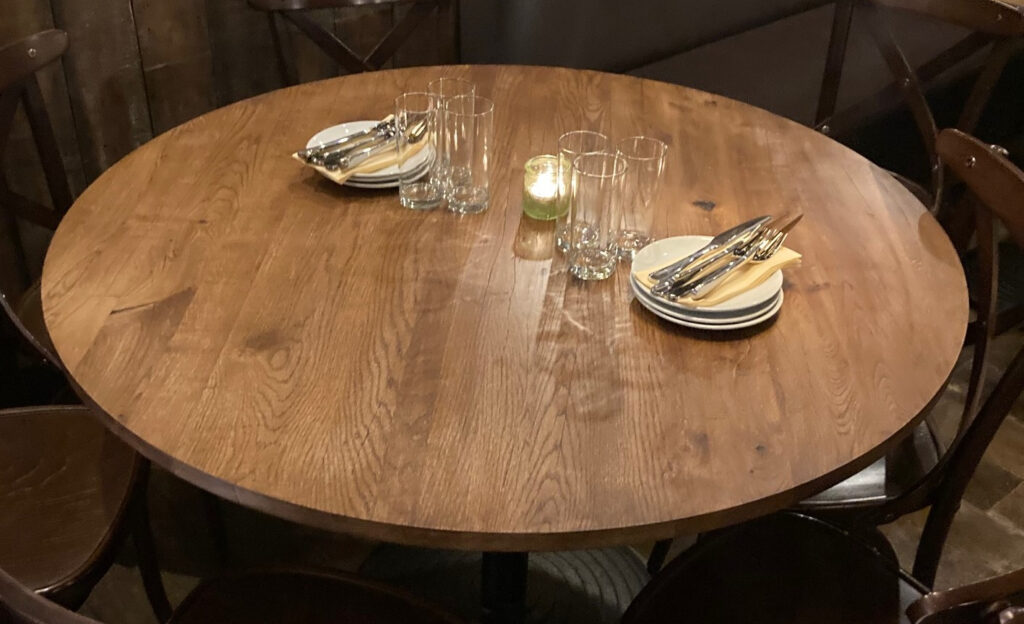
Shape changes the picture. Round tables remove awkward corners and can feel more sociable, but the centre can become hard to reach if the diameter grows too much. Rectangular tables use space efficiently in longer rooms, though corner seating and leg placement can reduce flexibility. Oval tops often soften movement around the table and can make circulation easier in narrower spaces.

Serving space also matters. A table that seats six for plates and glasses may not feel comfortable for six if the meal includes platters, side dishes, bottles, and shared bowls. That difference explains why a table can feel perfect on a weekday and suddenly too tight when guests arrive for a longer meal.

Pro Tip: Consider moving or removing one occasional chair to instantly free up valuable space around your table for daily use.
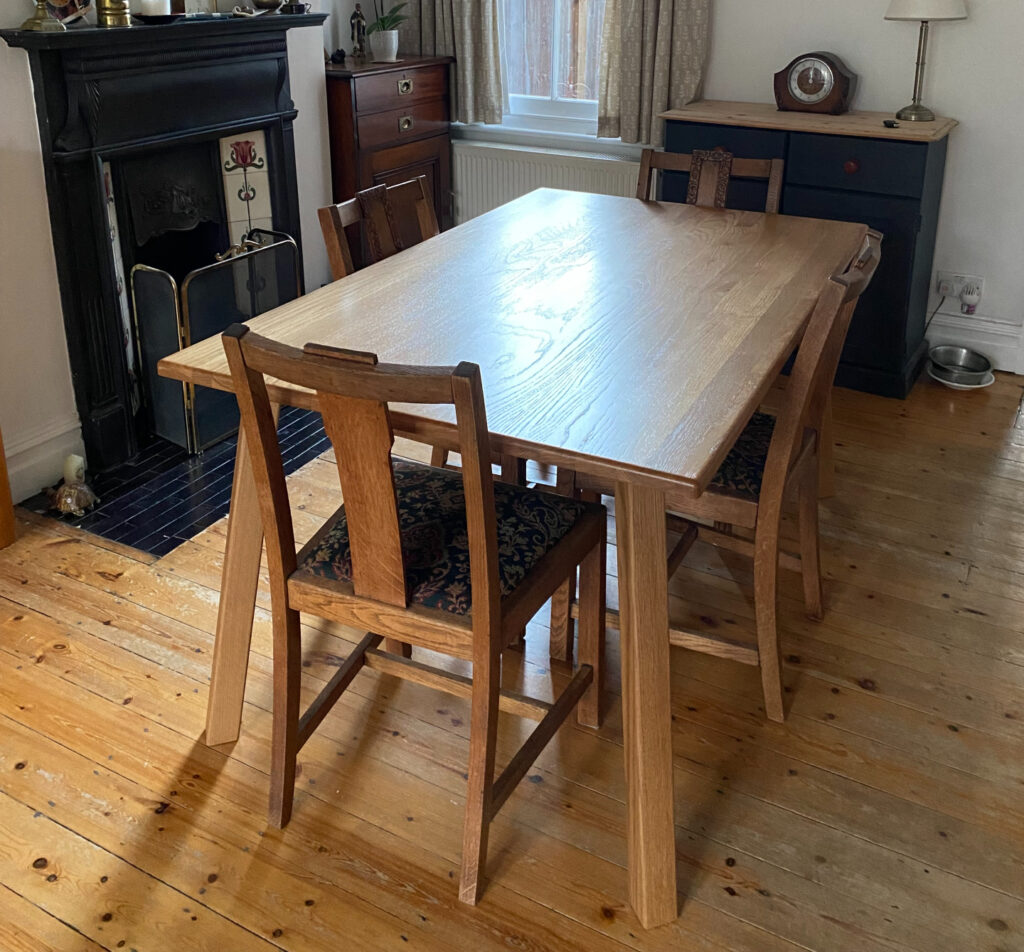
Pro Tip: Benches work best when paired with tables that have a generous overhang so everyone can slide in comfortably without bumping knees.

Common seating mistakes that make tables feel smaller

A table can lose usable seating without anyone noticing why. Small layout habits add up fast, especially in busy dining spaces where the table has to work around walls, radiators, doors, or open-plan walkways.

The most common mistakes are easy to spot once you know where to look:

  • Too many chairs left around the table all the time
  • Chairs pushed into the corners where table legs block knees
  • End seats used even though the apron or underframe cuts into legroom
  • Benches paired with a table that has little overhang
  • One side placed too close to a wall for comfortable access
  • Chairs chosen for style but too wide for the available spacing

Overcrowding is especially common. A six-seat table may have eight chairs gathered around it because the extra seats are useful to keep nearby. In practice, those spare chairs narrow access routes and make the table seem smaller before anyone even sits down.

Underframe details can quietly cause trouble as well. If a chair has to sit slightly off-centre to avoid a leg, the next chair follows suit, and suddenly the whole run feels compressed. Bench seating can improve flexibility in some layouts, but only if the table allows enough knee space and enough top overhang for people to slide in comfortably.

Room alignment plays a part too. A table set square to the room is not always the easiest one to use. If one diner must shuffle sideways because a door opens behind them, the issue is traffic flow, not necessarily table size. Moving the table a few centimetres, removing one occasional chair, or changing which seats are used daily can make the same setup feel noticeably calmer.

Table shape, leg design, and their impact on seating

Surface area tells only half the story. The base underneath the top often decides where people can actually place their legs and how easily chairs can tuck in.

A pedestal table usually gives more freedom around the edges because there are no corner legs interrupting seat positions. That can make a round or square table feel more generous than its dimensions suggest. Four-legged tables can be very stable and visually light, but the legs claim the most useful seating zones, especially at the corners and ends.

Leg placement changes comfort in several ways:

  1. Corner legs can block the natural position of a chair, which means that two people along one side end up closer together.
  2. Aprons can reduce thigh room, particularly on compact tables or when dining chairs have arms.
  3. A good overhang gives knees more breathing room and makes benches easier to use.
  4. Pedestal bases often suit flexible guest seating because a chair can shift slightly without hitting a leg.

Rounded shapes soften another common problem, namely movement around the table. A rectangular top with sharp corners takes up predictable floor space, but those corners can sit directly in a circulation route. Oval and round tables often ease traffic flow in rooms where people need to pass frequently.

For households trying to squeeze in occasional extra guests, benches and stools can help, although only with the right structure above and below. A bench works best where the supports do not interrupt the sitting zone. That practical kind of design flexibility is one area where a workshop such as Tablemaker can make a real difference, particularly when a table needs to suit a fixed room width or an existing base.

Book a Table Sizing Consultation

Get personalised advice on what table size and seating arrangements will work best in your dining space.

Book Consultation

When a bigger table really is the answer

Sometimes the honest answer is yes, the table is too small. Better seating arrangement cannot solve a table that is consistently undersized for the people who use it.

A few signs point clearly in that direction:

  • Meals feel cramped even after reducing chair numbers and improving spacing
  • Shared dishes leave no room for normal place settings
  • Family life has changed, including children getting older or more people eating together regularly
  • Guests can sit down, but nobody can do so comfortably for a full meal
  • The room allows proper clearance, yet the tabletop still feels undersized in proportion
  • Daily work or dining habits now need more usable surface than before

Growing households often reach this point gradually. A table that worked well when children were small can become frustrating once everyone needs full-size chairs, larger plates, laptops, homework space, or room for longer meals. In those cases, the issue is not poor chair arrangement. The demands have simply changed.

Room proportion still matters. A larger table only improves things if people can move around it comfortably. Many space planning guides suggest allowing enough distance from table edge to wall or other furniture for chairs and circulation, which means that buying the biggest table that physically fits is rarely the smartest move.

Made-to-measure sizing can help if the room sits between standard dimensions. A bespoke approach, including the sort of sizing flexibility Tablemaker offers, can suit awkward spaces where an extra 10cm or 15cm changes the table from cramped to genuinely useful. That is especially relevant in older homes, open-plan kitchen diners, or rooms with fixed features that limit where chairs can go.

Final thoughts: rethinking space, not just size

A bigger table is sometimes the right solution, but bigger is not automatically better. The more useful question is whether the table supports the way people actually sit, move, eat, and share space.

Before replacing a table, look closely at three things. Check how much width each person really has. Notice whether legs, aprons, or benches are limiting seat positions. Pay attention to the room around the table, including doors, walkways, and wall clearance.

Thoughtful furniture lasts longer when it can adapt to changing habits, be refinished, and continue working in a room that shifts over time. A well-planned table setup usually comes from small observations made at everyday meals, not from chasing the largest possible dimensions.

Explore Made-to-Measure Tables

See customisable options that fit your room perfectly, whether you need more space or just better planning.

View Custom Tables

Tablemaker

55 High St, London N8 7QB

02083416334

HVQM+58 London

 

Posted on Leave a comment

How to choose table tops for a café fit-out when you’re working with a tight budget

How to choose table tops for a café fit-out when you're working with a tight budget-Tablemaker

How to choose table tops for a café fit-out when you’re working with a tight budget

What should you prioritise when choosing café table tops on a tight budget?

Start with durability, cleanability and the right size for your layout. A café table top has to cope with spills, repeated wiping, heavy daily use and constant chair movement, so the best budget choice is usually the one that lasts well, fits your space properly and does not create avoidable replacement costs later.

Table of Contents

Understanding the real demands of café table tops

A busy café table top has a harder life than most domestic furniture. Coffee drips, food spills, hot cups, wet cloths and frequent disinfecting all affect the surface day after day.

Domestic expectations can mislead buyers here. A top that looks good in a showroom may still struggle in a hospitality setting if it marks easily, swells at the edges or shows wear after repeated cleaning. Commercial table tops need to do ordinary jobs exceptionally well.

Common pressures include:

  • repeated wiping with cleaning products
  • knocks from cups, trays and chairs
  • surface scratches from crockery and bags
  • stains from coffee, tea, juice and food oils
  • constant turnover across breakfast, lunch and afternoon service

Health and safety regulations and general hospitality industry standards also shape the decision. Surfaces need to be practical to clean and presentable throughout service, because a damaged or sticky table does not simply look tired. It can affect customer confidence in the space.

Premature replacement is where tight budgets often unravel. A cheap top that needs replacing after a short period can cost more in labour, disruption and lost consistency across the room than a slightly better one that keeps going.

Setting a realistic budget: what to expect and where to compromise

A sensible café fit-out budget for table tops should account for the full life of the item, not just the invoice price. Upfront cost matters, but so do delivery, fitting, maintenance and the chance of needing replacements before the rest of the fit-out has aged.

Some compromises are easier to live with than others. A simpler edge detail or a more standard size may reduce cost without changing day-to-day performance very much. A weaker core material or a finish that struggles with regular cleaning can be a more expensive compromise in the long run.

A practical way to think about spend is this:

  • protect budget for the surface material and finish
  • be careful about going too thin if the top will see heavy use
  • save money through standard shapes, simpler detailing and batch ordering where possible

VAT, installation costs and any adjustments to existing bases should also be included early. UK hospitality supply norms vary by maker and specification, so broad budgeting works better than chasing a single low headline figure that may not include everything.

Lower spend can still be sensible if the room has a short lease, lighter trade or a very clear refurbishment cycle. Even in those cases, the table top still needs to be fit for daily service, because the cheapest option on paper can become the most expensive one on the floor.

Pro Tip: Opt for standard table top sizes and shapes to access lower prices without reducing quality or function.

Pro Tip: Prioritise a finish that stands up to strong cleaning products and daily spills to avoid premature replacements.

Material options: pros, cons, and budget implications

Material choice affects appearance, lifespan, maintenance and repair options more than almost any other decision. For most cafés, the right answer depends on service intensity, interior style and whether you expect to repair or replace tops over time.

A quick comparison of common table top materials

Material

Typical strengths

Typical drawbacks


Budget note


Solid wood

Repairable, can be refinished, warm appearance

Can move naturally with humidity, needs suitable finish and maintenance

Higher upfront cost, better long-term potential in some settings

Veneered MDF

Neat appearance, often lower cost than solid wood

Limited repairability once veneer is damaged

Can work well if wear is moderate and edges are protected

High-pressure laminate

Hardwearing, easy to wipe, often stain resistant

Harder to repair invisibly if chipped or badly damaged

Often strong value for high turnover spaces

Chipboard-based tops

Low initial cost

More vulnerable to moisture damage, edge failure and shorter service life

Budget-friendly at first, but replacement risk is higher

Solid oak and other solid hardwoods appeal to cafés that want a natural surface with a longer life cycle. They can be sanded and refinished, which means wear does not always equal replacement. That repairability is one reason workshops such as Tablemaker focus on solid wood for high-use surfaces where longevity matters.

Laminate remains a practical option for many budget-led projects. A good laminate top can cope well with regular wiping and high turnover, especially where speed of cleaning is a top priority. The trade-off is usually in repair, because once the surface or edge is badly damaged, the fix is often less straightforward.

Veneered MDF sits in the middle for some fit-outs. It can look smart at a lower cost than solid wood, but severe scratches, swelling or edge damage can shorten its useful life. Perceived value and actual durability do not always match, which is why the use case matters more than the first impression.

If environmental considerations are part of the brief, it is worth checking sourcing information and whether timber products carry recognised certification such as FSC. Material honesty also matters. A café that expects years of hard use usually benefits from choosing a surface that can age, be maintained or be renewed without pretending to be something it is not.

Sizing and space planning: getting the most from limited square footage

Small cafés often lose money through poor sizing rather than expensive materials. A top that is too deep can choke circulation. One that is too small may increase turnover pressure because customers feel cramped and trays overhang the edge.

Seat count matters, but comfort and staff movement matter too. UK café layout guidelines and accessibility standards vary by setting, yet the underlying principle is steady: people need enough room to sit, serve and pass each other without constant friction.

Awkward corners, banquette seating and reused metal bases can all change what size makes sense. A made-to-measure approach is sometimes worth the extra thought, particularly if one or two non-standard tops can stop a whole room from feeling compromised. Tablemaker is often relevant in that kind of scenario, where fitting the top to the space or an existing base is the practical issue.

A few sizing checks go a long way:

  • match the top to the base so the overhang feels stable and balanced
  • leave realistic circulation space for staff carrying trays
  • think about how chairs tuck in when tables are not in use
  • allow for cleaning access around walls, benches and windows

Thickness also changes the feel of a room. A very thick top can look heavy in a small café, whereas an overly thin one may feel less substantial or suit fewer bases. Shared benches, wall-fixed seating and modular layouts all benefit from careful dimensions, because one misplaced depth measurement can affect every table in the row.

Future rearrangement deserves attention as well. Square and smaller rectangular tops tend to give more flexibility if covers rise and fall during the week, especially in cafés that switch between solo workers, pairs and quick lunch trade.

Construction details that matter on a budget

Good construction is about what the table top does over time, not how many decorative details it carries. In a café, money is usually better spent on structure, stability and a repairable finish than on features that change the look but not the lifespan.

For solid wood, grain direction, timber dryness and methods used to reduce movement are all worth understanding. Wood naturally responds to changes in humidity, so a top needs to be built with that behaviour in mind. Kiln-dried timber and sensible construction choices can reduce the likelihood of warping, cupping or stress around fixings.

The most useful features to prioritise are:

  1. A stable substrate or well-prepared solid timber.
  2. A finish suited to regular cleaning and touch-ups.
  3. Sensible thickness for the span, base and level of use.
  4. Adaptable fixing details if the top may need to work with different bases later.

Straightening bars are one of those details that sound technical but have a simple purpose. They help keep a solid wood top flatter across the grain. In practical terms, that can matter more than an elaborate edge profile, because a top that sits flat and feels solid is easier to live with every day.

Full-stave construction, removable fixing methods and hardwax oil finishes can all add long-term value in the right setting. What matters is whether the detail supports service life. Decorative flourishes rarely compensate for a weak core or a finish that degrades under constant wiping.

Book a Consultation

Speak with an expert about choosing the right table top for your project and ensure you get a solution built to last.

Book a Consultation

Maintenance, cleaning, and longevity: planning beyond the first year

The first year often hides problems because everything still looks new. By the second or third year, cleaning habits and finish choice start to show more clearly.

Repeated use of harsh chemicals, soaking wet cloths or abrasive pads can shorten the life of many surfaces. A top described as easy-care still benefits from the right routine, because no finish is immune to poor treatment.

A simple maintenance plan should cover:

  1. Daily wiping with suitable cleaning products and a cloth that is clean rather than saturated.
  2. Fast removal of standing liquid around joints and edges.
  3. Regular checks for chips, worn finish or loose fixings.
  4. Occasional touch-up or refinishing where the material allows it.

Solid wood offers one clear advantage here. If the surface becomes tired, local repairs or refinishing may restore it without replacing the whole top. Hardwax oil finishes are often chosen for that reason, since they can be maintained in stages instead of forcing a full replacement at the first sign of wear.

Staff routines matter just as much as material selection. If one shift sprays strong cleaner directly onto every table and another leaves water sitting after mopping, surface life will vary no matter how good the product is. Small habits, repeated every day, shape the repair cycle more than most buyers expect.

Common pitfalls and how to avoid them

Budget pressure tends to produce the same mistakes again and again. Most are avoidable once you look past the first price.

  • Choosing a domestic-grade top for commercial use. Busy cafés need surfaces that can cope with repeated cleaning and daily turnover.
  • Ignoring the base. A top that does not suit the existing pedestal, leg spread or fixing pattern can wobble or look undersized.
  • Buying by appearance alone. Some finishes photograph well but show scratches, edge damage or staining very quickly in service.
  • Forgetting repair options. A lower-cost top with no realistic repair path can become a short-term purchase.
  • Overfilling the room. More tables do not always mean more usable covers if customers and staff cannot move comfortably.

Base compatibility is a particularly common issue in refurbishments. A reused base may save money, but only if the new top matches its weight, fixing points and proportions. The same applies to inflexible sizing. Saving a little by forcing a standard top into an awkward space can leave dead corners, poor circulation or unstable seating arrangements.

Another trap is treating all commercial furniture costs as if they stop at purchase. Maintenance time, future refinishing, storage of spares and the possibility of replacing one damaged top rather than a full set all affect value in practice.

Rethinking value: why the right table tops save money over time

Good value in a café fit-out is rarely about finding the lowest starting price. It is about choosing a surface that suits the way the business actually runs, from the morning clean-down to the hundredth wipe of the day.

A repairable top, a sensible size and a finish that copes with regular cleaning can all reduce spend over years of use. Circular economy principles and sustainable furniture thinking support that approach, because keeping a table top in service for longer is often better than replacing a cheaper one again and again.

The strongest budget decisions usually come from a clear order of priorities: durability first, fit second, appearance third. Once those are in place, a café can still look distinctive. More importantly, the room keeps working under pressure, which is what a tight budget needs most.

Request a Custom Quote

Get a tailored quote for contract grade table tops designed for your commercial or shared space needs.

Request a Quote

Tablemaker

55 High St, London N8 7QB

02083416334

HVQM+58 London
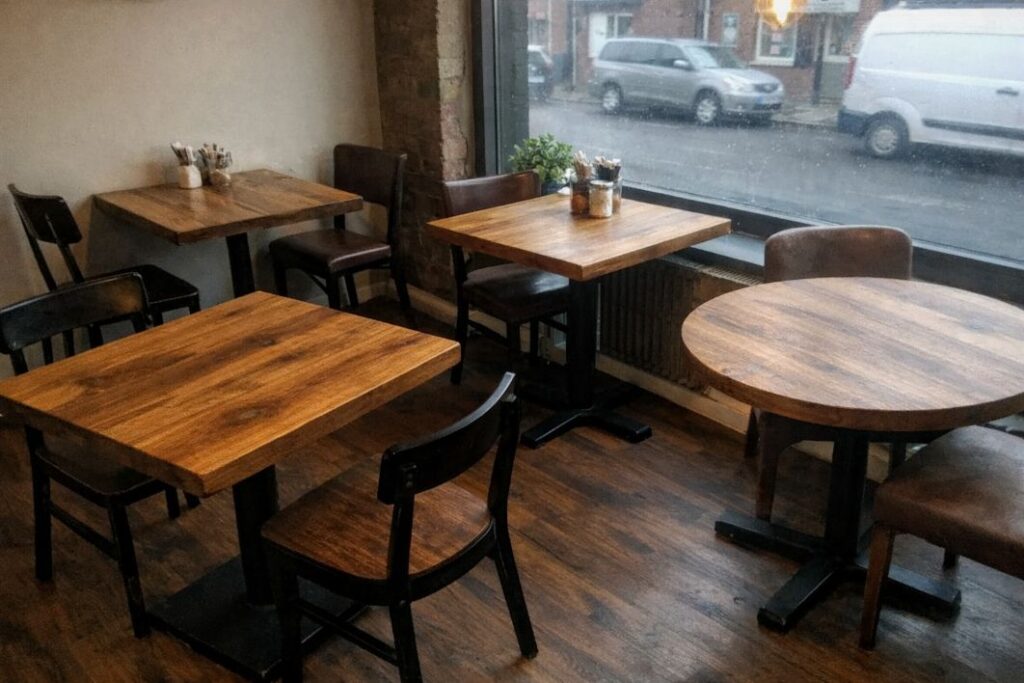
 

Posted on

What makes a table top “contract grade” and do you actually need one?

What makes a table top contract grade and do you actually need one-Tablemaker

What makes a table top “contract grade” and do you actually need one?

What does “contract grade” really mean for a table top, and is it always necessary?

A contract grade table top is generally made and specified for heavier, more frequent use than a standard domestic one. That usually means closer attention to durability, stability, finish performance, maintenance, and suitability for a commercial setting such as a café, office, or hospitality venue. You do not always need one. The right choice depends on how often the surface will be used, how it will be cleaned, what it will sit on, and whether it needs to be repaired over time.

Table of Contents

What Does “Contract Grade” Really Mean for Table Tops?

Picture a dining table in a quiet flat and compare it with a café table used from breakfast through to closing time. Both may look similar on day one, yet the demands placed on them are completely different. That difference is where the phrase “contract grade” starts to matter.

In plain English, contract grade usually refers to furniture intended for commercial use, where wear is higher and expectations around consistency, safety, and performance are tighter. In procurement documents, a contract specification may refer to testing, materials, finish performance, fire compliance in wider furniture categories, or suitability for a particular usage environment. For table tops, the focus is often on durability, stability, cleanability, and compatibility with repeated use.

A simple way to think about it is this:

  • Domestic furniture is generally made for private homes with lighter and less predictable use.
  • Contract furniture is generally specified for workplaces, hospitality furniture, and shared settings where use is frequent and maintenance cycles are planned.
  • “Contract grade” does not mean indestructible. It usually means the item is better suited to a demanding environment.

Industry bodies such as the British Standards Institution and FIRA are often part of this conversation because standards and testing frameworks shape how products are assessed. Even so, the phrase itself can be used loosely in marketing. Some contract furniture suppliers use it carefully, linked to specification and performance. Others use it as a general quality signal, which can blur the line between a genuine contract standard and a vague commercial claim.

That is why the label matters less than the details behind it. A table top either suits its setting or it does not, whether the room is a hotel breakfast area or a family kitchen used all day for meals, homework, and laptop work.

Key Features That Define a Contract Grade Table Top

A genuine contract grade table top is usually defined by how it is built, finished, and expected to age under pressure, not by a badge or a product name.

What to look for

  • Material choice: Solid hardwood and well-made engineered constructions tend to outperform flimsy boards in high-use settings. The right answer depends on budget, weight, maintenance, and the look required.
  • Construction: Stable build methods, sensible grain orientation, and reinforcement where needed all matter. On solid wood tops, straightening bars can help reduce the risk of cupping across the width.
  • Surface finish: A finish for commercial use needs to cope with repeated wiping, spills, and abrasion. Repairability also matters because a finish that can be refreshed may extend the life of the top.
  • Joinery and fixing logic: A strong top still needs an appropriate way to attach to a base. Poor mounting can shorten the life of an otherwise good surface.
  • Long-term serviceability: The best durable table tops are often the ones that can be cleaned, maintained, and refinished without replacing the whole piece.

Solid wood contract tops are often chosen because they can be repaired. A veneered or laminated surface may work well in some commercial use table tops, particularly where consistency and cost control are priorities, but once the surface is badly damaged, repair options can be limited. Hardwood tops, by contrast, can often be sanded and refinished if the construction allows for it.

Construction quality is where many superficial claims fall apart. Full-stave construction, sensible board selection, and reinforcement across the grain all deal with real timber behaviour rather than pretending movement will not happen. In workshop-led production, including the approach used by Tablemaker, straightening bars are part of that logic because they support stability without treating wood as a static material.

Finish choice deserves equal attention. Hardwax oil is often valued on repairable surfaces because local wear can be refreshed more practically than on some film-forming finishes. That does not make every oiled top a contract product, but it does show how maintenance planning and material choice are linked.

In other words, a contract grade top should solve problems before they appear on the surface, whether that problem is wobble on a busy restaurant base, edge wear from constant chair movement, or a patchy finish after repeated cleaning.

Pro Tip: Check your maintenance routines before specifying a finish to ensure surfaces remain presentable with realistic cleaning and repairs.

Pro Tip: Consider the compatibility between your chosen table top and base so fixing points, overhang, and weight are balanced for long-term stability.

When Is Contract Grade Necessary, And When Isn’t It?

The answer sits somewhere between obvious and situational. Some environments clearly need contract specification needs to be met. Others simply need a well-made top suited to daily life.

Take a hospitality venue first. A café or restaurant table may see dozens of users a day, regular cleaning with commercial products, constant movement of crockery, and a higher chance of knocks around the edges. In that setting, high-use surfaces need stronger thinking around finish performance, stability, and ease of maintenance. Commercial offices and shared breakout areas often fall into the same category, especially where furniture is used by many people and maintained on a schedule.

Now compare that with a domestic household where a table is used for dinner in the evening and little else. A full contract standard may be unnecessary there. The owner might value timber character, repairability, or a particular thickness more than heavy-duty commercial performance. Over-specification can add cost and weight without adding much practical value.

A grey area appears in homes that function like shared workspaces. Large families, open-plan kitchens, rented properties, and home offices with long daily use can put a table top under real strain. In these cases, commercial vs domestic table tops stop being a neat split. A domestic buyer may benefit from commercial thinking, especially if the table doubles as a desk, project surface, and dining table across the week.

Workspace designers often face a similar judgement call. A meeting table used a few times a week has different demands from a hot-desk surface in constant use. One needs presence and stability. The other may need tougher maintenance planning and easier future refinishing.

The useful question is not whether contract grade sounds better. The useful question is whether the table top matches the rhythm of its actual life, including cleaning, movement, loading, and the likelihood of repair a few years from now.

Practical Considerations Before Choosing a Contract Grade Table Top

Labels and materials matter, but practical fit decides whether a top works well once it arrives.

Before choosing, it helps to look at the full setup rather than the surface alone. A contract top that does not suit its base, fixings, room layout, or maintenance routine can still become an awkward choice.

  1. Check size and base compatibility. A top needs the right overhang, weight distribution, and fixing points for the base beneath it. This matters even more if you are reusing an existing frame or pedestal.
  2. Think about mounting early. Some tops are supplied undrilled so installers can match them to different bases and hardware. That gives flexibility, but it also means fixing plans should be settled before installation day.
  3. Consider maintenance cycles. A repairable timber top may suit spaces where periodic refinishing is realistic. A lower-maintenance surface may be preferable where upkeep will be minimal or outsourced.
  4. Review lead time against the project schedule. Made-to-order pieces can offer better fit and material quality, but they still need to align with opening dates, office moves, or renovation programmes.
  5. Account for awkward constraints. Radiators, uneven walls, cable access, and unusual base dimensions all affect whether a standard size works or a custom size table top is the better route.

Sizing flexibility can be especially useful for projects that sit between off-the-shelf and fully bespoke. That is one area where a maker such as Tablemaker can be relevant, particularly for tops produced in fine size increments or adapted to suit existing frames.

Furniture installers will usually care about details that buyers sometimes miss, including fixing access, screw length, expansion allowance, and whether the base allows the top to move as timber naturally responds to the room. Maintenance professionals look at the same table from a different angle. They want to know how easy the surface will be to clean, refresh, and keep presentable after years of use.

Planning ahead here is less about perfection and more about avoiding a mismatch between a good top and the way the room actually functions.

Book a Consultation

Speak with an expert about choosing the right table top for your project and ensure you get a solution built to last.

Book a Consultation

The Real-World Value of Contract Grade, Beyond the Label

A table top rarely proves its worth in a showroom. It proves it after months of wiped spills, dragged plates, laptop chargers, sunlight, heating cycles, and the small knocks that come with ordinary use.

That is why contract grade value is best judged through longevity and repair cycles rather than status. Furniture repair specialists often see the same pattern repeatedly. A surface may have sounded impressive on paper, yet the finish cannot be refreshed, the top was poorly matched to its base, or the construction did not suit the room. Another top may have aged more gracefully simply because its specification matched the job.

British Standards and related guidance can support better decisions, but no label replaces careful reading of the details. Specification matters more than terminology. Thickness, substrate, fixing method, finish type, timber stability, and future maintenance all tell you more than a phrase printed in a catalogue.

The most useful way to think about contract vs standard is fit for purpose. Some commercial spaces need a true contract approach because downtime, replacement, and visible wear all carry a cost. Some homes benefit from the same level of thinking because the table works hard every day. Other settings need something simpler, provided the choice is honest about its limits.

A good table top does not need to sound invincible. It needs to wear well, accept maintenance, and remain serviceable as needs change. That is often the difference between a surface that is merely specified and one that still makes sense years later.

Request a Custom Quote

Get a tailored quote for contract grade table tops designed for your commercial or shared space needs.

Request a Quote

Tablemaker

55 High St, London N8 7QB

02083416334

HVQM+58 London
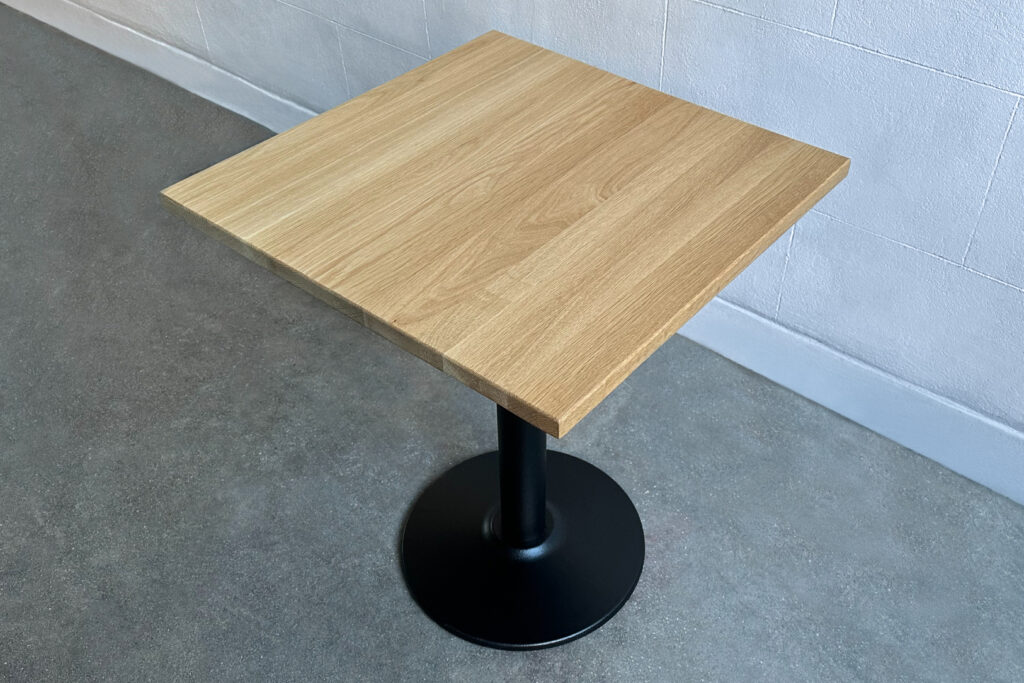
 

Posted on

What to do if your solid wood table has a white ring or heat mark

What to do if your solid wood table has a white ring or heat mark-Tablemaker

What to do if your solid wood table has a white ring or heat mark

What should you do first if a solid wood table has a white ring or heat mark?

Start by identifying whether the mark sits in the finish or has gone into the wood itself. Most pale white rings are caused by moisture or heat trapped in the finish, which means that gentle treatment may improve them. Avoid harsh cleaners, abrasive scrubbing, and improvised internet fixes until you know what kind of mark you are dealing with.

A white ring on a wood table can look alarming, especially if it appears suddenly after a hot mug, a damp glass, or a serving dish has been left in place. In many cases, the timber underneath is still sound. The visible mark often sits in the furniture finish rather than deep in the solid wood.

That distinction matters. A heat mark on a table may appear chalky, cloudy, or pale because heat or moisture has affected the top layer. A darker mark usually suggests a different problem, such as liquid that has moved further in, or a stain that has reacted with the wood.

Here is a simple way to think about the most common surface blemishes:

  • White or cloudy ring: usually moisture or heat trapped in the finish
  • Slightly dull patch: often a change in sheen caused by heat, friction, or cleaning products
  • Dark mark: more likely to involve more detailed staining, water ingress, or a reaction in the wood itself

Solid wood reacts differently from veneered boards because it is a natural material with visible grain, changing moisture levels, and a finish that can often be renewed. A hardwax oil finish, for example, tends to be more repairable than a thick surface coating, although it can still show heat and moisture marks if the conditions are right.

Many people assume these marks are permanent. Some are stubborn, and some do need restoration work, but a surprising number improve with careful treatment and a little patience, especially when the problem has not gone beyond the finish.

Table of Contents

Immediate steps: what not to do

The fastest way to worsen a small table surface stain is to attack it too aggressively.

  • Do not scrub with a scouring pad, stiff brush, or abrasive cream
  • Do not apply bleach, strong household cleaners, or solvent-based products
  • Do not hold a hairdryer or other direct heat source close to the mark
  • Do not keep rubbing with oil or polish in the hope that more product will hide it
  • Do not mix several DIY remedies one after another without stopping to assess the result

Abrasion can strip the finish unevenly. Chemical cleaners can react with oils, lacquers, and polyurethane in ways that are hard to reverse. Direct heat can dry one area too quickly and leave a larger patch than the original ring.

Online advice often skips an important detail, namely that different finishes respond differently. A method that improves one tabletop may damage another. Restraint is usually the most useful first response, particularly if the mark is fresh and confined to a small area.

Assessing the mark: identifying severity and finish type

Before trying to remove a white ring from wood, take a minute to inspect the surface properly in good daylight. Look across the top from an angle as well as from above. A shallow mark often appears milky or dull only in reflected light, whereas more detailed damage may remain obvious from every angle.

A simple assessment can be done in stages:

  1. Check the colour. White or pale marks often suggest trapped moisture or heat in the finish. Brown, black, or grey marks may indicate more detailed staining.
  2. Feel the surface lightly with clean fingertips. If the area feels smooth, the issue may be in the finish alone. If it feels rough, sunken, or raised, the finish may have been disturbed more significantly.
  3. Observe the edges of the mark. Soft, cloudy edges usually point to a surface issue. Sharp outlines can appear where heat or moisture has been concentrated in one spot.
  4. Think about the cause. A hot mug, warm takeaway container, or damp vase gives useful clues. Knowing what sat there often tells you whether you are dealing with heat, moisture, or both.

Finish type affects what you can safely do next. A few broad cues can help:

Hardwax oil usually leaves the wood looking natural and close to the grain, with a low to soft sheen. Local repair is often more straightforward because the finish penetrates rather than forming a thick plastic-like layer on top.

Lacquer or polyurethane often creates a more sealed surface. That finish can resist spills well, but visible heat damage may look more obvious because the affected patch contrasts with the intact coating around it.

If you are unsure, avoid assuming. A table made from solid wood may still have any number of furniture finishes on top. Some workshop-made pieces, including many from Tablemaker, use hardwax oil because it protects the timber while remaining repairable over time.

Home treatment is most suitable when the mark is pale, localised, and clearly superficial. Once the colour turns dark or the finish feels physically damaged, a gentler home approach may not be enough.

Pro Tip: Test any home remedy on a small, inconspicuous area before tackling the main mark to avoid spreading damage.

Pro Tip: Regularly refresh hardwax oil finishes to increase resistance against heat and moisture marks on frequently used tables.

Gentle home remedies for white rings and heat marks

Small white rings and light heat marks often respond best to one careful method at a time. Stop after each attempt and inspect the surface before doing anything else. Rushing from one remedy to the next can turn a minor blemish into a broader repair job.

One commonly used approach is gentle heat through a cloth. Place a clean, dry cotton cloth over the mark, then use a household iron on a low setting with no steam for a few seconds at a time. Lift the cloth, check the result, and repeat only if the mark is improving. The aim is mild heat transfer, not prolonged heating.

Keep the iron moving and never let it sit in one place. If the surface becomes hot to the touch, pause and let it cool fully before reassessing.

Another low-risk option for a faint mark is light buffing with a soft cloth. Sometimes a cloudy patch is less severe than it first appears, especially if it is a change in sheen rather than a true stain. Gentle circular buffing can help you see whether the finish is actually damaged or simply dulled.

For stubborn but still pale rings, some people use a tiny amount of non-gel toothpaste on a soft cloth. The key word is tiny. Rub very lightly over the affected area, then wipe clean and dry the surface. Toothpaste works by very mild abrasion, so it should be treated as a limited test, not a full polishing routine.

Baking soda is sometimes mixed with a drop or two of water to make a mild paste, but caution matters here. Even gentle abrasion can alter the sheen if you overwork one patch. Use the least pressure possible and stop if the area starts to look uneven.

Signs that a remedy is helping include a gradual reduction in cloudiness, softer edges around the ring, or a return of the original sheen. Signs to stop include roughness, increased dullness, a larger pale patch, or any change in colour beyond the original mark. Those details suggest that the finish needs a more controlled repair.

When to seek professional help or restoration

If a mark remains unchanged after careful home treatment, a professional assessment may be the wiser move.

Certain signs point to a problem that goes beyond a simple surface haze:

  • The mark is dark brown, black, or grey rather than white
  • The finish feels cracked, bubbled, sticky, or visibly worn through
  • The affected area is large or sits in a prominent central part of the table
  • Several remedies have already been tried and the surface now looks uneven
  • The table has sentimental, financial, or practical value that makes experimentation a poor trade

Professional wood table repair usually starts with inspection under proper light, followed by a decision about whether the finish can be blended locally or whether the area needs sanding and refinishing. On solid wood, that process is often possible in a way that would be harder on thin veneers or composite boards.

A workshop-led repair may involve gentle surface preparation, colour matching where needed, and a fresh finish coat that suits the original appearance. If the tabletop uses hardwax oil, local refinishing can sometimes be relatively contained. If it has a heavier lacquered finish, the repair may need broader blending so the sheen looks consistent across the top.

For bespoke makers and restorers, including teams such as Tablemaker, the aim is usually practical rather than cosmetic perfection at any cost. A good repair respects the material, the grain, and the way the table is used day to day.

Book a Professional Table Assessment

Arrange an expert evaluation of your solid wood table for tailored repair advice and restoration solutions.

Book Assessment

Preventing future white rings and heat marks

A solid wood table benefits from the same kind of routine care as any hardworking surface in a busy home. The goal is not to keep it untouched. The goal is to reduce avoidable damage that comes from heat, standing moisture, and repeated friction in the same spots.

A few habits make a real difference:

  • Use coasters under cold or hot drinks, especially if condensation is likely
  • Place mats or trivets under serving dishes, mugs, and pans
  • Dry spills promptly instead of letting moisture sit on the finish
  • Rotate decorative objects occasionally so one area does not age differently from the rest
  • Add felt or protective pads under ceramics, vases, and heavy accessories

Maintenance matters as well. Hardwax oil finishes often benefit from occasional refresher care, particularly on dining tables and desks that see daily use. A worn finish is more likely to show marks because moisture and heat meet less resistance at the surface.

One common myth says that solid wood is too delicate for ordinary life. That is not really the issue. Solid wood is durable, but it still responds to its environment, and a little attention keeps that response within manageable limits. A coaster under a mug is a small habit, yet it can spare you from a much larger patch of remedial work later.

Why solid wood tables remain repairable and worth caring for

A white ring or heat mark can make a table feel spoiled in the moment, especially if the top has been looked after for years. Even so, one blemish rarely means the piece is ruined. Solid wood remains one of the few furniture materials that can be refreshed, refinished, and repaired repeatedly across its life.

That is a meaningful difference. A full-stave solid wood top has depth, real grain, and enough substance to tolerate sensible restoration. Surface damage can often be addressed in stages, from light buffing and local refinishing through to more thorough sanding if needed.

By contrast, thinner manufactured surfaces may offer less room for correction once the top layer is compromised. Repairability is part of the value of solid wood, alongside its weight, feel, and the way it ages with use.

Thoughtful care does not preserve a table in a museum state. It keeps the finish working, keeps marks from becoming worse than they need to be, and leaves open the option of repair when everyday life leaves its trace. A pale ring on the surface is often just that, a surface event, and solid wood gives you more ways to respond calmly and effectively.

Request a Quote for Table Restoration

Receive a detailed quote for repairing or refinishing your wood table using professional techniques and quality materials.

Get a Quote

Tablemaker

55 High St, London N8 7QB

02083416334

HVQM+58 London

 

Posted on

How to tell if your dining room can actually fit the table you want

How to tell if your dining room can actually fit the table you want-Tablemaker

How to tell if your dining room can actually fit the table you want

How do you know if a dining room can truly fit your chosen table?

You know by measuring usable space rather than headline room dimensions, then allowing for chairs, movement, doors, radiators and everyday traffic flow. A table that fits on paper can still feel cramped in practice, so the safest approach is to test its footprint in the room before deciding.

Table of Contents

Understanding your dining room’s true dimensions

Measuring a dining room sounds simple, but usable space is rarely the same as the full floor area shown on a plan.

Many UK homes have small irregularities that affect layout more than people expect. Alcoves can narrow one side of the room, skirting boards can change how close furniture sits to a wall, and a radiator behind a chair can remove space that seemed available on paper. Open-plan rooms can be just as awkward, because walkways between the kitchen, garden doors and living area still need to stay clear.

Estate agent measurements can be helpful as a starting point, but they are not enough for furniture planning. Those figures often describe overall room dimensions rather than the area a table can genuinely occupy once obstructions are taken into account.

Common obstacles include:

  • inward-opening doors that need swing space
  • radiators and pipework along the wall
  • bay windows, chimney breasts and alcoves
  • window sills that limit table position
  • uneven walls or corners that are not fully square
  • skirting boards that stop furniture sitting flush

A simple floor plan helps, but walking the room with a tape measure tells you more. Measure wall to wall, then measure again between the points where furniture can actually sit. In older properties especially, the second number is often the one that matters.

Calculating the space needed for table and chairs

A table rarely causes problems when nobody is using it. The trouble starts once chairs are pulled out and people begin moving around.

Picture an ordinary weeknight meal. One person gets up for water, another shifts their chair back, and someone else passes behind them carrying plates. A dining room layout has to work in motion, not just in a showroom-style still image.

Use these checks as a practical guide:

  1. Measure the table size itself, including the widest and longest points.
  2. Add chair depth on each side where seating will go.
  3. Allow extra room for chairs to pull back comfortably.
  4. Leave circulation space if somebody needs to walk behind a seated diner.
  5. Check the room again with doors open and nearby furniture in place.

Bench seating changes the calculation slightly. A bench can tuck under the table more neatly than chairs, which saves some space when it is not in use. Even so, people still need room to sit down and stand up, so a bench does not remove the need for clearance.

Shape matters as well. Rectangular tables usually suit narrower rooms because they follow the line of the space. Round tables soften movement around corners and can work well in squarer rooms, but their footprint sometimes surprises people because the widest point is constant from every angle. A table that seats six in theory can still feel tight if the chair spacing is mean or the legs interrupt where people want to sit.

That is one reason made-to-order sizing can be useful. Workshops such as Tablemaker offer dimensions in finer increments, which means that a modest adjustment in width or length may improve dining comfort without changing the character of the table.

Pro Tip: Take time to live with a taped-out table footprint in your dining room to experience real movement and flow before ordering.

Pro Tip: Consider bench seating or extending tables for flexible use in rooms that serve different purposes during the week.

Testing table sizes before you buy

Mark the table on the floor before you commit to it.

A physical mock-up is often more revealing than any digital planner. Masking tape works well for this, and newspaper or flattened cardboard can help you picture the mass of the top itself. Once the footprint is on the floor, add chairs or dining chairs of a similar size and live with the arrangement for a day or two.

Try this in a simple sequence:

  1. Mark the exact table footprint with masking tape.
  2. Position chairs, stools or spare dining chairs around it.
  3. Walk the normal routes through the room, including to doors and cupboards.
  4. Sit down, stand up and pull chairs back fully.
  5. Leave the outline in place for a few days to see how the room feels during ordinary use.

Some surprises appear immediately. A table that looked fine by width may block a natural path to the garden. A round top may clip the edge of a sideboard. A rectangular table may fit well until the end chairs are in use. Those moments are useful because they happen before money is spent, not after delivery.

Digital room tools can help with rough planning, but they often flatter a layout by presenting it from above and without the mess of daily movement. Tape on the floor is less glamorous, yet it gives a more honest answer.

Factoring in everyday use and special occasions

Most people buy a dining table with two lives in mind. One is the everyday version, where the table serves routine meals, homework, laptops or cups of tea. The other appears at birthdays, Christmas or a crowded Sunday lunch.

Problems usually start when the occasional version dictates everything. A larger table may seat extra guests once or twice a year, but it can dominate the room every other week. If chairs need to stay half tucked in, or if somebody has to edge sideways past the corner each day, the compromise is constant.

Flexible seating often solves this more gracefully. Benches can free up circulation when not in use. Folding chairs can be stored elsewhere and brought out only when needed. An extending table can make sense if the room has enough spare space when opened, plus somewhere sensible to keep extra leaves or chairs. A bespoke maker may also adapt length, width or overhang to suit a room that needs more precision than standard sizes allow.

Daily comfort deserves more weight than occasional capacity. A table that serves four people easily every day is usually the better fit than one that squeezes in six on a regular basis and leaves the room feeling pinched.

Book a Table Sizing Consultation

Get specialist advice on the ideal table size for your dining room and ensure a comfortable fit.

Arrange a Consultation

Common pitfalls and misconceptions about table fit

A few table sizing myths appear again and again, and they tend to lead to the same regrets.

  • Myth: If the table fits within the room dimensions, it fits. Reality: Chairs, movement and obstructions are part of the footprint too.
  • Myth: Open-plan space gives unlimited flexibility. Reality: Walkways still need to remain clear between zones, especially near kitchens and patio doors.
  • Myth: Online planners show exactly how the room will feel. Reality: Screen layouts rarely capture chair pull-out, door swing or the sense of visual bulk.
  • Myth: Any six-seater works the same way. Reality: Leg placement, top shape and width can change how many people sit comfortably.
  • Myth: A table can sit right against a radiator or wall until guests arrive. Reality: Furniture tends to stay where it is placed, and cramped layouts become daily habits.

Visual weight matters too. Solid wood tables often look calmer and more grounded than lighter materials, but they can also feel more substantial in a small dining area. That does not make them unsuitable. It simply means that thickness, leg design and proportion deserve attention alongside raw measurements.

When bespoke sizing makes sense

Sometimes the room is the problem, and sometimes standard sizes are.

An awkward bay, a narrow passage behind chairs, built-in seating, or an existing base you want to keep can all make off-the-shelf dimensions frustratingly close but never quite right. In those cases, bespoke sizing is less about luxury and more about solving a practical puzzle.

Situations where made-to-measure is often worth considering include:

  • unusual room shapes or chimney breast restrictions
  • a need to match an existing table base or frame
  • built-in benches or banquette seating
  • tight widths where a few centimetres make a real difference
  • requirements for a specific thickness or top shape
  • rooms with fixed features such as radiators or shelving

A workshop such as Tablemaker can adjust size, proportion and construction details for spaces that fall between standard options. That might mean trimming width to preserve circulation, refining overhang for better seating, or producing a top to suit a frame you already own. The value lies in resolving the exact fit of the room, not in making the table larger for its own sake.

Repairable materials also matter here. A solid wood top made to suit a difficult space can continue working for years because it can be refinished, adapted or paired with a different base later on.

Rethinking table fit: Why proportion and flow matter more than size

The best dining table is rarely the biggest one you can squeeze in. The better choice is usually the one that leaves the room feeling balanced, usable and easy to move through.

Proportion changes how a space feels long after the excitement of choosing a table has faded. A top that suits the shape of the room, keeps circulation clear and leaves enough air around the chairs will seem more settled from the start. People notice that quality in simple ways. The room feels calmer, meals feel less cramped, and everyday movement stays natural.

Restraint often produces the stronger result. A slightly smaller table with better flow tends to serve a home more faithfully than a larger one chosen for occasional maximum capacity. Once you measure honestly, test the footprint and think about how the room works on an ordinary Tuesday, the right size usually becomes much easier to recognise.

Explore Custom Dining Tables

Browse a curated range of made-to-order table options designed for your unique space and needs.

View Custom Tables

Tablemaker

55 High St, London N8 7QB

02083416334

HVQM+58 London

 

Posted on

What wood should a table top be made from if it’s going to get heavy daily use?

What wood should a table top be made from if it's going to get heavy daily use-Tablemaker

What wood should a table top be made from if it’s going to get heavy daily use?

What makes a wood table top suitable for heavy daily use?

A table top for heavy daily use needs more than an attractive grain or a hard surface. It should cope with frequent contact, spills, knocks, cleaning, and shifting weight, while remaining stable enough to stay flat and repairable enough to recover from wear over time.

Heavy use usually points to hardwoods with good stability, sensible construction, and a finish that can be maintained rather than replaced. The right choice depends on where the table sits, how it is used, and how much visible wear is acceptable.

Table of Contents

Understanding heavy daily use

Heavy daily use sounds straightforward, but it covers very different situations. A kitchen table used for family meals, schoolwork, and grocery bags faces one pattern of wear. A shared office desk has another. A café table in the hospitality sector may see constant wiping, hot cups, dragged chairs, and moving objects from morning to night.

Several settings fall under the same label:

  • Domestic use with constant activity, including children, laptops, plates, and cleaning sprays
  • Shared workspace use with repeated contact, keyboard wear, cable movement, and frequent repositioning of equipment
  • Commercial use with steady turnover, food and drink exposure, and stricter cleaning routines linked to workplace regulations or hospitality guidance

Many people assume heavy use means dramatic damage. In practice, daily wear and tear is often more ordinary than that. Surface wear builds from repeated wiping, mugs placed in the same spot, keys dropped without thinking, and bags or boxes slid across the top. Accidental damage matters too, although routine friction often leaves the clearest long-term mark.

Standards and guidance from bodies such as the British Standards Institution can shape expectations around furniture performance and workplace suitability, but the most useful starting point is still the real pattern of use. A table that sees three careful meals a day has different demands from one that is cleaned dozens of times and used by different people every hour. That distinction matters before any wood species enters the conversation.

Key qualities of a table top for heavy use

Choosing a durable wood for tables starts with the right criteria. Hardness matters, but it is only one part of the picture.

Durability and hardness

The Janka hardness scale is often mentioned in hardwood discussions, and it can be useful as a rough guide to dent resistance. Even so, a harder wood does not automatically make a better heavy-duty table top. Daily performance also depends on grain, thickness, construction, and finish.

A very hard surface may still show scratches. A slightly less hard timber may wear more gracefully and be easier to repair.

Stability

Wood moves with changes in humidity. That movement is normal, but poor stability can lead to cupping, twisting, or gaps if the material is not properly selected and dried. Kiln-drying helps reduce excess moisture before manufacture, which gives the table top a better starting point.

For frequent use, stability is as important as surface toughness. A top that stays flatter in changing conditions usually feels better in service and ages with fewer problems.

Repairability

High-use surfaces benefit from being repairable table surfaces rather than disposable ones. Solid wood can usually be sanded and refinished when wear becomes too obvious, which means that scratches, stains, and minor dents do not always mark the end of the table’s useful life.

That matters more with years of use than on day one. A good table top should be able to recover from living, working, and eating.

Finish and protection

Protective finishes influence how a table copes with moisture, grease, hand oils, and cleaning. Hardwax oil finishes are often chosen because they offer surface protection while remaining easier to refresh than thick film finishes that can chip or peel.

Finish choice also affects the feel of maintenance cycles. Some surfaces hide marks well but are awkward to patch. Others ask for occasional care, yet reward it with simpler refinishing and a more natural repair route.

Pro Tip: Choose a finish that matches your willingness to maintain and periodically refinish the surface, not just the look you prefer on day one.

Pro Tip: Inspect for proper kiln-drying and grain orientation before purchase to reduce future movement and stability issues.

Comparing common woods: pros and cons for heavy use

No single species suits every room or every workload. The best wood for a table top depends on the balance between toughness, stability, appearance, and how willing you are to accept visible character as the surface ages.

  • Oak: A common choice for solid wood surfaces because it combines good hardness, solid stability, and strong repair potential. Solid oak also works well across dining tables, desks, and commercial tops. Its grain is usually visible, which can help mask minor wear, though some people prefer a quieter look.
  • Ash: European ash is tough, practical, and often a little lighter in appearance than oak. Its grain can be lively, and that can either suit a busy room or feel too active depending on taste. Under frequent use, ash generally performs well if the construction is sound.
  • Walnut: American walnut is often chosen for its darker colour and calmer visual tone. It is typically softer than oak or beech, so it may pick up dents more readily in high-traffic table use. Many people still choose it for desks and dining tables because the appearance is distinctive and the surface remains repairable.
  • Maple: Maple can be hard and hard-wearing, with a smoother, finer grain than oak or ash. It often suits cleaner-lined interiors and practical work surfaces. Colour consistency can appeal, although some users find that wear shows more clearly on paler woods.
  • Beech: Beech is a capable hardwood with good hardness and a long history in furniture making. It can work well for frequent use, though movement has to be managed carefully through proper drying and construction.

Softwoods are usually less suitable for a scratch-resistant table top in hard service. Pine and similar timbers can work in lower-impact domestic settings, but they tend to dent and mark more quickly. Some people like that softness and patina. Others find it frustrating within a few months.

Hardness alone can also mislead. A wood that ranks well on paper may still disappoint if the grain is poorly arranged, the boards are badly joined, or the finish is unsuited to food and drink exposure. Workshops such as Tablemaker tend to favour full-stave hardwood construction for that reason, pairing the timber choice with sensible sizing and build decisions instead of relying on species alone.

Timber grading standards and responsible sourcing, including FSC-certified material where relevant, add another layer. They do not guarantee perfect performance, but they can support more consistent quality and traceability.

Construction methods that matter

A table top is only partly defined by species. Build quality often decides whether a stable hardwood stays stable once it is in daily use.

Full-stave, finger-jointed, and veneer

Full-stave solid wood construction uses longer, wider lengths of timber across the top. Many people prefer it for strength, appearance, and future refinishing.

Finger-jointed tops use shorter sections joined together. They can still be serviceable, but the visual rhythm is busier, and quality varies with execution.

Veneered boards place a thin wood layer over a core such as MDF or plywood. They can look neat and stay relatively stable, but deep repairs are limited because the surface layer is thin.

Grain direction

Grain direction affects both appearance and movement. Boards selected and arranged with care tend to behave more predictably over time. Poor grain matching can make movement harder to control, particularly on wider tops exposed to changing room conditions.

Straightening bars and fixings

Straightening bars, whether timber or metal, are fitted across the grain to reduce cupping and support panel stability. They do not stop wood movement altogether, because nothing can do that, but they can help keep a top flatter in service.

Removable fixings matter too. A construction method that allows parts to be adjusted, refinished, or remounted gives the table more useful life, especially if the top is paired with an existing base or a sit-stand frame.

Drying and moisture control

Kiln-dried timber gives the maker a more reliable starting point. If the moisture content is poorly managed before a top is built, movement problems may show up later as the table settles into its room.

British woodworking standards and sound joinery techniques exist for good reason. They reflect the fact that wood is a live material even after manufacture, and daily use tends to expose shortcuts quickly.

A few practical checks can reveal a lot:

  1. Ask whether the top is solid wood, veneer, or another build type.
  2. Look for signs that wood movement has been considered, including grain orientation and straightening support.
  3. Check whether the fixing method allows for seasonal movement and later repair.

That construction logic is often what separates a handsome top that lasts from one that begins to misbehave after a winter of heating and a summer of open windows.

Book a Table Top Consultation

Discuss your needs with our wood specialists and get tailored advice for choosing the right table top.

Arrange a Consultation

Maintenance, repair, and longevity

Years of use expose the true value of a table top. A surface that can be cleaned sensibly, repaired locally, and refinished when needed usually gives better long-term service than one that must be replaced once damage builds up.

Routine care is often simple. Daily cleaning solid wood usually means a soft cloth, a mild cleaner suited to the finish, and restraint with water. British cleaning guidance for interior surfaces generally leans in that direction anyway, because harsh chemicals can damage both the finish and the timber beneath.

Periodic refinishing is different from ordinary cleaning. Once a top shows dull patches, shallow scratches, water marks, or ingrained wear, sanding and re-oiling may restore the surface. Hardwax oil manufacturers often provide maintenance advice for this exact reason, since these finishes are meant to be renewed rather than stripped away completely every time.

Minor damage is rarely the end of the story. A ring mark from a mug, a scuff from a monitor stand, or a light dent from dropped cutlery can often be reduced or removed during surface refinishing. Professional restoration services may be useful for heavier damage, though many small issues are manageable if the table is solid wood and the finish is compatible with touch-ups.

A few habits make a noticeable difference:

  • Wipe spills promptly, especially around joints and edges
  • Avoid aggressive sprays, bleach-based cleaners, and abrasive pads
  • Use suitable protectors under hot dishes, heavy equipment, or objects with rough bases

Neglect causes more trouble than ordinary wear, yet over-maintenance can be just as unhelpful. Constant polishing with unsuitable products or repeated wet cleaning can leave a surface patchy and tired. A long-lasting table top usually benefits from calm, regular care instead of constant intervention.

Repairability also changes how people live with wood. Small marks stop feeling like permanent defects when the surface can be renewed in the future. That shift in mindset often makes solid timber a more practical choice than it first appears.

The bigger picture: rethinking table tops for real-world use

People often search for one perfect answer, but choosing table top wood rarely works that way. The strongest decision usually comes from matching the timber, construction, and finish to the actual pattern of use.

Oak may suit a busy family kitchen because it balances toughness, stability, and repairability. Walnut may still be right for a heavily used desk if appearance matters and a few dents are acceptable. Beech, ash, or maple may fit better in settings where colour, grain, or wear pattern matters as much as hardness. The trade-offs are real, and that is normal.

A useful way to think about the choice is this:

  1. How much contact will the surface see every day?
  2. What kind of damage is most likely, including spills, abrasion, or knocks?
  3. Do you want a top that stays pristine-looking, or one that can age well and be refinished?

Those questions usually lead to a better answer than a simple hardness ranking. Heavy daily use asks for realism, not perfection. The best table top wood is the one that can take ordinary life seriously, remain serviceable through wear, and still make sense years after the first marks appear.

Request a Bespoke Table Quote

Explore your options for a hardwearing, custom-made table designed for daily life or business use.

Request a Quote

Tablemaker

55 High St, London N8 7QB

02083416334

HVQM+58 London
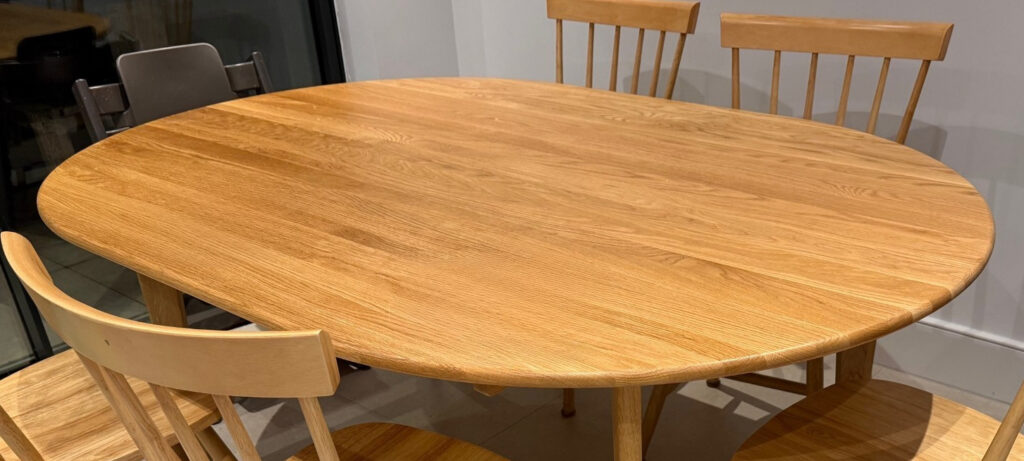
 

Posted on

What to look for when buying an unfinished oak table top in the UK

What to look for when buying an unfinished oak table top in the UK-Tablemaker

What to look for when buying an unfinished oak table top in the UK

What should you check before buying an unfinished oak table top in the UK?

You should check what “unfinished” actually includes, the grade and quality of the oak, the thickness and stability of the top, whether the size suits your base or space, and how much surface preparation and finishing work will still be needed. Delivery, handling, installation, and future maintenance also matter because a solid oak top is heavy, moves naturally with changes in moisture, and is meant to last for years rather than weeks.

Table of Contents

Understanding what “unfinished” really means

A common misunderstanding starts with the word itself. Someone sees “unfinished oak table top” and assumes it is ready to install and use the same day, when in many cases it still needs final sanding, cleaning, oiling, or another protective finish before daily use.

In practice, unfinished, pre-finished, and raw oak are close in meaning but not always identical. Furniture makers, woodworking workshops, and timber suppliers may use these labels slightly differently, so the product description matters more than the headline term.

  • Unfinished oak usually means the top has been made and sanded to a usable level, but no protective finish has been applied.
  • Pre-finished oak usually means oil, lacquer, or another treatment has already been added in the workshop.
  • Raw oak can mean a very lightly prepared surface, or simply oak with no finish at all, so the level of surface prep may vary.

Buyers should also check what is excluded. An unfinished top may not include fixing holes, mounting hardware, edge softening beyond a simple detail, or any stain protection. That affects how soon the top can be fitted and how carefully it must be handled before finishing.

Assessing oak quality and grade

The oak itself matters more than polished wording in a listing. Terms such as prime oak, character oak, and rustic oak can be useful, but they only help if you know what you are looking at.

Prime oak tends to have a cleaner, more even appearance with fewer knots and less visible variation. Character oak usually includes more natural features, including knots, colour shifts, and stronger grain variation. Rustic oak often shows these features more openly, including sapwood and a less uniform surface pattern.

A visual inspection should focus on a few practical points:

  1. Look at the grain direction and whether the boards sit together in a coherent way.
  2. Check for knots, splits, or filler, and decide whether they suit the room and intended use.
  3. Notice any sapwood, which is lighter in colour and may be included by design rather than by accident.
  4. Ask whether the top is solid oak throughout or built with another core beneath the surface.
  5. Read the grading language carefully, because one maker’s “character” may look quite different from another’s.

European and American oak can also differ in tone and grain, though either can work well if properly selected and dried. British Standards and timber grading bodies exist, but product photos and clear workshop information often tell a buyer more than a broad grade label alone.

A dining table for a busy family kitchen may suit character oak beautifully because marks and movement in tone feel natural there, whereas a meeting table or desk might call for a calmer grain pattern and fewer visual interruptions.

Thickness, stability, and structural considerations

Thickness changes both the look and the behaviour of an oak top. A slim profile can feel neat and restrained, but a thicker top often gives more visual weight and may feel better suited to larger spans or heavier bases.

Stability depends on more than thickness alone. Kiln-dried timber, sensible grain selection, and sound construction all matter because solid wood responds to moisture in the air. That movement is normal, but the top should be built in a way that manages it sensibly.

When comparing options, pay attention to these details:

  • Whether the top is made from full-stave solid wood or narrower sections joined together
  • Whether straightening bars are fitted across the underside
  • Whether the timber has been kiln-dried
  • Whether the maker explains how the top should be mounted to allow natural movement
  • Whether the weight suits the base and the room where it will be installed

A very thick top is not automatically better. More mass means more weight, which affects delivery, lifting, and the type of frame underneath. Shorter spans can work well at moderate thicknesses, especially if the construction is thoughtful. By contrast, a wide desk top on a sit-stand frame needs careful attention to rigidity and load.

Some workshops, including Tablemaker, use straightening bars as a practical way to reduce cupping across the width of a top. That kind of detail is worth noticing because it shows the maker has considered how the piece will behave after it leaves the bench, not just how it looks in a photo.

Pro Tip: A final pass with fine sandpaper and a tack cloth before finishing can enhance the smoothness and appearance of your oak table top.

Pro Tip: For tops on adjustable frames, always allow clearance for natural wood movement when securing the fixings to prevent cracking or cupping over time.

Sizing, compatibility, and customisation

Getting the size right is where many buying mistakes begin. A top can be beautifully made and still be wrong for the room, the chairs, or the base already waiting for it.

Start with the base, not the top. Measure the fixing points, the spread of the legs, and the amount of overhang you want on each side. Once those numbers are clear, the overall size becomes much easier to judge.

If you are ordering for an existing frame or pedestal, work through the decision in order:

  1. Measure the maximum length and width the room can take.
  2. Measure the base itself, including fixing plates and support rails.
  3. Decide how much overhang is needed for seating comfort and appearance.
  4. Check whether the top will be drilled or supplied undrilled.
  5. Confirm thickness, because some frames have limits on screw length or load.

Desk tops for sit-stand frames need extra care. The frame manufacturer may state a recommended width, depth, and weight range, and those figures should not be ignored. An undrilled top is often useful because it allows the mounting holes to match the frame precisely.

Awkward spaces also benefit from made-to-measure sizing. Alcoves, bay windows, banquette seating, and hospitality interiors often need dimensions that standard retail furniture does not cover. Tablemaker’s made-to-order approach is relevant here because small size increments can make the difference between a top that merely fits and one that works properly with the space around it.

Surface preparation and finish options

An unfinished oak top is not the same thing as a finished top waiting to be wiped down. Buyers should expect some level of preparation before the surface is ready for daily use, especially if the top will be used for dining, working, or commercial service.

“Ready to finish” usually means the timber has already been machined and sanded to a workshop standard. Even so, the surface may still need a final light sand, dust removal, and careful inspection around edges, corners, and joints before any oil or lacquer goes on.

Common finish options include:

  • Hardwax oil, which gives a natural look, reasonable stain resistance, and a surface that can usually be repaired locally
  • Lacquer, which can provide stronger surface sealing, though repair is often less smooth if damage occurs
  • Wax, which is usually softer and less suited to hard daily wear on a table top
  • Stain followed by a protective topcoat, if a darker or more specific tone is wanted

Finish choice affects both appearance and upkeep. Hardwax oil is popular on oak because it leaves the grain looking like wood rather than plastic, and repairs can be more manageable after scratches or wear. Lacquer may suit some settings well, especially where a more sealed feel is preferred. A purely decorative finish with little protection can leave a buyer doing remedial work sooner than expected.

Edge details need attention too. A square edge, eased edge, chamfer, or radius each changes how the piece feels in daily use, particularly on desks where forearms rest against the front.

Order your made-to-measure oak top

Find the perfect unfinished oak table top tailored to your space with expert advice and precision sizing.

Start your custom order

Practicalities: delivery, handling, and installation

Solid oak is heavy, and unfinished oak needs careful handling from the moment it arrives. Delivery lead times can vary depending on whether the top is made to order, held in stock, or sent by a furniture delivery service rather than a standard parcel network.

Before delivery day, make sure the route into the property is clear. Hallways, stair turns, narrow doorways, and lifts all matter, especially with longer tops. Packaging should protect the surface, but no wrapping can compensate for dragging a heavy slab across a hard floor or leaning it in a damp garage for several days.

Once the top arrives, the sequence matters:

  1. Inspect the package and surface promptly.
  2. Move the top with enough people for its size and weight.
  3. Store it flat and indoors, away from direct heat or damp conditions.
  4. Apply the finish before heavy use if the product is supplied unfinished.
  5. Mount it in a way that allows for timber movement rather than fixing it rigidly across its full width.

Undrilled tops are common because they can suit many different bases, but that leaves the measuring and fixing to the installer. Screws that are too long can break through the surface. Fixings that clamp the timber too tightly can contribute to movement issues later. A calm installation is usually a better one than a fast one.

Longevity, maintenance, and repairability

One of the strongest reasons to choose solid oak is that it can be renewed. Surface wear, light scratches, and small stains do not always mean the top is finished in the everyday sense of the word. In many cases, they mean the surface needs attention, not replacement.

Routine care is fairly simple. Dust should be removed with a soft cloth, spills should be dealt with promptly, and harsh chemical cleaners are best avoided. A finished oak top may need occasional re-oiling or other upkeep depending on the product used and the level of wear.

Damage also tends to be more manageable on solid wood than on thinner surface materials. A cup ring, a patch of dryness near a sunny window, or a cluster of marks near a favourite seat can often be improved with local sanding and refinishing. Heavier wear may call for a full refresh of the surface, which means that long-term use does not automatically lead to long-term disappointment.

Adaptation is part of the appeal as well. A top might start life as a dining table, then move onto a new base years later, or be resized and refinished for another room. That kind of flexibility depends on the original construction and the amount of solid material available to work with, so it is worth thinking beyond the first installation.

Common misconceptions and forward considerations

Unfinished oak does not mean lower quality. It usually means one more stage remains before the top is ready for protected daily use, and that stage may be left open on purpose so the buyer can choose the finish, colour, and final feel.

Another myth is that solid wood can be maintenance-free. Oak is durable and practical, but it is still a natural material. It moves slightly, it records use, and it benefits from sensible care. Many people actually prefer that honesty once they know what to expect.

Future flexibility is another point people often overlook. An unfinished or simply finished top can suit changing needs better than a fully fixed, highly processed surface. A new base, a different room, a fresh finish, or a repair after years of use all become more realistic options when the material itself remains workable.

The best buying decision usually comes from matching the top to the job. A family dining table, a home office desk, a café table top, and a sit-stand workstation all ask for slightly different things from the same species of wood. Once you understand what unfinished oak includes, how the top is built, and what care it will need, the choice becomes far less mysterious and much more practical.

Explore our finishing services

Let us prepare and finish your oak top with professional oiling or lacquering so it is ready to use.

See finishing options

Tablemaker

55 High St, London N8 7QB

02083416334

HVQM+58 London
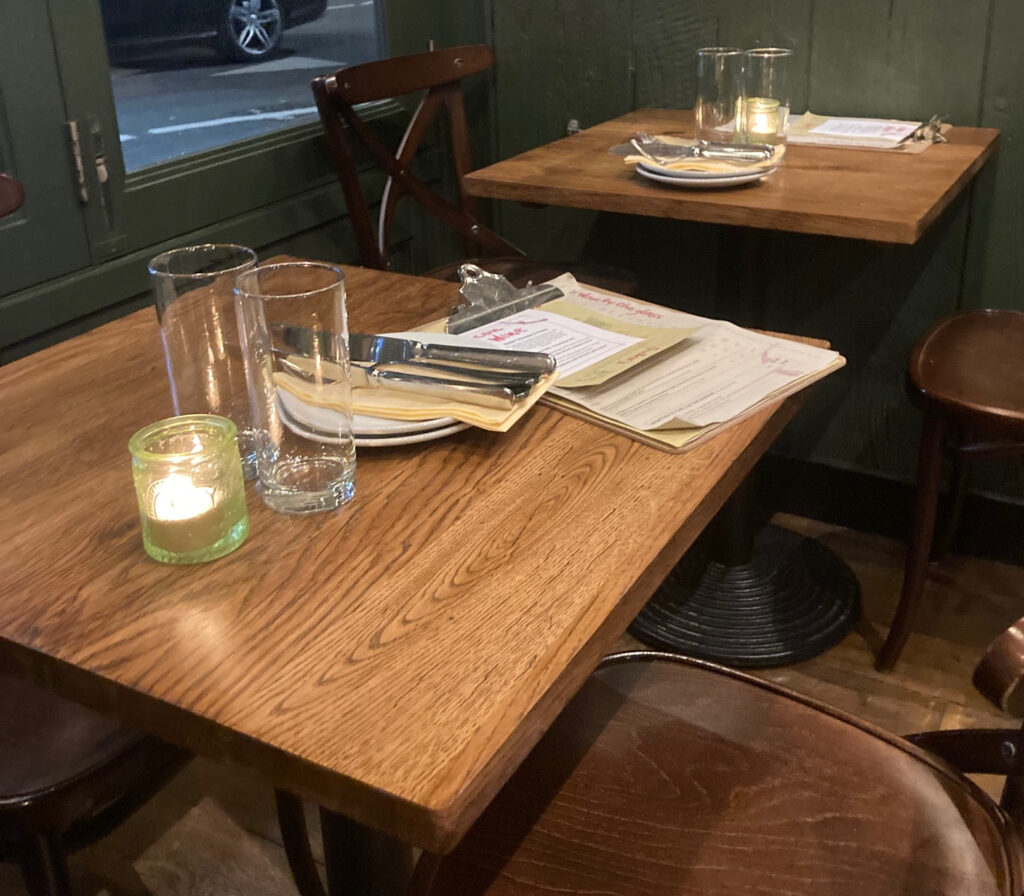
 

Posted on

When does it make more sense to replace a table top than buy a whole new table?

When does it make more sense to replace a table top than buy a whole new table-Tablemaker

When does it make more sense to replace a table top than buy a whole new table?

When is replacing a table top a better option than buying a new table?

Replacing a table top usually makes more sense when the base is still strong, stable and suited to the space, but the surface is worn, damaged or no longer practical. Buying a whole new table tends to be the better route when the base is failing, the proportions no longer work, or the table needs a complete change in function.

A lot of tables wear out unevenly. The top takes the daily knocks, heat marks, spills and scratches, while the base often stays perfectly serviceable for years. That difference matters, because surface wear and structural wear are not the same problem.

Replacing just the top can extend the furniture lifespan, reduce waste and keep a base you already know fits the room. A full replacement makes more sense if the frame is weak, warped or poorly built in the first place. The decision is less about appearance alone and more about what part of the table has actually reached the end of its useful life.

A simple way to think about it is this:

  • Replace the table top if the main issue is surface damage, an unsuitable size, or a material that no longer works for how the table is used.
  • Buy a whole new table if the base is unstable, the joinery is failing, or the table needs a completely different footprint or purpose.

That sounds straightforward, but a table top swap is not always as easy as people expect. Compatibility, fixings, weight and proportions all need checking before a new top goes anywhere near an old base.

Table of Contents

Signs your table base is worth keeping

Imagine a dining table with a scratched and stained top, but legs that still feel solid under load. In that case, the base may well be worth reusing. The best place to start is with stability, not looks.

A base that deserves a second life usually has decent material quality, sound joints and no serious movement when pushed from the side. Small cosmetic marks on the legs matter far less than looseness at the joints or bending under weight.

Use this quick assessment before planning any replacement:

  1. Check for wobble on a flat floor. If the table rocks badly even after simple floor adjustment, the base may have a structural issue.
  2. Look closely at the joints where legs meet rails or supports. Gaps, splitting or repeated loosening suggest more detailed wear.
  3. Test the frame under gentle pressure. A sturdy table base should resist twisting and should not creak excessively.
  4. Inspect for warping, rusted fixings or cracked timber. Any of these can affect how a new top sits and performs.
  5. Consider weight support. A new solid wood top may be heavier than the original, so the base must be able to carry that load safely.

Material matters as well. Solid wood bases, metal frames and well-made pedestal structures often justify reuse if they remain square and stable. Lightweight chipboard frames or thin tubular bases can be much less forgiving, especially if the replacement top is thicker or wider than the old one.

Proportion is easy to miss. A base can be technically sound but visually wrong for a new top if the legs sit too far inward, the stance is too narrow, or the overhang becomes awkward for seating. That tends to show up most clearly on larger dining tops and desk tops where edge support affects day-to-day comfort.

When surface damage or wear is the only issue

Many people reach this decision after living with the same annoyance for months: water rings that never quite disappear, a finish that feels rough, or dents across the area that gets used most. In those cases, the problem may sit entirely in the top.

Some damage is cosmetic and repairable. Some marks go further into the wood or finish, making a full replacement more sensible than repeated patch fixes. The difference usually comes down to depth, spread and whether the material underneath is still sound.

Here is a practical way to judge common problems:

  • Light scratches and mild finish wear often respond well to refinishing.
  • Water marks and surface staining may improve, depending on how deeply the moisture has travelled.
  • Deep gouges, burns and widespread staining can make repair less convincing, especially on heavily used surfaces.
  • Swelling around joints, peeling layers or soft spots point to more serious material failure.

A solid wood top gives more options because it can often be sanded and refinished more than once. Veneered or laminate surfaces have less margin for repair, particularly once the top layer has worn through or chipped at the edges. Hygiene can become part of the issue as well. A top with damaged finish around food prep or regular dining use may be harder to clean properly, even if the base remains sound.

Sometimes replacement is the cleaner answer because it avoids pouring effort into a surface that still will not feel right after repair. A desk with cable damage, cup rings and an uneven finish may still sit on a perfectly good frame, which makes the case for a new top fairly strong.

Pro Tip: Review the structural joinery of your table base before committing to a tabletop replacement, as weak joints may compromise the result.

Pro Tip: Choose a top thickness and finish that complements not only the visual style but also the weight capacity of your existing base.

Matching a new top to an existing base: practical considerations

A new top for an old base can work very well, but only if the fit is planned properly. Measuring the old top alone is rarely enough.

Start with the base itself. Measure the full footprint of the frame, the distance between legs or supports, and the location of any mounting points. Hidden fixings can complicate things, particularly on tables that were made around a factory-drilled top rather than a replaceable one.

The main checks usually fall into four areas.

  1. Size and overhang A top needs enough support without making the table feel cramped or top-heavy. Too much overhang can strain the base and leave seating positions awkward. Too little can make the table look undersized and reduce usability.
  2. Thickness and weight A thicker top changes both appearance and load. That can improve stiffness, but it also places more demand on the frame. Narrow metal legs or ageing timber bases may struggle with a heavier slab.
  3. Fixings and drilling patterns Some bases use simple brackets. Others rely on threaded inserts, corner blocks or specific drilling positions. If a new top is undrilled, the mounting method needs to be planned with care.
  4. Material behaviour Solid wood moves with changes in humidity, which means fixings must allow for seasonal movement across the grain. Workshop practices such as correct grain direction and the use of straightening bars can support stability, but the mounting approach still has to suit the base.

Custom sizing becomes especially useful when the frame is unusual. Tablemaker, for example, produces tops for existing bases and sit-stand frames where standard widths or pre-drilled patterns would create problems. That sort of made-to-measure approach is less about novelty and more about getting the proportions, support and installation details right.

One overlooked issue is edge profile. A chunky square-edged top can overwhelm a delicate base, whereas a thinner visual profile may sit more comfortably with older legs or finer metalwork. The table needs to work as a whole, not just as a set of matching measurements.

Cost, sustainability and longevity: the case for table top replacement

Cost is one of the first things people weigh up, and rightly so. Replacing a top can be less expensive than buying a complete table, but that depends on the condition of the base, the material of the new top and any fitting work required.

The financial case is strongest when a sound base already exists and the new top solves the main problem in one step. A poorly made base can turn a supposedly economical swap into false economy, especially if it fails soon afterwards.

From a sustainability point of view, reuse has an obvious appeal. Keeping a functional base in service means fewer materials are discarded and fewer components need to be manufactured from scratch. That does not make every replacement automatically sensible, but it does shift attention onto repairability and furniture lifespan.

Solid wood supports that long view particularly well. A well-made top can be refinished, adapted and maintained over time in a way that many composite surfaces cannot. If the base and top are treated as separate parts with different life spans, furniture starts to look less like a one-off purchase and more like something that can be adjusted as needs change.

Effort matters too. Replacing a top is usually worthwhile when it produces a table that is easier to live with for years, not just one that looks better for a month.

Get a Custom Table Top Quote

Discover how a made-to-measure table top can transform your existing base. Share your requirements for a tailored quote.

Request a Quote

When buying a whole new table makes more sense

Sometimes the answer is simple: the whole table is done. If the base is unstable, damaged or fundamentally the wrong shape for the room, replacing only the top will not fix the real problem.

Several situations point clearly to a full table replacement:

  • The base wobbles badly because joints have failed or materials have weakened.
  • The frame is too small, too narrow or too lightly built for the top you would need.
  • Both the top and base show heavy wear, including splits, bending or repeated repair failures.
  • The table needs a different function entirely, such as moving from occasional use to daily dining or home working.
  • The style mismatch is too strong, with a new top likely to look awkward on the old frame.

Safety comes into play here. A top-heavy dining table, an unstable pedestal base or a frame with damaged fasteners can all become frustrating at best and unsafe at worst. In those cases, a partial fix often delays the inevitable.

Changing needs can also push the decision. A household that now needs more seating, better leg room or a desk-height surface may be asking more than the old base can reasonably provide. At that point, a complete table replacement is usually the more coherent answer.

The role of bespoke workshops in table top replacement

Off-the-shelf replacements work best when the base follows standard sizes and fixings. Many older tables do not. Some have unusual leg positions, inherited bases, metal frames from another maker, or dimensions that sit awkwardly between standard options.

That is where a specialist workshop can be useful. Instead of forcing the base to fit a generic top, the top is made around the actual requirements of the table.

A bespoke approach can help with:

  • exact sizing for awkward rooms or non-standard bases
  • suitable thickness for the span and support pattern
  • timber choice based on use, appearance and maintenance
  • undrilled or custom-drilled tops for particular mounting hardware
  • practical details such as cable access, overhang and edge shape

Good workshop input also helps with the parts readers often underestimate, including how wood movement affects fixing positions or how a heavy top changes the feel of a base. Traditional carpentry standards are less about decorative detail here and more about making sure the finished table behaves properly in everyday use.

For a valuable base, a family piece, or a commercial setting where dimensions need to be exact, that problem-solving role can matter as much as the top itself.

Rethinking furniture longevity: beyond one-off purchases

A table does not have to be treated as a sealed object that succeeds or fails all at once. In many cases, it makes more sense to see it as a set of parts with different life spans, different maintenance needs and different possibilities for repair.

That shift in mindset changes the replacement question. Instead of asking whether the table looks tired, it becomes more useful to ask which part has stopped doing its job. A worn surface may call for a new top. A failing structure may call for a full replacement. Either way, the decision becomes clearer when furniture is judged by function, repairability and long-term use.

Solid wood plays a distinct role in that way of thinking because it can be maintained, refinished and adapted over time. A table that fits well, works hard and can be renewed when needed is often the one that stays in service longest. Seen that way, replacing a top is not a compromise. It is often a practical sign that the rest of the table still deserves its place.

Book an Expert Consultation

Unsure if your table is worth refurbishing? Arrange a personal consultation to get practical advice from our specialists.

Book Now

Tablemaker

55 High St, London N8 7QB

02083416334

HVQM+58 London

 

Posted on

Can You Make an Extra-Long Oak Table Top in the UK? What Changes in the Build

Can You Make an Extra-Long Oak Table Top in the UK What Changes in the Build-Tablemaker

Can You Make an Extra-Long Oak Table Top in the UK? What Changes in the Build

What qualifies as an “extra-long” oak table top?

In the UK, an oak table top is considered “extra-long” when it exceeds 240cm in length. At this point, the build, mounting and delivery all require different considerations from those of standard sizes. Whether for home use or commercial settings, anything approaching or surpassing 250cm typically moves into the custom category.

This matters because the physical demands of a longer surface affect more than just how it looks. Weight increases significantly, grain behaviour becomes more noticeable, and installation logistics become harder to ignore.

Common extra-long use cases

Domestic settings

  • A dining table intended to seat 10 to 12 people, which usually calls for at least 260cm
  • A large kitchen island or breakfast table spanning the length of an open-plan room
  • A shared desk or work surface across the width of a bay window or alcove

Commercial and workplace settings

  • Conference tables for 8 or more users, starting around 300cm
  • Workbenches or display units for collaborative or public-facing environments
  • Café or restaurant communal seating that must bridge long uninterrupted spaces

Attention to room proportions and the base configuration becomes critical beyond these lengths. A table top that is too long for its frame may flex or twist over time, regardless of the strength of the wood.

Table of Contents

How solid oak behaves at larger sizes

Solid oak is one of the best-suited materials for large-scale table tops, but it behaves differently once you start stretching dimensions beyond common lengths. The challenges are natural rather than structural, and good design allows them to be accounted for rather than avoided.

What changes with scale

  • Movement across the grain: Oak naturally shifts with temperature and humidity, growing in summer and contracting in winter. This becomes more noticeable as surface area increases.
  • Weight: A typical 3-metre solid oak top is extremely heavy, often requiring two or more people just to reposition it safely.
  • Flex and cupping: Left unsupported, wide planks may bow slightly or lift at the edges. Even kiln-dried timber will try to move if not restrained.

These behaviours are not flaws. They are simply how wood works. A well-prepared workshop selects staves with stable grain patterns and fits straightening bars across the underside to keep the surface true over time.

Joinery and construction changes for extra-long builds

As oak tops get longer, so too must the effort to keep them stable, flat and easily maintainable. This affects the way they are built from the start.

Key adjustments in construction

  1. Straightening bars: Across-grain movement is managed using wooden or metal bars fixed to the underside. These remain removable, which allows for adjustment if conditions or mounting methods change.
  2. Full-stave boards: Where feasible, long single-grain staves are used to improve both performance and appearance. This approach avoids weak join lines often found in jointed or fingerboard constructions.
  3. Over-length reinforcement: Heavier tops may require internal braces or joinery solutions concealed within the thickness of the slab, especially at widths over 90cm.
  4. Concealed fixings: Underside fittings allow some movement without detaching from the base. A rigid mount can lead to stress cracks over time if the top cannot breathe.

Each of these methods is driven by function. They are not decorative, and they collectively extend the useful life of the furniture by decades.

Pro Tip: For easier delivery, consider designing split-top tables that reassemble seamlessly on site.

Pro Tip: If planning near walls or alcoves, calculate clearance for cleaning and re-oiling access.

Mounting and base compatibility considerations

As the length of a table top increases, so does the importance of matching it with an appropriate base. A weak or mismatched frame undermines the benefit of a well-made top.

What to consider before mounting

  • Span support: For anything over 220cm, support should come from more than just two end legs. Intermediate brackets or legs are often required, depending on weight and use.
  • Sit-stand frame compatibility: Most electric sit-stand frames are designed for single-person desks under 180cm. For larger tops, dual-motor or triple-leg models should be considered.
  • Base rigidity: Longer tops amplify small flexes. Metal frames and commercial-grade legs should be properly anchored and levelled to prevent minor leaning or twisting.

Adapting the mounting points to suit the top, rather than forcing the top onto a standard base, is important. A bespoke approach is often the simplest way to avoid retrofitting or instability.

Transport, access and installation challenges

An extra-long oak table top often becomes more challenging to deliver and install than to build. In many UK homes and offices, physical access is the limiting factor.

Common access barriers and solutions

  • Stairwells and corners: Long pieces may not make the turn on narrow or winding stairs.
  • Door frames and lifts: Full-length tops above 260cm often require ground-floor access or outdoor lift hoists.
  • Team size: A three-metre oak top routinely weighs over 80kg, requiring two or more experienced hands to handle.
  • Modular builds: For awkward sites, a split-top design may be introduced, allowing the top to be reassembled smoothly on location.

Thinking through access only after production increases the risk of return trips or redesigns. A good workshop will talk through delivery and room entry points before fabrication starts.

Request a Custom Oak Table Quote

Let us know your exact measurements, finish preferences and timeline. We’ll provide a tailored quote to get your build underway.

Get a Quote

Finish, maintenance and longevity at scale

An extra-long oak top brings extra surface to protect and maintain. Fortunately, solid wood is uniquely forgiving in this regard. The right finish allows for straightforward upkeep, even on expansive surfaces.

What to expect from a good finish

  • Hardwax oil: This breathable coating sinks into the wood, offering strong resistance to liquids while allowing small blemishes to be spot-repaired without stripping the entire surface.
  • Maintenance access: Very long tops, especially in commercial or benching scenarios, should be designed with cleaning access in mind. Overhangs and tight wall fits can create dust traps.
  • Consistency of sheen: On larger surfaces, light reflection can vary subtly if the oil is not applied evenly. An experienced hand helps avoid patching or streaks.

One of the main advantages of solid oak is its capacity for renewal. Surface wear does not mean the end of a table’s service. Re-oiling and light sanding, even after several years, can restore it close to new.

When a bespoke workshop makes the difference

Most mass-market suppliers do not offer extra-long table tops for one simple reason: they fall outside the scale of standard packaging and production. If you need a surface over 240cm, with precise mounting or room-fit requirements, a more flexible approach becomes necessary.

This is where a bespoke workshop can quietly solve problems that standard providers cannot.

Workshop advantages for extra-long builds

  • Sizing in precise increments: Some workshops, including Tablemaker, offer lengths in 1cm steps rather than fixed sizes, which makes a significant difference for tight wall-to-wall fits.
  • Base and access adaptation: From awkward radiators to existing metal frames, custom layouts are handled as part of the planning, not treated as exceptions.
  • Material control: Grain direction, colour matching and stave layout are decided in-house, allowing the maker to build with longevity in mind.
  • Fast, not rushed: While most custom pieces take months, a UK-based workshop like Tablemaker can often build and deliver within two to three weeks due to their made-to-order structure.

An extra-long oak top is not simply a larger table. It is a different build, with different physics, mounting, delivery and lifespan expectations. Choosing a workshop-led approach keeps all of those aspects coherent, and the result appropriately proportioned, stable and ready for use.

Visit Our Workshop in Person

See materials up close and meet the makers. Book an appointment to discuss your extra-long table project directly.

Book a Visit

Tablemaker

55 High St, London N8 7QB

02083416334

HVQM+58 London

 

Posted on

Custom Table Top With a Cut-Out (Pillar / Radiator / Corner) UK: What’s Possible

Custom Table Top With a Cut-Out (Pillar Radiator Corner) UK What’s Possible-Tablemaker

Custom Table Top With a Cut-Out (Pillar / Radiator / Corner) UK: What’s Possible

What kinds of cut-outs can a UK workshop make for tables and desks?

UK workshops can create accurate cut-outs in solid wood table and desk tops to accommodate pillars, radiators, boxed-in corners and other fixed features. These are usually made as L-shapes, U-shapes or notches, depending on the obstacle, and are planned to preserve stability and function while fitting the shape of the room.

Table of Contents

Why Cut-Outs Are Often Needed in UK Homes

Many UK homes, especially older properties or converted spaces, feature internal elements that interfere with standard rectangular furniture. These can make off-the-shelf tables difficult or impossible to position without leaving awkward gaps or blocking heat.

Common obstacles include:

  • Radiators mounted low on walls, especially under windows
  • Boxed-in pipework at floor level
  • Fixed pillars in open-plan spaces
  • Irregular alcoves with skirting boards or sills
  • Wall protrusions or sloping bulkheads
  • Cable management requirements near sockets or ports

In these cases, a purpose-made cut-out can be more effective than resizing the whole table. Instead of reducing usable surface area, a cut-out allows the top to sit flush in its intended position while working around the obstruction.

Some cut-outs are mostly visual, reducing the footprint without heavily affecting strength. Others must accommodate heat, moisture or movement. Both types can be handled with the right brief and material approach.

Types of Cut-Outs That Can Be Made

Not all cut-outs are equal in shape or challenge. The type chosen depends on the feature being worked around and how close it sits to the table’s edge.

Pillar Cut-Outs Typically U-shaped, these allow a table or desk to wrap around a structural column or post. They require careful planning, as the wood is being removed from the middle third of an edge, which can affect strength.

Radiator Notch Usually a shallow L-shape or stepped corner removal, this provides clearance for lower wall-mounted radiators. Position and depth depend on the radiator’s height and how far it projects into the room.

Corner Cut-Outs Often shaped like a single L, these allow the rear corner of a desk or table to nest into boxed-in pipework, sockets or tiled risers. This is one of the simpler types and frequently used for wall-mounted desks.

Wall Irregularities or Boxed Skirting Some homes have decorative skirting or boxed wiring at unusual heights. A shallow rebate or partial notch at the rear edge can accommodate this without compromising the overall shape.

Cable Access Cut-Outs Usually circular or semi-circular, these work as feed points for wires behind or through the top surface. They are technically straightforward but still need to be placed away from major load paths.

Each type varies in how visible it appears in daily use. Some cut-outs are tucked against walls and barely noticed. Others, like pillar recesses on central edges, become a deliberate part of the design profile and should be finished accordingly.

Pro Tip: When planning a pillar cut-out, confirm that it does not interrupt a support bar or joinery feature underneath.

Pro Tip: Always allow for a 3 to 5mm clearance gap around obstacles to prevent fit issues due to seasonal wood movement.

Materials and Structural Considerations

Cutting into a table top is not just a surface alteration. It changes the way the material behaves, which is especially relevant in solid wood.

Solid oak and other hardwoods used by workshops like Tablemaker are chosen for their strength and repairability. Unlike veneered boards or MDF, solid wood resists small knocks and can be refinished over time. However, it also moves across its grain with seasonal humidity, meaning structural planning is important.

Key construction factors include:

  • Grain Direction: Cut-outs that interrupt the grain risk creating tension points, so careful orientation is important.
  • Straightening Bars: These are often fitted across the underside to stabilise wider surfaces. When cut-outs are added, bar positions may be adjusted or supplemented.
  • Kiln Drying and Joinery Method: Only properly seasoned timber should be used, as fresh or unstable wood is more prone to cupping near cut edges.

A well-executed cut-out, when reinforced and finished correctly, should not significantly reduce stability. However, some designs may require reshaping or rethinking to maintain strength and lifespan.

Measuring and Planning for a Cut-Out

Precision is important for a successful result. A small measurement error can lead to poor fitting, gapping or unintentional pressure against walls, pipes or radiators.

  1. Measure in Millimetres Start with a tape measure suitable for interiors. Measure from fixed room elements like walls or floor skirting, not interior features that might move. Digital sketches or paper templates can help show proportions.
  2. Account for Skirting and Trims Always include the full depth of pipe boxing or skirting when marking dimensions. A 10mm oversight here can affect flush wall fitting.
  3. Allow Clearance Gaps Cut-outs should not press tightly against obstacles. Leave 3 to 5mm where the table meets fixed surfaces, to allow for minor shifts and air circulation.
  4. Flag Non-Square Walls If a wall runs at a slight angle or bulge, mention it. Photographs or simple drawings can avoid misinterpretation.
  5. Use Templates When Practical A cardboard or MDF template laid against the obstacle helps a workshop transfer shapes accurately. This is especially useful for complex radiator or pillar cut-outs.

Providing clear, annotated measurements gives the workshop confidence to produce a precise result. Mention preferred orientation, positioning in the room or any visual preferences that matter.

Get a Quotation for Your Custom Table

Send us your measurements and photos for a no-obligation quote tailored to your space and cut-out needs.

Request a Quote

How Custom Orders Are Handled in UK Workshops

Once a clear brief is supplied, UK furniture workshops follow a structured process.

  1. Initial Enquiry Send measurements, photos and any sketches. Outline the obstacle and its position relative to the table’s edges.
  2. Quotation and Confirmation The workshop will respond with a proposal. This includes estimated cost, design notes and any potential limitations, followed by a formal order review.
  3. Production Drawings (if required) For more complex designs, workshops may issue a drawing for approval before cutting.
  4. Manufacturing In made-to-order settings like Tablemaker’s, most tables and desk tops are produced on-site within two to three weeks. Timelines are clearly confirmed.
  5. Delivery or Collection Once complete, pieces are dispatched, often with the cut-out already shaped and finished. If fitting tolerance is slim, it may be advisable to collect and test-fit before final edge finishing.

If the room layout changes after ordering, for example, a radiator is moved or walls replastered, inform the workshop immediately. Minor mid-process adjustments can sometimes be accommodated.

Limitations and Trade-Offs to Be Aware Of

Although custom cut-outs offer flexibility, not every shape or location is suitable. Some configurations affect structural integrity or visual outcome more than expected.

Common limitations include:

  • Minimum Distance from Table Edge: Cut-outs too close to corners risk splintering or weakening the top.
  • Interrupting Load Paths: A deep cut-out positioned centrally along an edge can compromise strength.
  • Asymmetrical Appearance: Some cut-outs may feel visually unbalanced unless mirrored or planned within a broader design.
  • Support Bar Obstruction: If a cut-out interrupts internal reinforcing bars, stability may suffer unless re-engineered.

In many cases, repositioning the frame or base is a better solution. For standing desks, notching the metal frame rather than the wood top sometimes preserves strength more effectively. A good workshop will raise these options and explain the trade-offs clearly.

Finishing, Maintenance and Long-Term Use

The presence of a cut-out changes how a table or desk is finished and maintained, but it does not require specialist care.

Finishing At workshops like Tablemaker, cut edges are sanded smooth and finished with the same hardwax oil as the rest of the surface. This seals the timber and protects against minor spills or dust ingress. Any surfaces occasionally exposed to heat, such as those near radiators, are treated cautiously to prevent finish failure.

Care and Cleaning Cut-outs often sit against walls or other objects, which can make cleaning access slightly tighter. A soft brush or cloth corner usually suffices. Spills near cut edges should be wiped promptly, as standing moisture still affects sealed timber over prolonged periods.

Long-Term Movement and Refinishing Seasonal movement around cut edges is normal. If a cut-out edge becomes slightly uneven over time, it can often be lightly re-sanded and re-oiled. Full refinishing is also possible, allowing the furniture to adapt if the room layout changes in future.

A well-made cut-out becomes just one more part of a practical, long-life piece of furniture. With the right planning, it does not compromise performance, and may be the single detail that makes the table work in your space.

Talk to a Workshop Specialist

Speak with an expert about materials, cut-out shapes and reinforcing options for your custom table.

Book a Consultation

Tablemaker

55 High St, London N8 7QB

02083416334

HVQM+58 London