When you buy a piece of furniture from Tablemaker, the finish is a vital part of the final look. The colour and protective coating affect how the wood appears, how it feels to the touch, and how well it stands up to everyday use.
In our workshop we generally favour finishes that protect the wood while still allowing its natural character to remain visible. Below is an overview of the finishes we most commonly use and the options available.
Contents of this Guide
Hardwax oil – our standard finish
Water-based varnish
Oil-based varnish, polyurethane and lacquers
Painted furniture
Stains and dyes
Oils (e.g. Danish, tung, linseed)
Wax
Hardwax oil – our standard finish
Our standard finish for tables, desks and most other furniture is hardwax oil.
Hardwax oil is a modern wood finish made from natural oils and waxes. Unlike varnish, which forms a layer on top of the wood, hardwax oil partly soaks into the timber and is absorbed into the pores. This strengthens the surface fibres while leaving the grain visible and natural looking. The result is a durable finish that still feels like real wood rather than a plastic-like coating.
All of the hardwax oils we use leave a satin sheen — not completely matt but also not glossy.
We typically offer three versions of this finish.
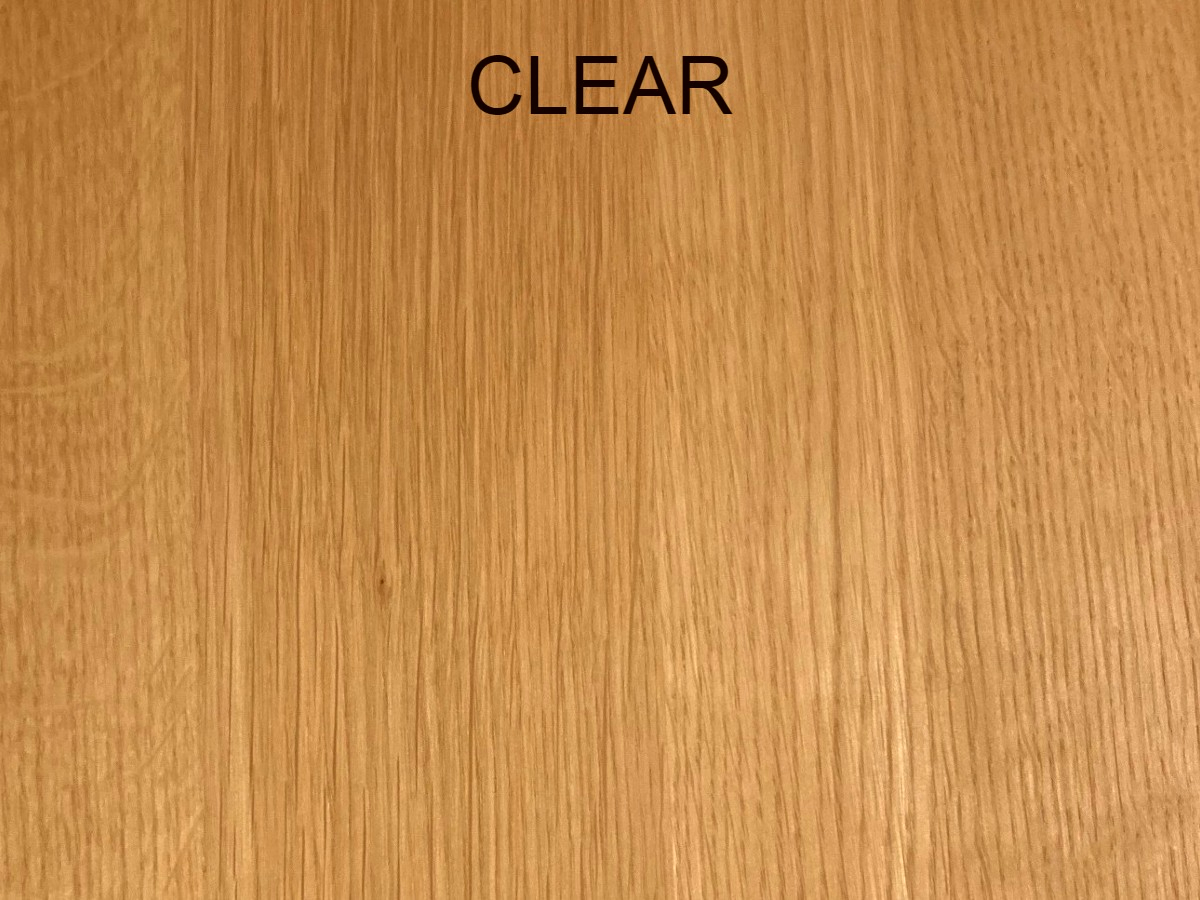
Clear hardwax oil
Although described as clear, this finish does slightly enrich the colour of raw wood. The effect varies depending on the species of timber.
On lighter woods such as oak, ash or pine it often creates a slightly warmer tone. Some people describe the effect as giving the wood a subtle honey or golden tint. It enhances the natural grain very nicely, but it will change the appearance of bare timber slightly, so it is not ideal if you are trying to achieve a very pale “white oak” or limed look.
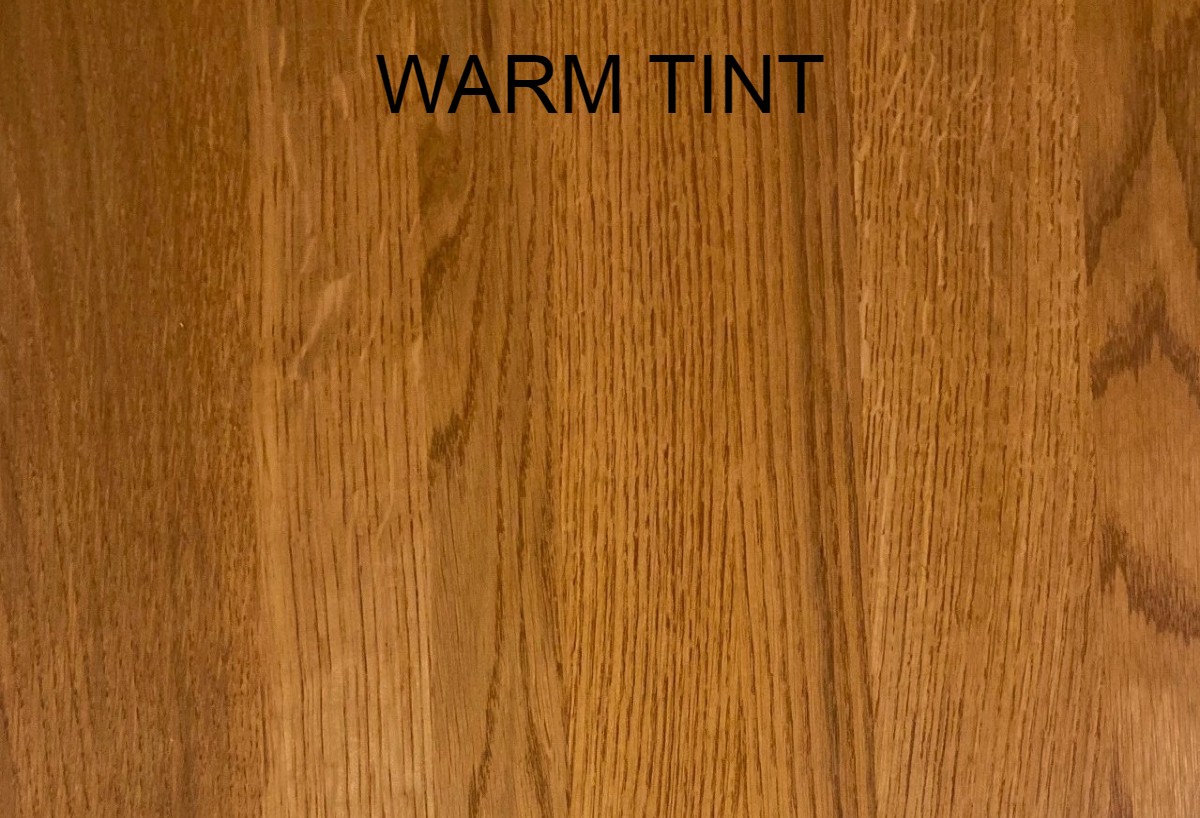
Warm hardwax oil
This tinted oil adds a gentle orange-brown tone to the wood.
It is a popular option for customers who like a slightly mid-century modern feel, as many vintage pieces from that period used timbers with warmer, reddish hues. The tint remains fairly light, so the grain is still clearly visible.
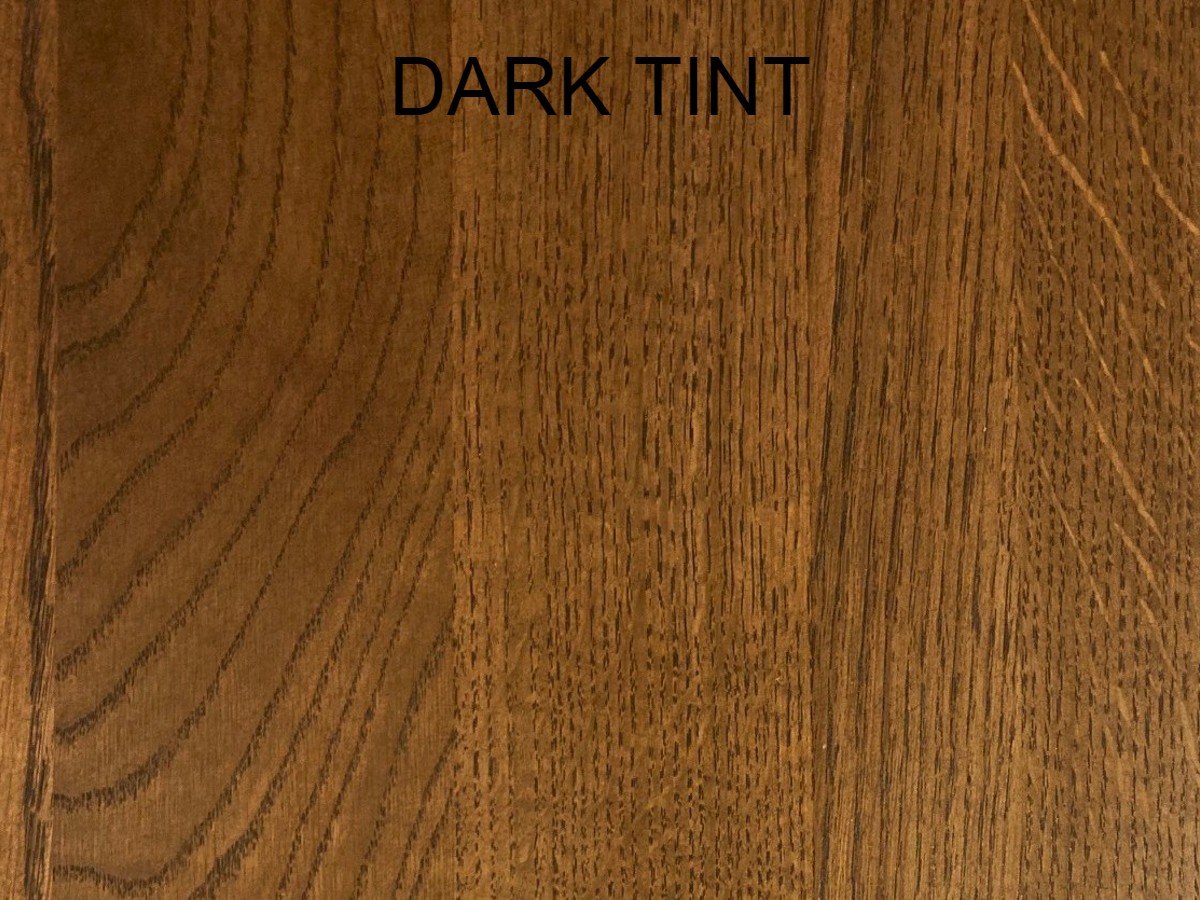
Dark hardwax oil
Our “dark” hardwax oil provides a mid-brown tone. The name mainly reflects how it compares to the clear and warm options rather than suggesting a very dark finish.
It deepens the colour of the wood while still allowing the grain pattern to remain prominent.
Light hardwax oil
This option will give the closest look to unfinished (bare) oak. It does this by lightly tinting the wood, whereas even clear oil or varnish will result in the material being slightly darkened, often with a slight honey-coloured effect.
This sort of tint is sometimes requested by those looking for a very light and airy Scandinavian look to their interiors.
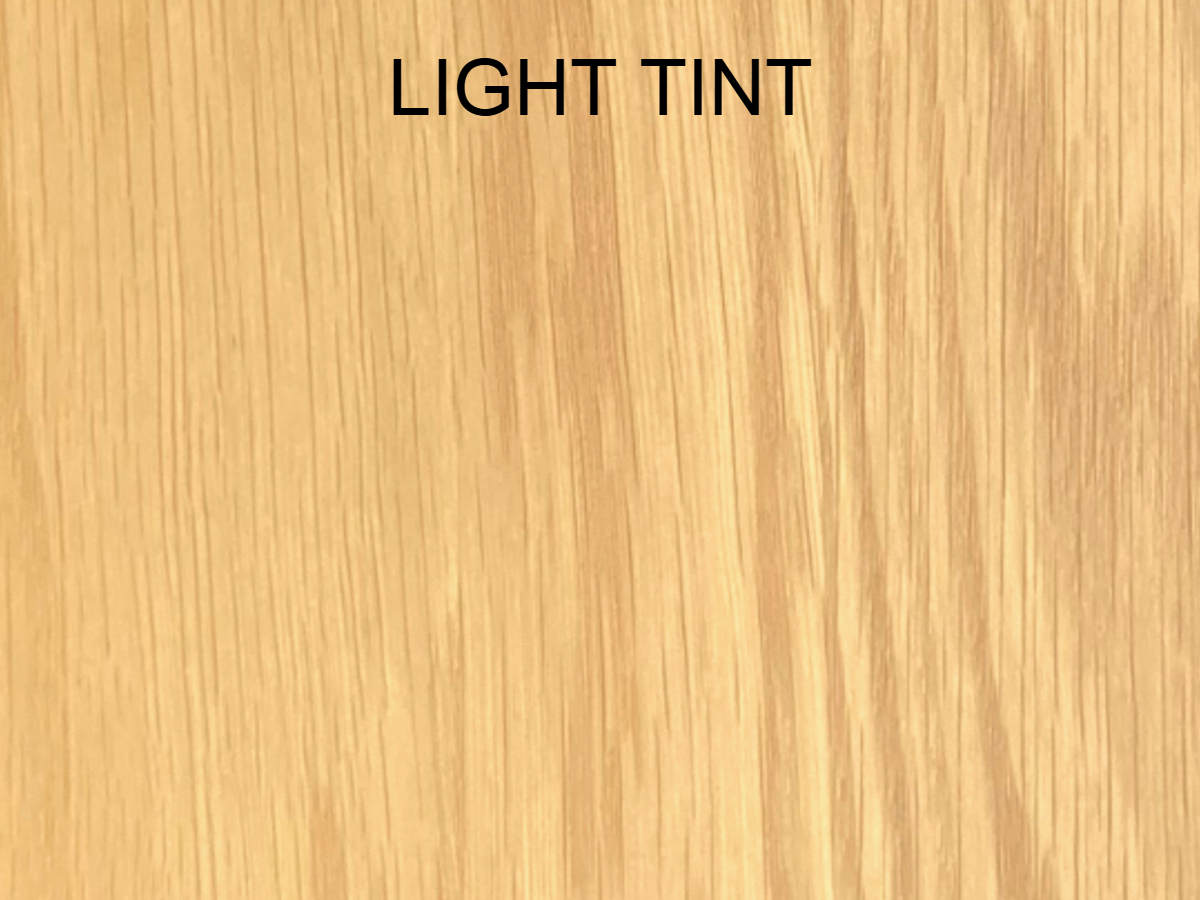
These four finishes are the standard options for our tables and desks. The same brand of hardwax oil is also available in a wider range of tints. If you are looking for something more specific we can often supply additional samples or direct you to a retailer so you can explore the full range.
Please note: we have made every effort to ensure the images on this website are an accurate representation of how the wood looks ‘in person’ but colours can appear quite different from screen-to-screen.
Customers who want to have the best possible idea of how a colour would look on a piece of furniture before ordering are advised to buy a solid oak sample piece in either 24mm or 30mm thickness.
Water-based varnish
Varnish works differently from hardwax oil. Instead of being absorbed into the wood fibres, it forms a protective layer on the surface.
We sometimes use a water-based varnish for particular projects. One of its advantages is the speed at which it dries. Multiple coats can often be applied in a single day, whereas hardwax oil usually requires much longer drying times between coats.
In some cases customers request varnish because they want a finish that more closely matches existing furniture they already own.
Oil-based varnish, polyurethane and lacquers
We generally avoid oil-based varnishes, polyurethanes and similar lacquer finishes.
These products often require long drying times and are usually best applied in factory-style environments with specialised spray equipment and controlled drying rooms. That type of process does not suit the scale of our small handmade workshop.
Another drawback is that these finishes can be difficult to repair if they become chipped or scratched. In many cases the only way to correct damage is to sand back a large area and refinish it completely. They can also become noticeably yellow over time if exposed to strong UV light.
Painted furniture
Customers sometimes ask whether we make painted tables.
We can certainly paint table legs and frames, but we do not paint the tops of surfaces that will receive regular use such as dining tables, desks or coffee tables.
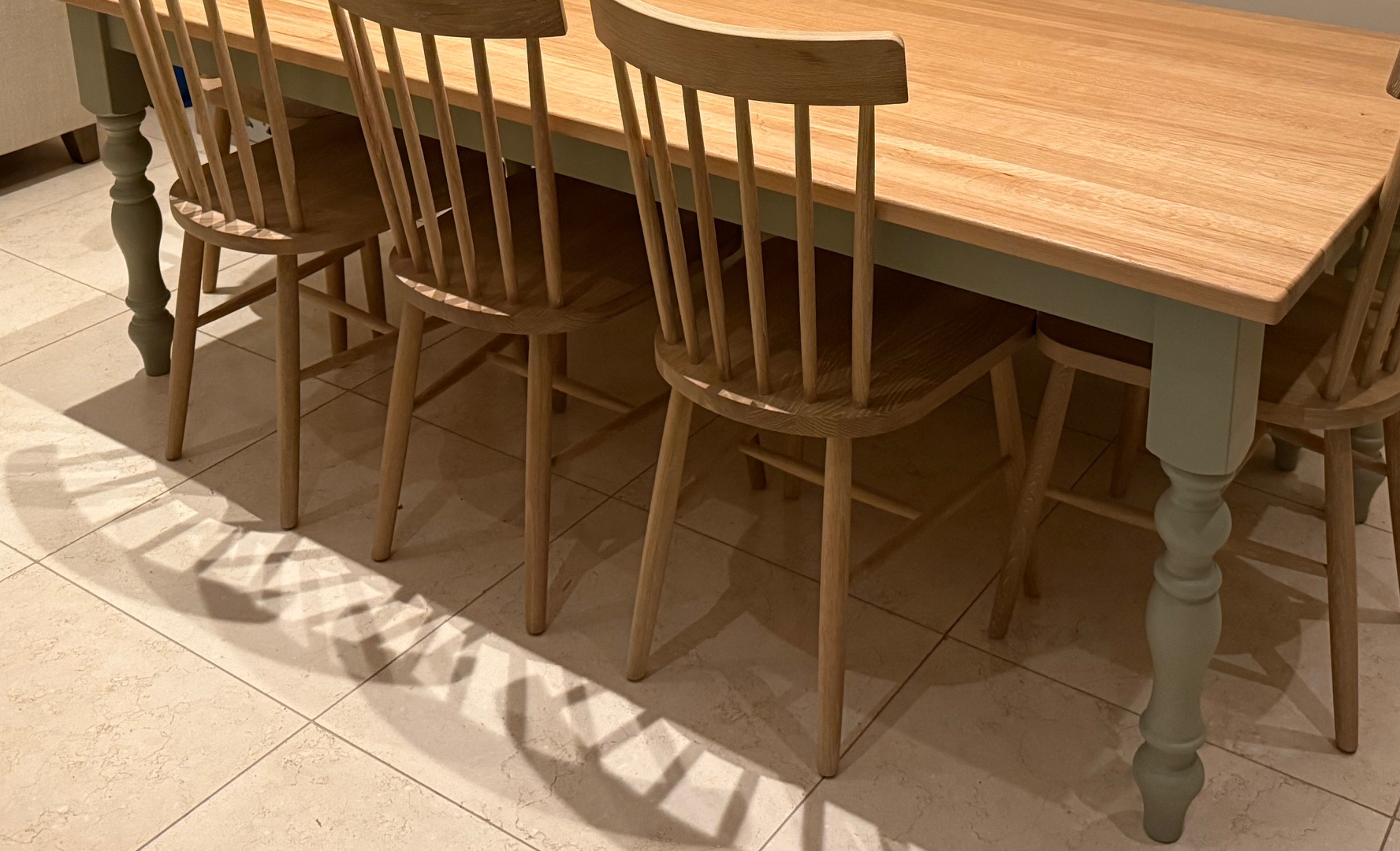
Paint is simply not very durable when exposed to everyday wear. Regular contact with plates, cutlery, keyboards and other objects can cause paint to chip, flake or wear away. Spills from food or drink can also damage a painted surface if left sitting for a few hours.
Painting table legs and frames, however, works very well because those parts are not subjected to the same kind of abrasion.
We can spray paint bases and legs in a wide range of colours that we keep in stock, and we can also order and spray almost any RAL colour on request.
Hand-painted finishes are also possible using colours from brands such as Farrow & Ball, Paint & Paper Library, Little Greene, Dulux and others. These are priced according to the size of the area being painted and the complexity of the shapes involved.
Stains and dyes
Wood stains and dyes are often discussed separately. Generally speaking, dyes dissolve completely in the liquid and colour the wood fibres directly, whereas stains usually contain small pigment particles that settle into the grain.
In practice they behave in fairly similar ways when used for colouring timber, so for simplicity we usually refer to both as stains.
Block colour wood stains
For some of our table designs we use water-based coloured stains on the legs rather than paint. This is the case for designs such as the Element 57, Industry 68, Box 85, Record 65 and Stadium 300.
One advantage of staining instead of painting is that the colour penetrates deeper into the wood. If the surface receives a small knock or dent, it is therefore less likely to reveal pale bare wood underneath.
With sufficient applicaton, a block colour effect can often be achieved with a consistent tone, as opposed to the shades altering based on the grain variation. This can make a piece of wood look almost painted in that colour.
Stains do need to be sealed after application, otherwise there is a small risk that colour could transfer onto fabrics or react with water. We seal them with a water-based varnish, which locks the colour in place.
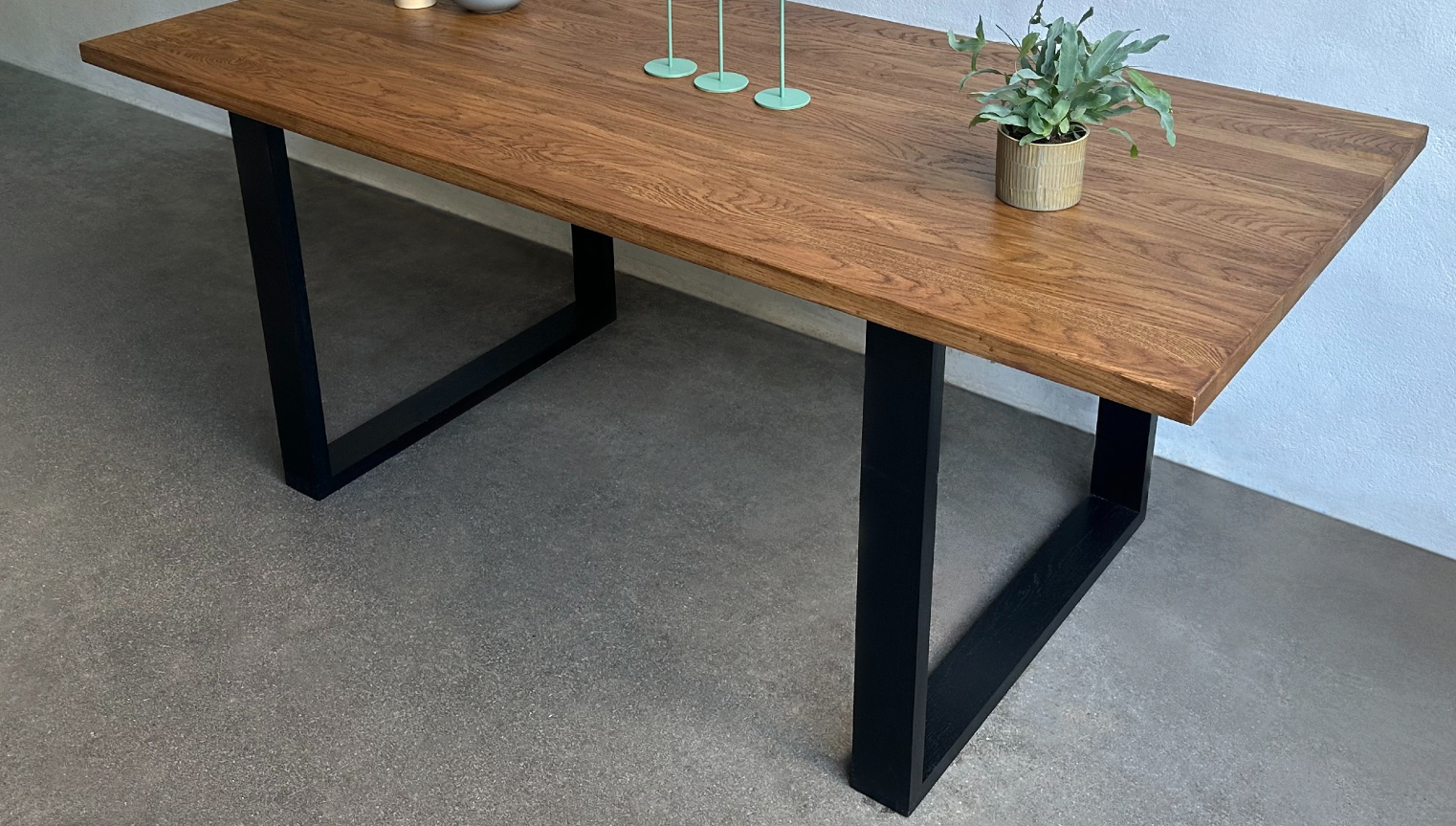
Traditional wood stain shades
There are many traditional wood stain colours available from brands such as Rustins, Ronseal and Sadolin, as well as from specialist online retailers.
We do not normally use these as our standard finishes because the tinted hardwax oils we offer already provide many of the tones people are looking for. However, if you have a very specific colour requirement we are open to using these products. Projects involving specialist stains can sometimes require additional preparation and testing, so they are priced on a bespoke basis.
Oils (e.g. Danish, tung, linseed)
Many people are familiar with wood finishing products such as Danish oil, tung oil, linseed oil or teak oil.
These oils soak into the wood and offer some protection while enhancing the natural colour of the timber. They tend to produce a very natural appearance but usually require several coats and periodic re-application over time.
We do occasionally use them if a customer specifically requests it, but in most cases we prefer hardwax oil because it provides a tougher and more protective surface with fewer coats. This makes the process more efficient and helps keep our prices lower.
Wax
Wax finishes, including traditional beeswax, have been used on furniture for centuries.
They produce a pleasant soft sheen and a smooth feel to the touch, but on their own they are not particularly durable. Compared with hardwax oil or varnish, wax is more easily marked by water, heat and everyday wear.
For that reason we generally do not use wax as the primary finish on tables or desks that will see regular use.