

When does it make more sense to replace a table top than buy a whole new table?
When is replacing a table top a better option than buying a new table?
Replacing a table top usually makes more sense when the base is still strong, stable and suited to the space, but the surface is worn, damaged or no longer practical. Buying a whole new table tends to be the better route when the base is failing, the proportions no longer work, or the table needs a complete change in function.
A lot of tables wear out unevenly. The top takes the daily knocks, heat marks, spills and scratches, while the base often stays perfectly serviceable for years. That difference matters, because surface wear and structural wear are not the same problem.
Replacing just the top can extend the furniture lifespan, reduce waste and keep a base you already know fits the room. A full replacement makes more sense if the frame is weak, warped or poorly built in the first place. The decision is less about appearance alone and more about what part of the table has actually reached the end of its useful life.
A simple way to think about it is this:
- Replace the table top if the main issue is surface damage, an unsuitable size, or a material that no longer works for how the table is used.
- Buy a whole new table if the base is unstable, the joinery is failing, or the table needs a completely different footprint or purpose.
That sounds straightforward, but a table top swap is not always as easy as people expect. Compatibility, fixings, weight and proportions all need checking before a new top goes anywhere near an old base.
Table of Contents
Signs your table base is worth keeping
Imagine a dining table with a scratched and stained top, but legs that still feel solid under load. In that case, the base may well be worth reusing. The best place to start is with stability, not looks.
A base that deserves a second life usually has decent material quality, sound joints and no serious movement when pushed from the side. Small cosmetic marks on the legs matter far less than looseness at the joints or bending under weight.
Use this quick assessment before planning any replacement:
- Check for wobble on a flat floor. If the table rocks badly even after simple floor adjustment, the base may have a structural issue.
- Look closely at the joints where legs meet rails or supports. Gaps, splitting or repeated loosening suggest more detailed wear.
- Test the frame under gentle pressure. A sturdy table base should resist twisting and should not creak excessively.
- Inspect for warping, rusted fixings or cracked timber. Any of these can affect how a new top sits and performs.
- Consider weight support. A new solid wood top may be heavier than the original, so the base must be able to carry that load safely.
Material matters as well. Solid wood bases, metal frames and well-made pedestal structures often justify reuse if they remain square and stable. Lightweight chipboard frames or thin tubular bases can be much less forgiving, especially if the replacement top is thicker or wider than the old one.
Proportion is easy to miss. A base can be technically sound but visually wrong for a new top if the legs sit too far inward, the stance is too narrow, or the overhang becomes awkward for seating. That tends to show up most clearly on larger dining tops and desk tops where edge support affects day-to-day comfort.
When surface damage or wear is the only issue
Many people reach this decision after living with the same annoyance for months: water rings that never quite disappear, a finish that feels rough, or dents across the area that gets used most. In those cases, the problem may sit entirely in the top.
Some damage is cosmetic and repairable. Some marks go further into the wood or finish, making a full replacement more sensible than repeated patch fixes. The difference usually comes down to depth, spread and whether the material underneath is still sound.
Here is a practical way to judge common problems:
- Light scratches and mild finish wear often respond well to refinishing.
- Water marks and surface staining may improve, depending on how deeply the moisture has travelled.
- Deep gouges, burns and widespread staining can make repair less convincing, especially on heavily used surfaces.
- Swelling around joints, peeling layers or soft spots point to more serious material failure.
A solid wood top gives more options because it can often be sanded and refinished more than once. Veneered or laminate surfaces have less margin for repair, particularly once the top layer has worn through or chipped at the edges. Hygiene can become part of the issue as well. A top with damaged finish around food prep or regular dining use may be harder to clean properly, even if the base remains sound.
Sometimes replacement is the cleaner answer because it avoids pouring effort into a surface that still will not feel right after repair. A desk with cable damage, cup rings and an uneven finish may still sit on a perfectly good frame, which makes the case for a new top fairly strong.
Pro Tip: Review the structural joinery of your table base before committing to a tabletop replacement, as weak joints may compromise the result.
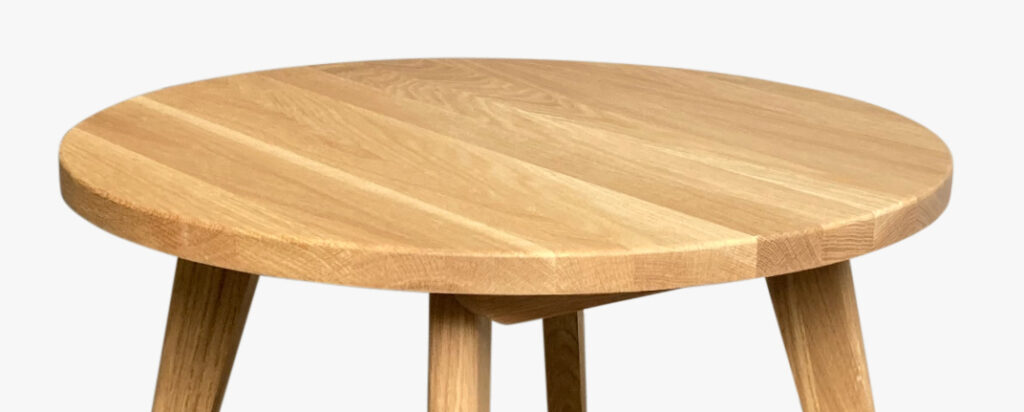
Pro Tip: Choose a top thickness and finish that complements not only the visual style but also the weight capacity of your existing base.
Matching a new top to an existing base: practical considerations
A new top for an old base can work very well, but only if the fit is planned properly. Measuring the old top alone is rarely enough.
Start with the base itself. Measure the full footprint of the frame, the distance between legs or supports, and the location of any mounting points. Hidden fixings can complicate things, particularly on tables that were made around a factory-drilled top rather than a replaceable one.
The main checks usually fall into four areas.
- Size and overhang A top needs enough support without making the table feel cramped or top-heavy. Too much overhang can strain the base and leave seating positions awkward. Too little can make the table look undersized and reduce usability.
- Thickness and weight A thicker top changes both appearance and load. That can improve stiffness, but it also places more demand on the frame. Narrow metal legs or ageing timber bases may struggle with a heavier slab.
- Fixings and drilling patterns Some bases use simple brackets. Others rely on threaded inserts, corner blocks or specific drilling positions. If a new top is undrilled, the mounting method needs to be planned with care.
- Material behaviour Solid wood moves with changes in humidity, which means fixings must allow for seasonal movement across the grain. Workshop practices such as correct grain direction and the use of straightening bars can support stability, but the mounting approach still has to suit the base.
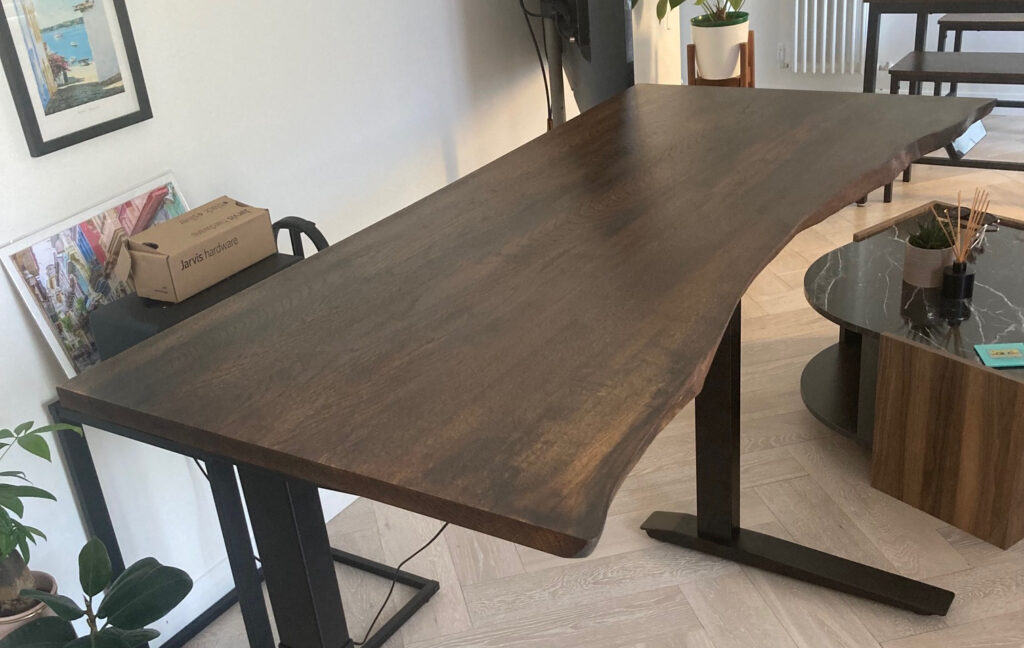
Custom sizing becomes especially useful when the frame is unusual. Tablemaker, for example, produces tops for existing bases and sit-stand frames where standard widths or pre-drilled patterns would create problems. That sort of made-to-measure approach is less about novelty and more about getting the proportions, support and installation details right.
One overlooked issue is edge profile. A chunky square-edged top can overwhelm a delicate base, whereas a thinner visual profile may sit more comfortably with older legs or finer metalwork. The table needs to work as a whole, not just as a set of matching measurements.
Cost, sustainability and longevity: the case for table top replacement
Cost is one of the first things people weigh up, and rightly so. Replacing a top can be less expensive than buying a complete table, but that depends on the condition of the base, the material of the new top and any fitting work required.
The financial case is strongest when a sound base already exists and the new top solves the main problem in one step. A poorly made base can turn a supposedly economical swap into false economy, especially if it fails soon afterwards.
From a sustainability point of view, reuse has an obvious appeal. Keeping a functional base in service means fewer materials are discarded and fewer components need to be manufactured from scratch. That does not make every replacement automatically sensible, but it does shift attention onto repairability and furniture lifespan.
Solid wood supports that long view particularly well. A well-made top can be refinished, adapted and maintained over time in a way that many composite surfaces cannot. If the base and top are treated as separate parts with different life spans, furniture starts to look less like a one-off purchase and more like something that can be adjusted as needs change.
Effort matters too. Replacing a top is usually worthwhile when it produces a table that is easier to live with for years, not just one that looks better for a month.
Get a Custom Table Top Quote
Discover how a made-to-measure table top can transform your existing base. Share your requirements for a tailored quote.
Request a QuoteWhen buying a whole new table makes more sense
Sometimes the answer is simple: the whole table is done. If the base is unstable, damaged or fundamentally the wrong shape for the room, replacing only the top will not fix the real problem.
Several situations point clearly to a full table replacement:
- The base wobbles badly because joints have failed or materials have weakened.
- The frame is too small, too narrow or too lightly built for the top you would need.
- Both the top and base show heavy wear, including splits, bending or repeated repair failures.
- The table needs a different function entirely, such as moving from occasional use to daily dining or home working.
- The style mismatch is too strong, with a new top likely to look awkward on the old frame.
Safety comes into play here. A top-heavy dining table, an unstable pedestal base or a frame with damaged fasteners can all become frustrating at best and unsafe at worst. In those cases, a partial fix often delays the inevitable.
Changing needs can also push the decision. A household that now needs more seating, better leg room or a desk-height surface may be asking more than the old base can reasonably provide. At that point, a complete table replacement is usually the more coherent answer.
The role of bespoke workshops in table top replacement
Off-the-shelf replacements work best when the base follows standard sizes and fixings. Many older tables do not. Some have unusual leg positions, inherited bases, metal frames from another maker, or dimensions that sit awkwardly between standard options.
That is where a specialist workshop can be useful. Instead of forcing the base to fit a generic top, the top is made around the actual requirements of the table.
A bespoke approach can help with:
- exact sizing for awkward rooms or non-standard bases
- suitable thickness for the span and support pattern
- timber choice based on use, appearance and maintenance
- undrilled or custom-drilled tops for particular mounting hardware
- practical details such as cable access, overhang and edge shape
Good workshop input also helps with the parts readers often underestimate, including how wood movement affects fixing positions or how a heavy top changes the feel of a base. Traditional carpentry standards are less about decorative detail here and more about making sure the finished table behaves properly in everyday use.
For a valuable base, a family piece, or a commercial setting where dimensions need to be exact, that problem-solving role can matter as much as the top itself.
Rethinking furniture longevity: beyond one-off purchases
A table does not have to be treated as a sealed object that succeeds or fails all at once. In many cases, it makes more sense to see it as a set of parts with different life spans, different maintenance needs and different possibilities for repair.
That shift in mindset changes the replacement question. Instead of asking whether the table looks tired, it becomes more useful to ask which part has stopped doing its job. A worn surface may call for a new top. A failing structure may call for a full replacement. Either way, the decision becomes clearer when furniture is judged by function, repairability and long-term use.
Solid wood plays a distinct role in that way of thinking because it can be maintained, refinished and adapted over time. A table that fits well, works hard and can be renewed when needed is often the one that stays in service longest. Seen that way, replacing a top is not a compromise. It is often a practical sign that the rest of the table still deserves its place.
Book an Expert Consultation
Unsure if your table is worth refurbishing? Arrange a personal consultation to get practical advice from our specialists.
Book Now
Tablemaker
55 High St, London N8 7QB
02083416334
HVQM+58 London