Every table or desk we produce at Tablemaker is built from a small number of carefully designed components that work together to create a durable and visually balanced piece of furniture. While the overall design may vary from one model to another, most tables share three core elements: the table top, straightening bars, and legs. Each plays a specific role in both the function and appearance of the finished table.
Contents of this Guide
Table top
Straightening bars
Table legs
Table top
The table top is the defining element of any table. It determines the overall shape, size, and visual presence of the piece, and it must also be durable enough to withstand its intended use.
Dining tables and coffee tables are typically used every day and are exposed to frequent wear, including spills, food contact, and general household activity. Desk tops face a different kind of use, often supporting computers, monitors, and equipment while being used for long periods at a time. For these reasons, we make all of our standard table and desk tops from solid oak, a hardwood known for its durability and resistance to scratches. Compared to softer woods such as pine, oak stands up far better to everyday use.
Thicknesses
Table tops can be produced in several thicknesses depending on the look the customer wants to achieve. Our standard designs are available in 24mm or 30mm solid oak, but we can also offer 19mm for a particularly slim, minimalist style or 40mm for a heavier, more substantial appearance.
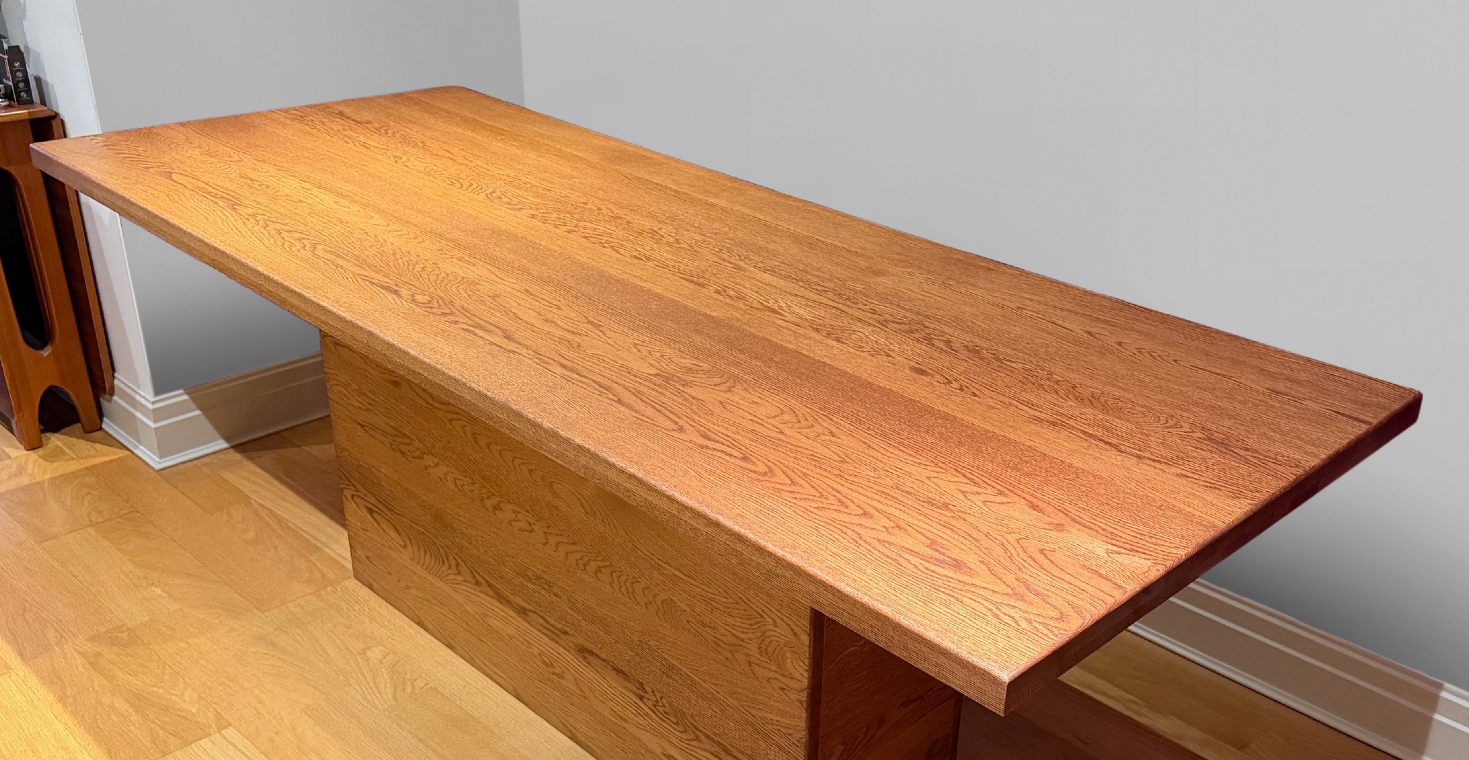
If a bespoke thickness is required — such as 27mm, 35mm, or 45mm — we can create this using a built-up edge. This technique involves building up the underside around the perimeter so the top appears thicker when viewed from the side. In practice, it is extremely difficult to tell the difference unless the underside of the table is inspected closely. It is a widely used method that allows the desired visual thickness to be achieved without the cost or weight of solid material throughout. Read more about it on the built-up edge FAQ.
Edge profile
Another detail that strongly influences the look of a table is the edge profile. We offer a variety of options on custom tables to suit different design styles.
Our most subtle option is the 2mm eased edge, which keeps a near-square profile while gently softening the sharp corner. For a slightly rounder appearance, customers can choose a 4mm radius (often called a pencil round), or larger radii such as 6.5mm, 9.5mm, 11mm, or 16mm, each creating progressively softer edges.
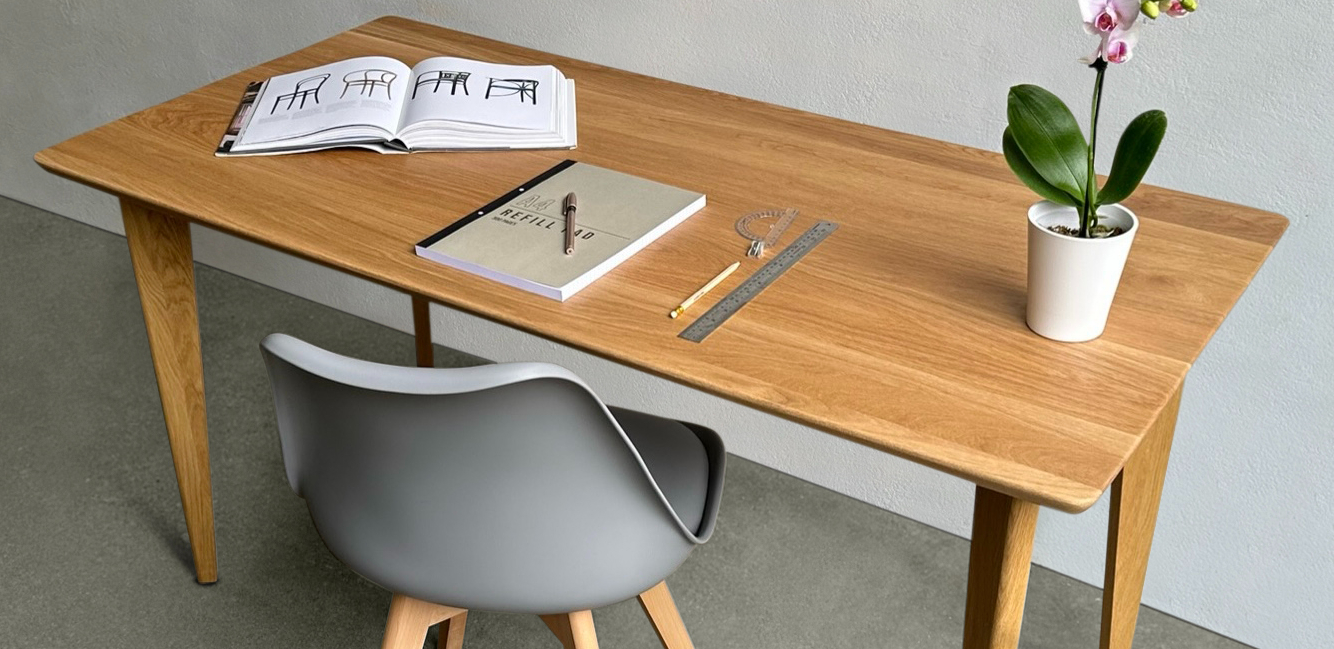
For a more contemporary look, the bevelled edge (sometimes referred to as a Swiss edge) combines a rounded top edge with an angled underside, producing a refined and modern profile. We also offer sloping edges, including a 10mm chamfer for a bold geometric look and a 30mm sloping edge, which is particularly popular for gaming desks due to the improved wrist comfort it provides.
See a graphic of these standard edge profile options.
If you have a specific edge detail in mind that is not part of our standard range, we are always happy to review custom requests. Customers are welcome to send sketches, reference images, or descriptions, and we will advise whether the profile can be produced and provide a tailored quotation.
Finishes/colours
All Tablemaker table tops are supplied with a hardwax oil finish as standard. Hardwax oil is a durable wood finish made from a blend of natural oils and waxes. Unlike surface coatings that sit on top of the wood, hardwax oil penetrates into the pores of the timber and bonds with the fibres. This helps protect the surface from everyday wear while preserving the natural look and texture of the wood. It also leaves a smooth satin finish that enhances the grain without creating a thick or glossy coating.
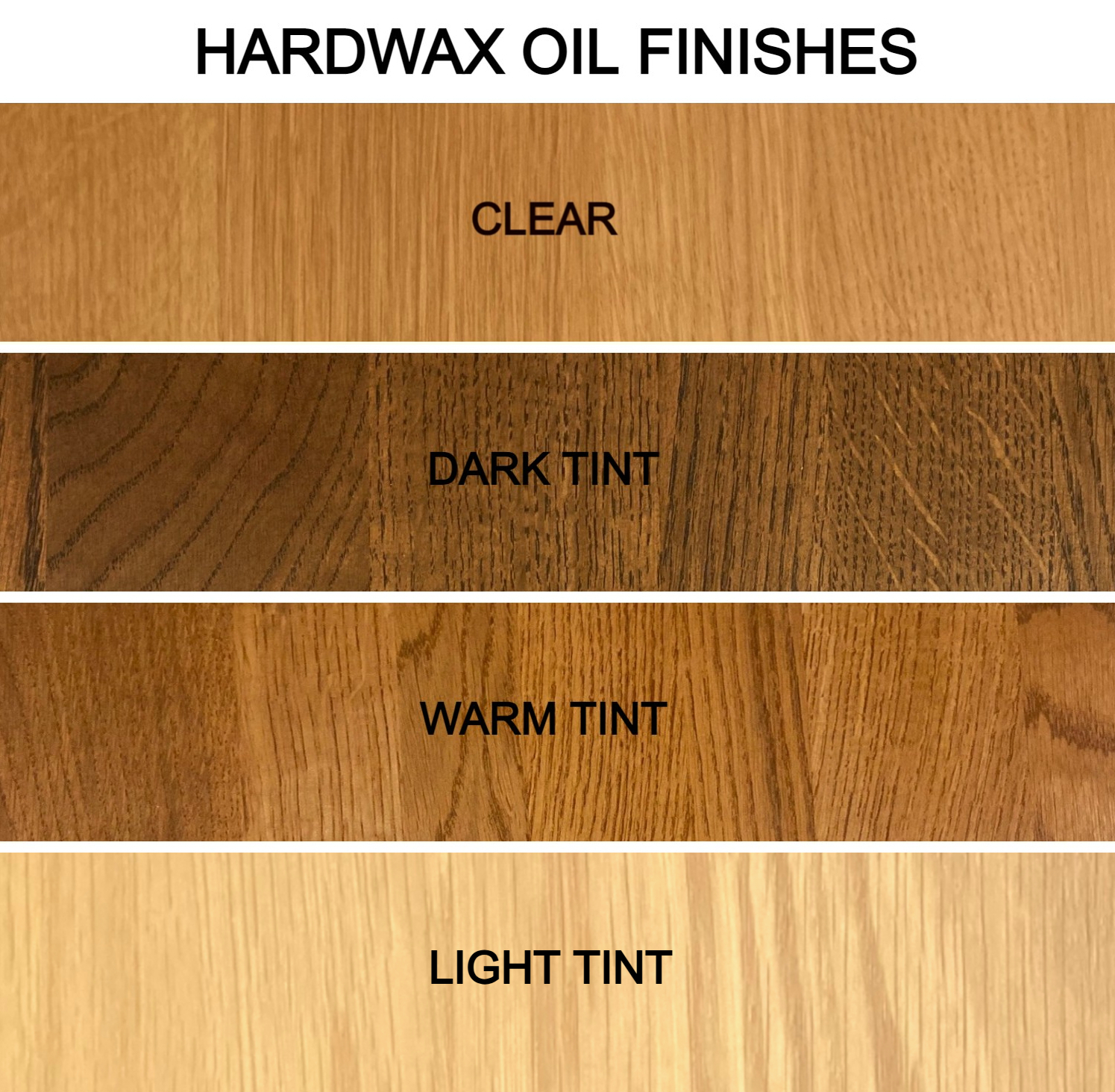
We offer hardwax oil in four standard colours:
-
Clear – remains close to the natural colour of the wood but with a slight ‘honey’ tone.
-
Dark tint – creates a richer, darker appearance while still allowing the grain to remain visible.
-
Warm tint – adds a subtle warmth that deepens the natural tones of the timber.
- Light tint – the closest option for retaining the natural (bare) colour of the wood.
For customers who require something different, we can also apply alternative finishes as part of a custom order. These may include water-based varnishes, specialist stains, or other finishing systems depending on the desired appearance and level of protection. If you have a particular finish in mind, feel free to get in touch and we can discuss the options available.
Buying custom table tops
It is also worth noting that you do not necessarily need to purchase a complete table. If you already have a base or frame, you can order table tops or desk tops on their own from Tablemaker.
Straightening bars
One feature of a well-built table that often goes unnoticed is the straightening bar. These are structural strips fitted to the underside of the table top to help keep the wood flat over time.
Wood is a natural material that responds to changes in humidity. As moisture levels in the air rise and fall, the wood expands and contracts slightly. Without some form of reinforcement, a wide wooden panel could gradually develop a slight curve or “cup” along its edges. Straightening bars help prevent this by providing rigidity across the underside of the top.
Wooden bars
In most of our tables the bars are made from the same material as the top — typically solid oak. They are usually sized proportionally to the thickness of the table top. For example, on a 30mm thick top, the straightening bar would typically be around 30mm wide and 40mm high.
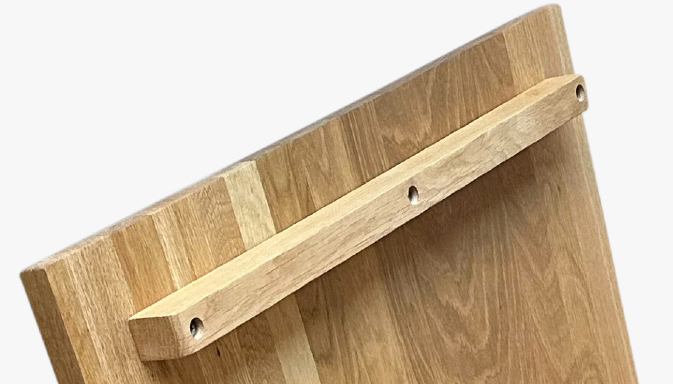
Beyond their structural role, we also treat straightening bars as a visual design element. They are set slightly in from the edges so they remain in proportion with the top, and in some designs we shape their corners to echo the edge profile of the tabletop itself. On custom orders these details can be modified to suit the overall design.
Metal bars
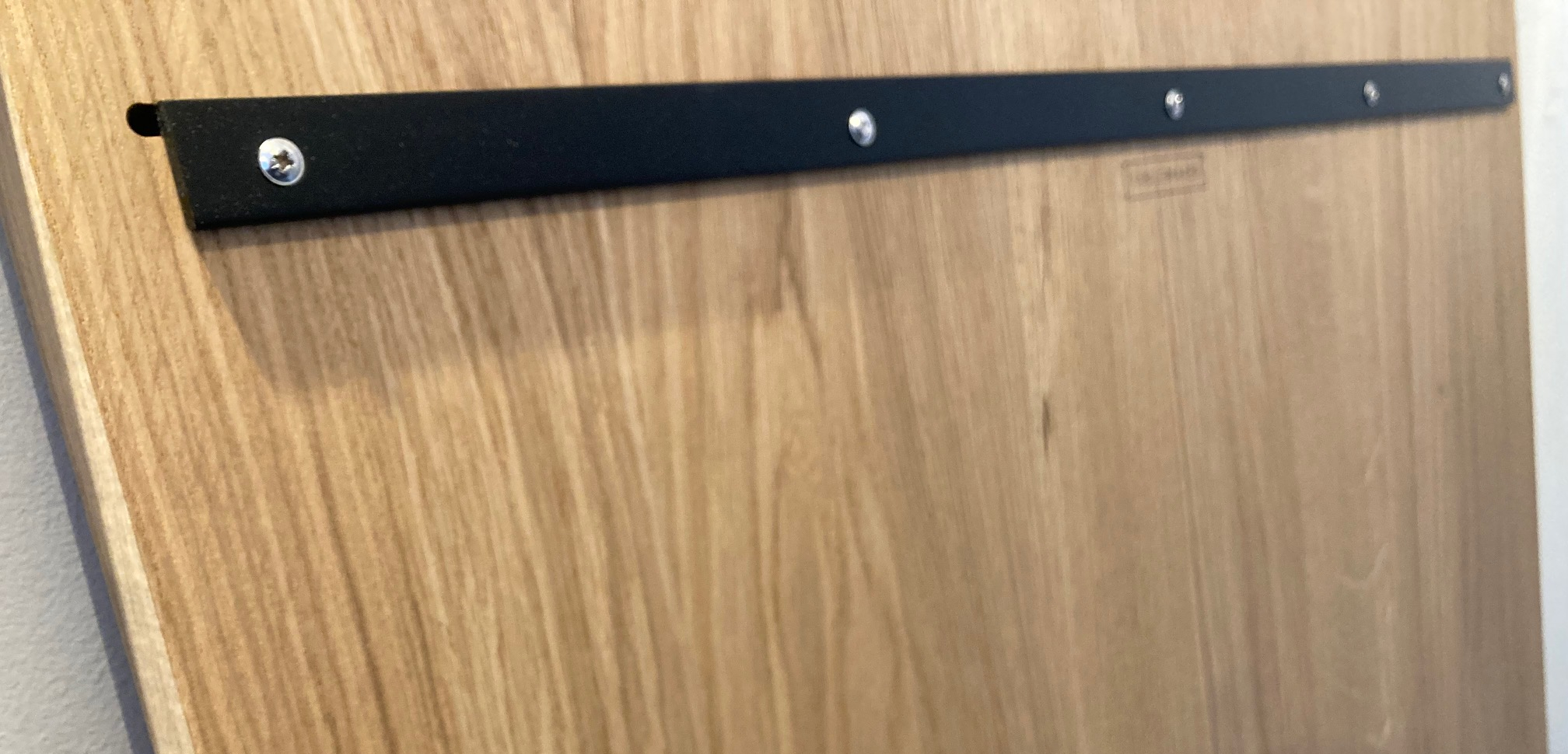
While wooden bars are most common, we occasionally use metal straightening bars where the design calls for a more minimalist appearance. One advantage of metal is that it can often be recessed into a groove on the underside of the top, making it largely invisible. This suits customers who prefer a very clean and understated aesthetic. Others prefer the added visual detail of wooden bars, which contribute to the handcrafted character of the table.
No bars
In some cases, customers may request a table top without straightening bars. If you are purchasing a complete table from us, we strongly recommend including some form of reinforcement. However, if you are ordering a top to be mounted onto an existing base, there may be situations where bars are unnecessary.
For example, a top may be supported by a wide cabinet or drawer unit, or attached to the metal frame of a height-adjustable desk. Another common scenario is when replacing the top of a traditional farmhouse-style table where the top is secured to a structural apron frame underneath.
If you request a top without bars we can supply it that way, but it is important to note that we cannot take responsibility for any cupping that may occur. Changes in humidity during storage or transport — such as in a damp courier depot or a humid delivery vehicle — can sometimes cause movement in the timber.
Table legs
The legs or base make a major contribution to the overall character of a table or desk. They influence both the visual style and the structural stability of the piece.
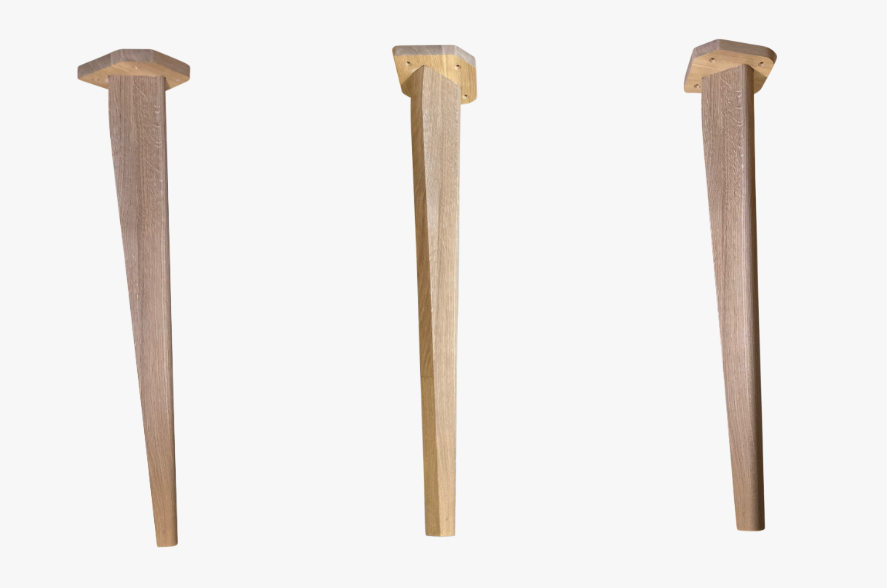
Most of our standard designs use four individual legs, one at each corner. A few designs, such as the Box 85 table and Industry 68 desk, instead use paired square-style legs positioned at either end.
Four-leg designs have the advantage of being completely independent components attached only to the tabletop. This allows us to produce tables in a wide range of widths with maximum flexibility. Designs that use paired legs are produced in specific widths as standard, although custom sizes are still possible.
Every Tablemaker leg consists of three key components: the leg stem, the mounting block, and the bumper.
Leg stem
The leg stem is the main visible part of the leg and largely determines the visual style of the table. Subtle design choices such as adding a taper, rounding the edges, or angling the leg can dramatically change the overall aesthetic. For instance, angled legs often create a mid-century modern feel, while straight vertical legs tend to produce a more industrial or contemporary look.
Mounting block
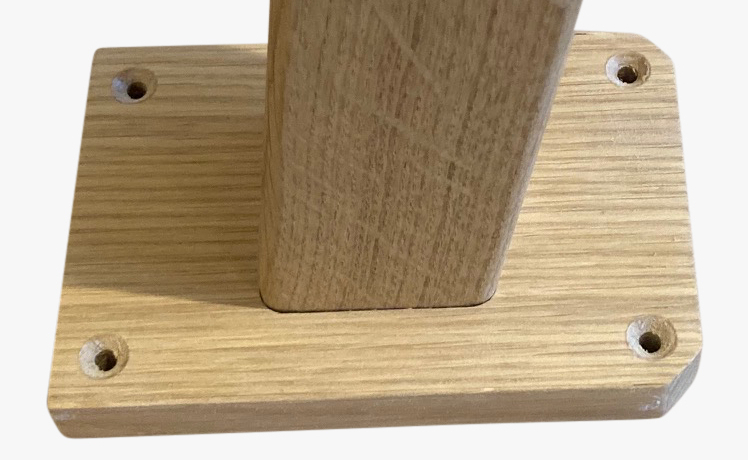
The mounting block is the structural connection point where the leg meets the table top. This component must be extremely strong in order to ensure the table remains stable and secure during use.
On our four-leg designs the mounting blocks are typically made from wood, while paired-leg designs usually incorporate metal mounting plates. These plates include clearance holes through which the fixing screws pass when the legs are attached during assembly.
Bumper
The final component is small but important: the bumper. These are clear rubber pads pre-attached to the bottom of each leg. Although they are usually barely visible, they serve two useful purposes. First, they help grip the floor slightly to prevent unwanted movement. Second, they help protect softer floor surfaces — such as pine flooring — from scratches.
For custom projects, legs and bases can take many different forms. If you have a particular design in mind for a bespoke table or desk, we would be happy to discuss what is possible.
Leg finishes
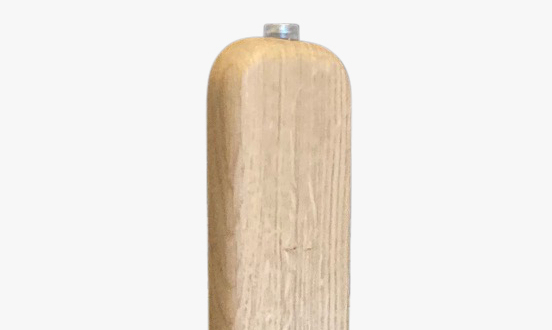
Tablemaker legs can be finished in a few different ways depending on the look you would like to achieve. The most common option is to finish the legs in the same hardwax oil as the table top, creating a consistent appearance where the entire table shares the same natural oak tone.
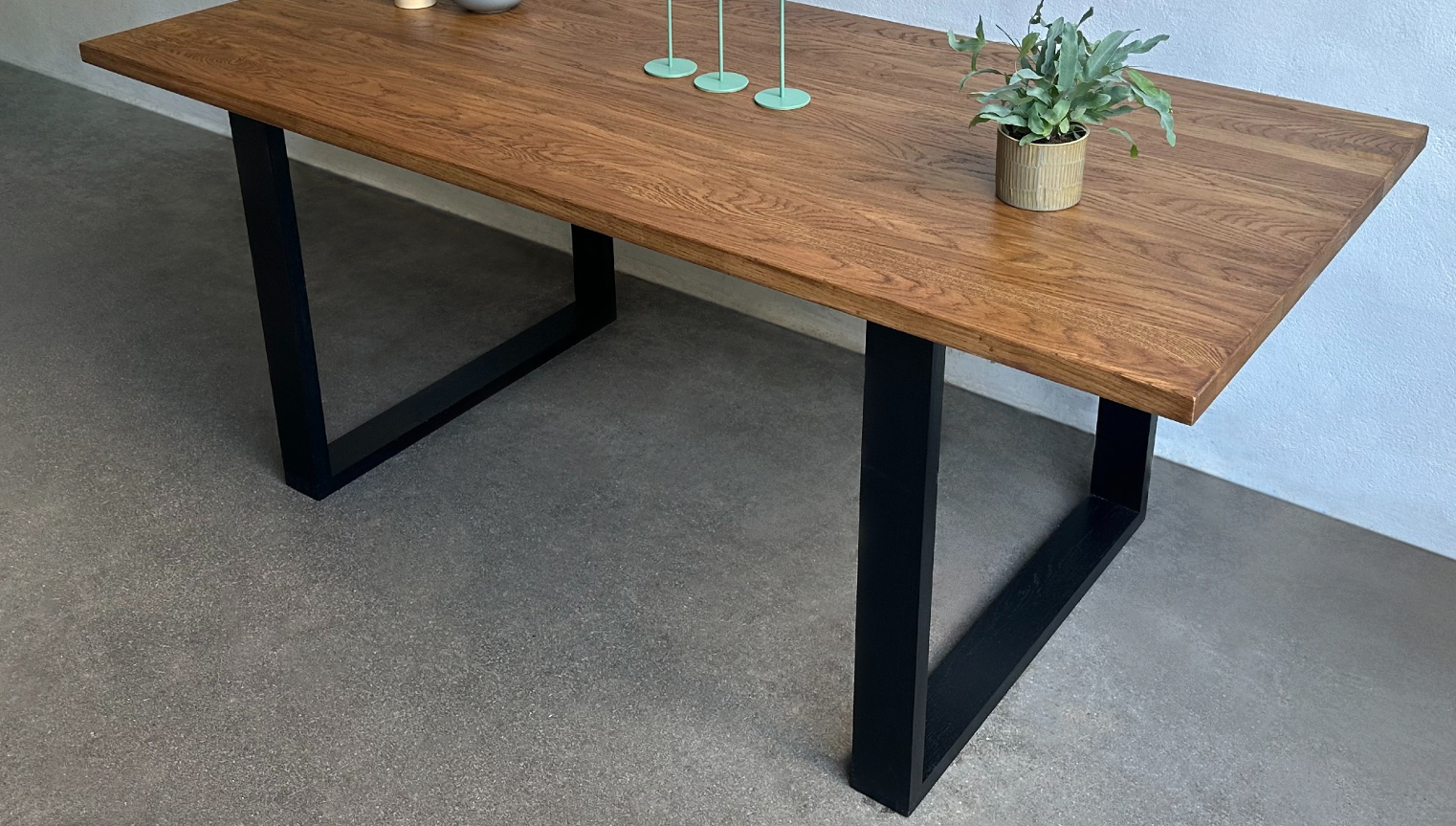
Alternatively, the legs can be painted or stained to create contrast with the top. This can be an effective design choice if you want the base of the table to stand out, or if you prefer a two-tone look. Dark painted legs paired with a natural oak top, for example, can create a strong contemporary aesthetic.
If you would like to explore the full range of available options, please take a look at our finishes and colours guide, where we explain the different treatments and finishes we can offer in more detail.
Buying custom table legs
And just as with table tops, you do not always need to purchase a full table. Tablemaker also offers custom legs and bases for customers who want to create their own furniture projects.
Find out more
If you have any questions about the components we use to make tables, or any general enquiry, please feel free to contact us.