

What Makes a Table Suitable for Commercial Insurance and Risk Assessments?
Why are tables considered in commercial risk assessments?
Tables are rarely questioned until they become a problem. While often seen as background objects, their role in shaping workplace safety is significant. Their design, condition, and how they are used can all influence liability and insurance assessments.
Table of Contents
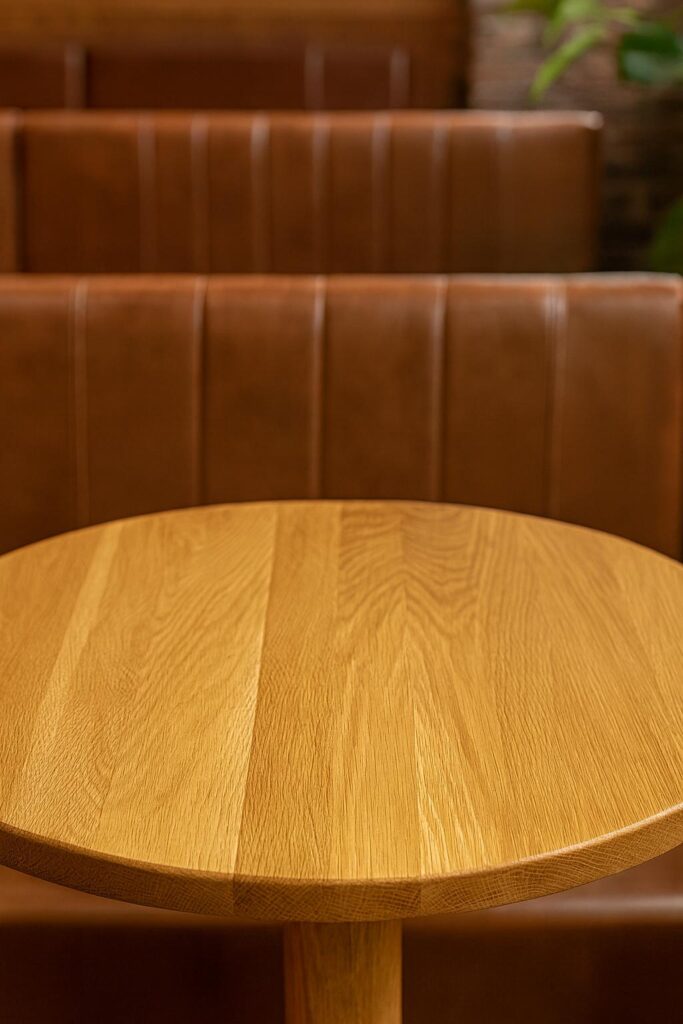
An AI photo of a round solid oak coffee table.
Why Tables Are Considered in Commercial Risk Assessments
Insurers evaluate how tables function within the entire space. They are not judged in isolation. Instead, they are assessed based on their impact on movement, safety, and interaction.
A stable, well-constructed table can still present risks if it is poorly placed or worn out. The Health and Safety Executive (HSE) includes furniture in its assessment of workplace hazards. These assessments directly affect both public and employer’s liability policies.
Assuming a table is safe simply because it has not caused harm before can be misleading. A single incident, such as a collapse or trip, may alter your risk status instantly. That is why tables are relevant in any comprehensive commercial risk assessment. Including them in your hazard identification process is essential to responsible planning.
How Insurers Judge Furniture Risk (Not How Buyers Do)
While buyers focus on comfort and aesthetics, insurers approach tables from a risk standpoint. They assess how and when failure might occur.
Here is what matters to them:
Likelihood and severity: How often could something go wrong, and what would the consequences be?
Residual risk: After mitigation, what dangers still remain?
Suitability versus durability: A robust table might not be appropriate in every setting.
Insurers use the same logic they apply to ladders or shelving. Anything regularly interacted with must be viewed through a risk lens. That is why insurance suitability for commercial tables extends well beyond appearance. Their decisions are shaped by risk exposure modelling and loss prevention goals.
Pro Tip: Documenting regular table inspections can strengthen your defence in liability claims.
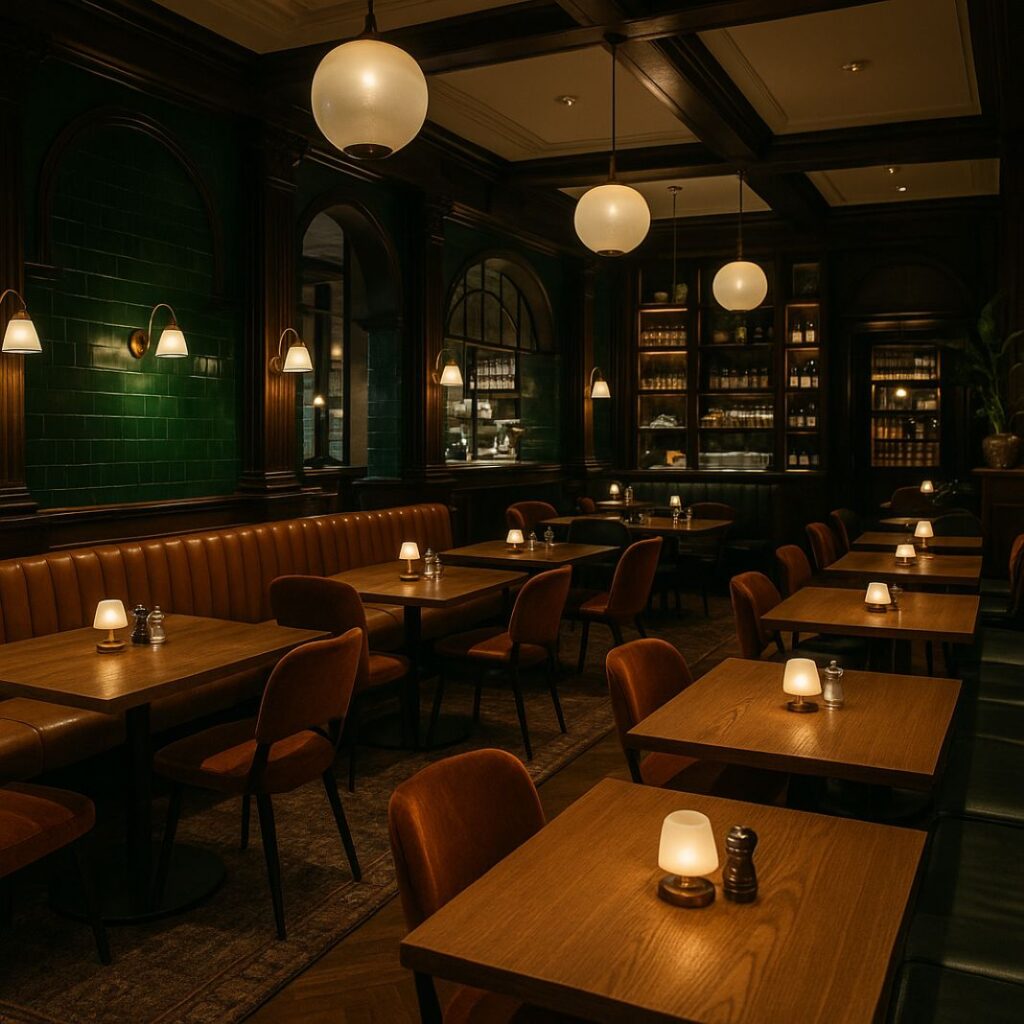
An AI photo of a London restaurant showcasing its square solid oak dining tables.
Pro Tip: Even a visually perfect table can become an insurance red flag if it doesn’t match its environment.
Temporary and Pop-Up Furniture: Special Risks to Consider
Folding tables, mobile desks, and portable setups are widely used in events, education, and retail. While convenient, they often come with increased risks.
Common vulnerabilities include the following:
Weaker joints: Folding designs often rely on hinges and clips that are prone to fatigue.
Transport wear: Repeated setup and movement can compromise structural integrity.
Lightweight builds: These can tip or flex more easily under pressure.
Improper setup: A partially locked table can collapse unexpectedly.
Because of these factors, insurers expect more frequent inspections and careful use of temporary furniture in commercial environments. Temporary furniture should undergo the same level of hazard identification as permanent installations.
Environment Matters: Offices, Hospitality, Retail, and Shared Spaces
The right table for one space might be a liability in another. Environments influence how furniture wears, how it is used, and who interacts with it.
Consider the following differences:
Offices: Controlled access and low-impact use.
Hospitality venues: Frequent movement, spills, and customer contact.
Retail spaces: Regular layout changes and exposure to heavy foot traffic.
Shared zones: Unpredictable use with little supervision.
Environmental stress, such as heat, moisture, or aggressive cleaning, can also accelerate degradation. Matching furniture to its context is essential to managing workplace furniture liability.
Maintenance, Wear, and the Risk That Builds Over Time
Tables naturally degrade with daily use. Without checks, they can slowly become unstable or hazardous.
Watch for the following:
Loose fixings: Screws and bolts may loosen through repeated use.
Worn surfaces: Splinters or cracks could injure users.
Creeping misalignment: A slow lean might go unnoticed until it becomes a problem.
Neglected maintenance: Without records, insurers may assume that risks are not being managed.
Scheduled inspections and repair logs show insurers that lifecycle risk is being monitored and controlled. This supports your duty of care and shows commitment to operational responsibility.
Red Flags: Signs a Table May Raise Insurance Concerns
Use this quick list to identify at-risk tables:
Wobble or instability under mild pressure
No inspection history or recorded maintenance
Positioned in a setting it was not designed for
Visible surface damage or structural wear
Loose or missing components
Temporary furniture used long-term
Clear mismatch between table design and current usage
Each of these is a clear risk indicator that may lead to insurance concern if not addressed promptly.
Request a Custom Quote
Get a made-to-measure commercial table tailored to your exact layout, usage, and risk needs.
Get Your QuoteResponsibility and Liability: Who Carries the Risk Once a Table Is in Use
Once furniture is installed, the burden of safety typically shifts from the supplier to the user. This transition is often misunderstood.
Key points to clarify include:
Use-case drift: Has the table ended up in a riskier location than originally intended?
Monitoring: Are regular checks being carried out?
Preventative care: Were hazards foreseeable and avoidable?
Insurers focus less on assigning blame and more on whether the risk was actively managed. Defining who is responsible early helps prevent disputes later. Clarifying operational responsibility reduces assumptions and supports liability management.
How to Assess Whether Your Tables Would Raise Insurance Concerns
No advanced equipment is needed to perform a meaningful self-assessment. A basic awareness of risks goes a long way.
Here is what to do:
Check for movement, such as rocking, leaning, or sagging
Confirm that the table fits its current use and environment
Look closely for surface and joint wear
Ensure that repair or inspection records are available
By thinking like an assessor, you will spot early warning signs before they lead to incidents. This proactive approach strengthens your insurance profile, aids in loss prevention, and supports a culture of duty of care. For businesses looking to proactively reduce risk through thoughtful table design, suppliers like Tablemaker offer built-to-order solutions that align durability with commercial insurance expectations.
Explore Custom Table Styles
See how our tables combine structural integrity with standout design for commercial interiors.
Browse Our Range
Tablemaker
55 High St, London N8 7QB
02083416334
HVQM+58 London