Posted on

Why One-Size-Fits-All Tables Fail in Real Commercial Environments

Why One-Size-Fits-All Tables Fail in Real Commercial Environments Tablemaker

Why One-Size-Fits-All Tables Fail in Real Commercial Environments

Why do one-size-fits-all tables fail in commercial environments?

One-size-fits-all tables promise flexibility and simplicity, helping buyers reduce decision-making and streamline procurement. However, commercial spaces often exceed what these tables are built to handle. While they may meet design standards, they frequently fail under the repeated stresses of real-world use.

Table of Contents
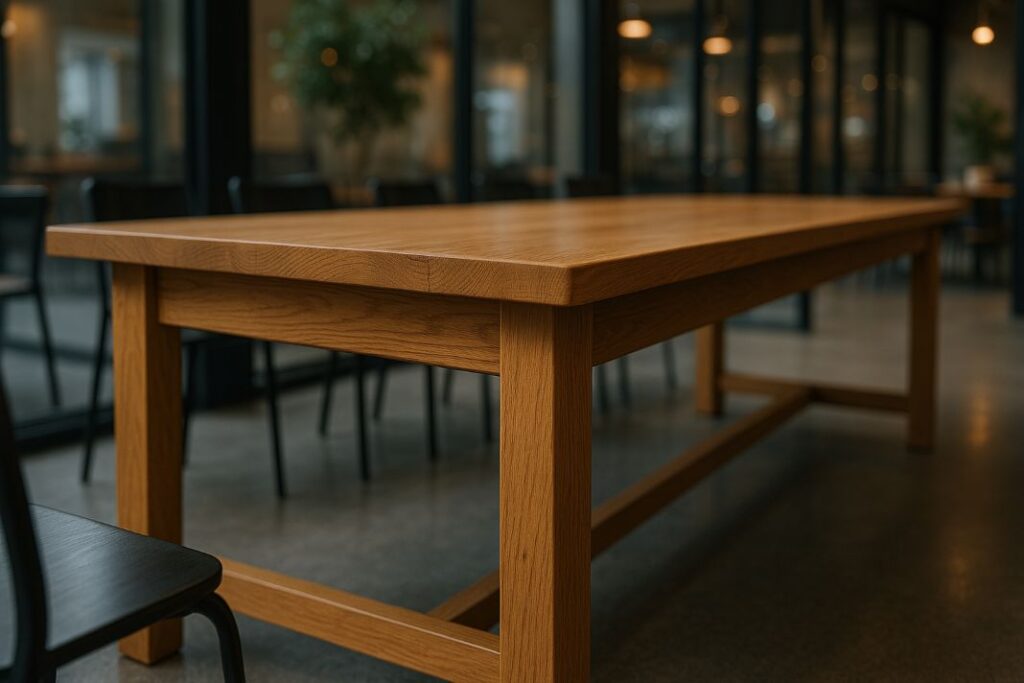
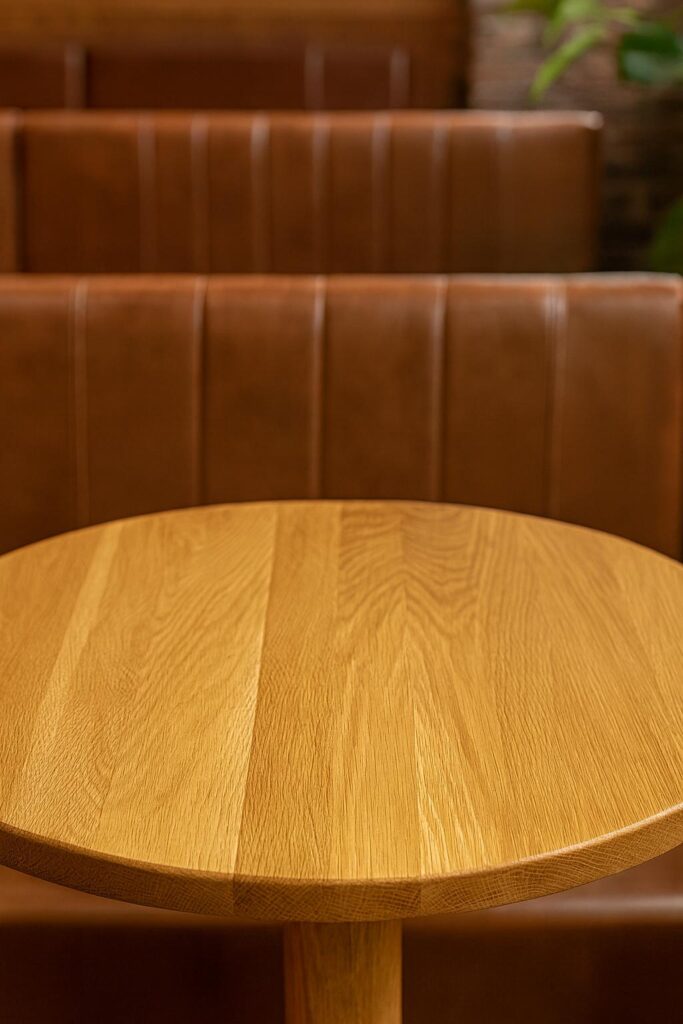
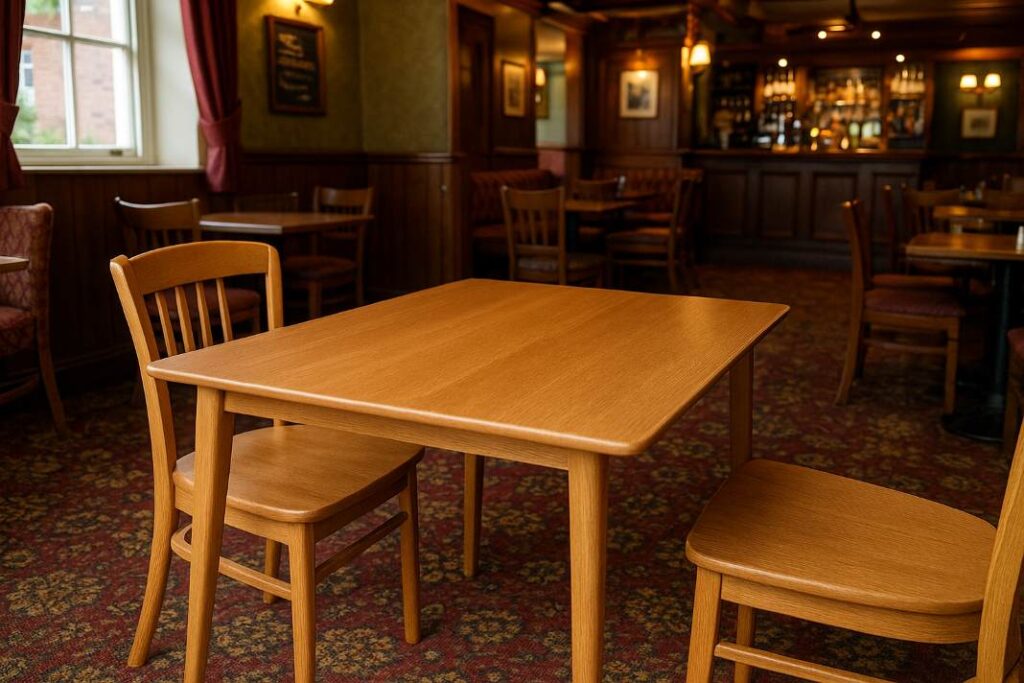
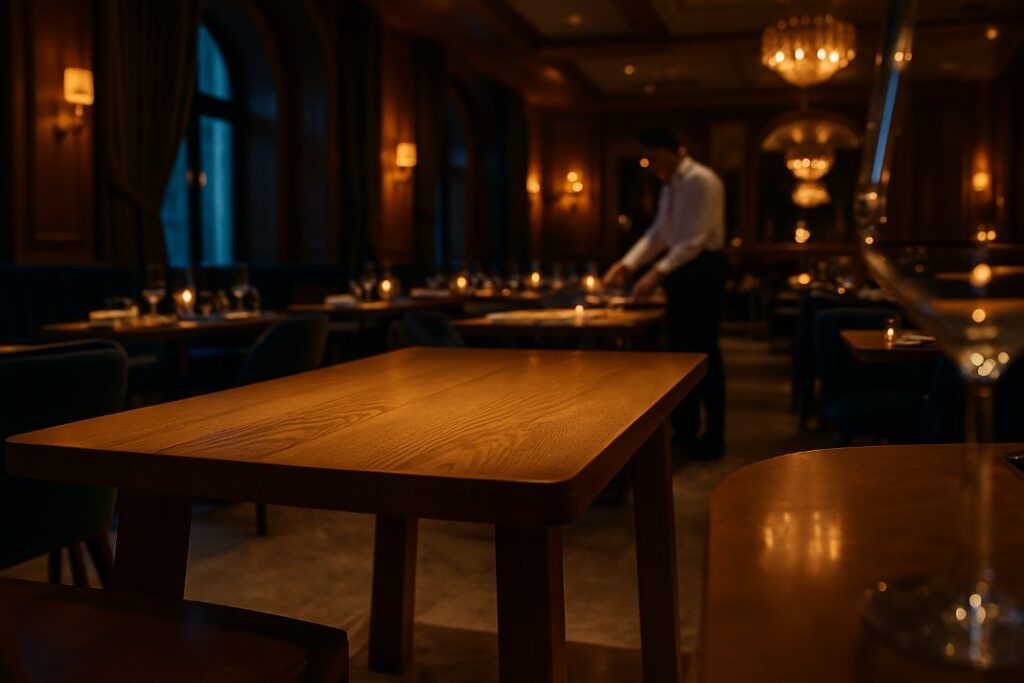
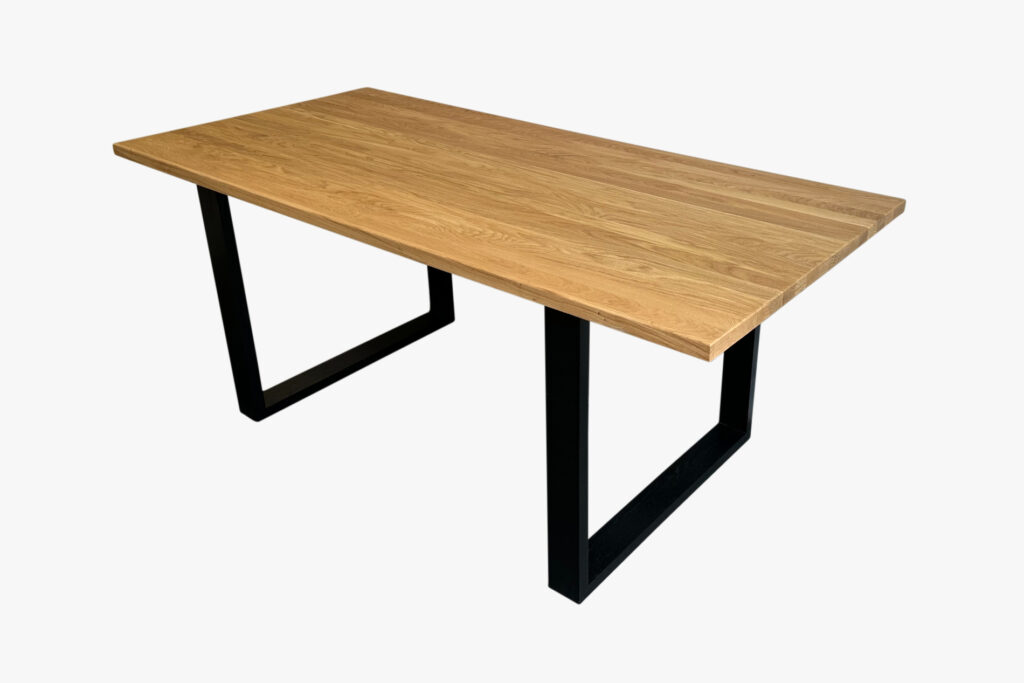
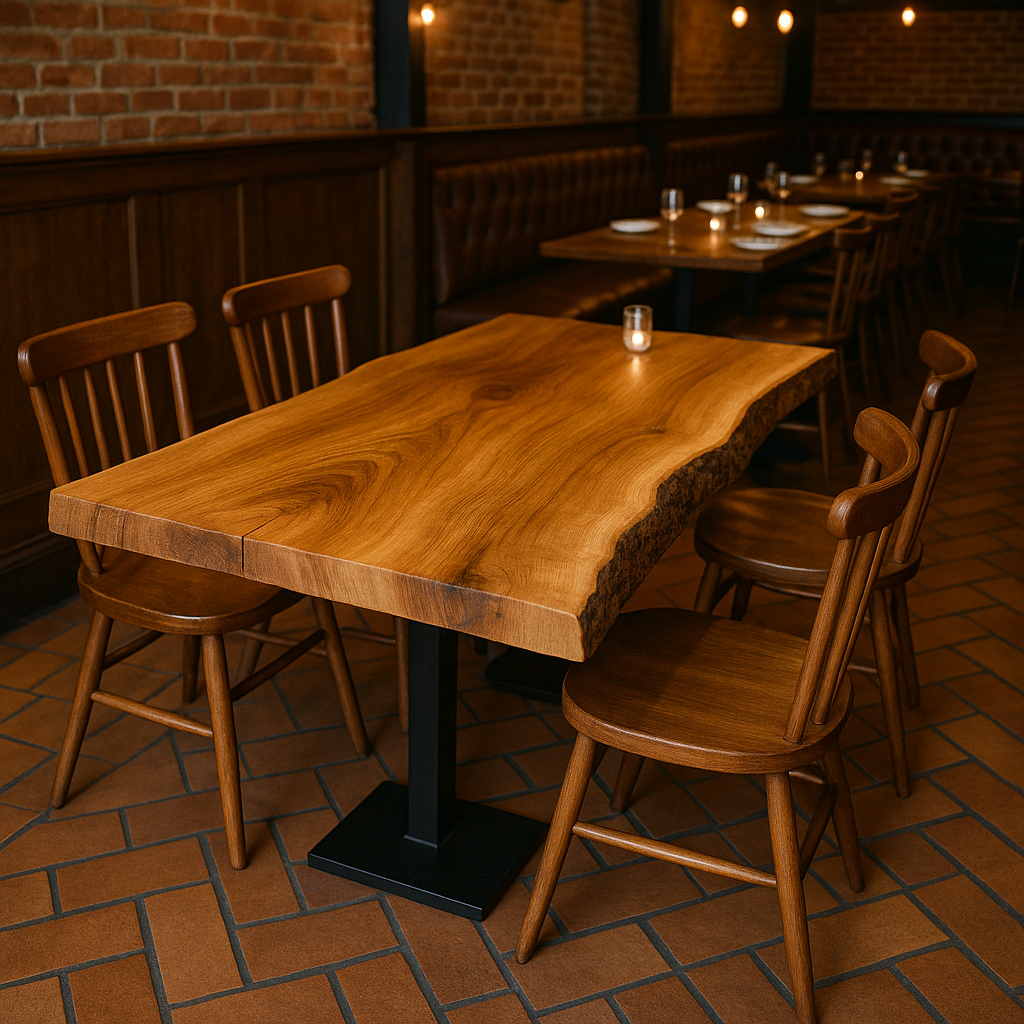
An AI photo of a commercial-grade solid oak table

The Promise and Trap of “Universal” Tables

Many commercial spaces face these challenges because standardised options dominate procurement catalogues. But firms like Tablemaker – Made-to-Measure Tables for Commercial Interiors – offer a different path by focusing on contextual fit and durable construction. The promise of universal furniture is simplicity. A single solution that fits many spaces, users, and needs seems efficient and scalable. Universal tables are appealing for good reasons. Fewer models simplify decisions, make stock management easier, and deliver a cohesive look. They appear to minimise risk and align with procurement goals.

In reality, though, most commercial environments are anything but standard. Tables are dragged between rooms, leaned on, or reconfigured daily. These aren’t unusual behaviours,they are expected in busy, flexible spaces.

A table that seems adequate at purchase may feel unstable or unsuitable only months later. Wobbles, surface wear, and layout incompatibility emerge gradually. Each issue may appear minor in isolation, but collectively they accumulate and cause significant problems over time.

The Design Assumptions Behind One-Size-Fits-All Tables

These table design assumptions are based on static loads, average behaviours, and predictable use. Furniture manufacturers typically design for what works for the majority. It’s an efficient approach, based on compliance with standards like EN 527 and EN 1729. Production costs stay down, and outputs stay consistent.

This approach assumes uniform flooring, consistent use, and predictable behaviour. Yet commercial realities are dynamic. Spaces shift, teams rotate, and cleaning methods vary widely.

The mismatch isn’t in the design’s logic,it’s in its real-world applicability. What holds up in controlled testing doesn’t always translate into long-term operational success. These designs often represent a design compromise, optimised for production efficiency rather than situational fit.

Pro Tip: Ask end users how furniture is really being used before committing to specs.

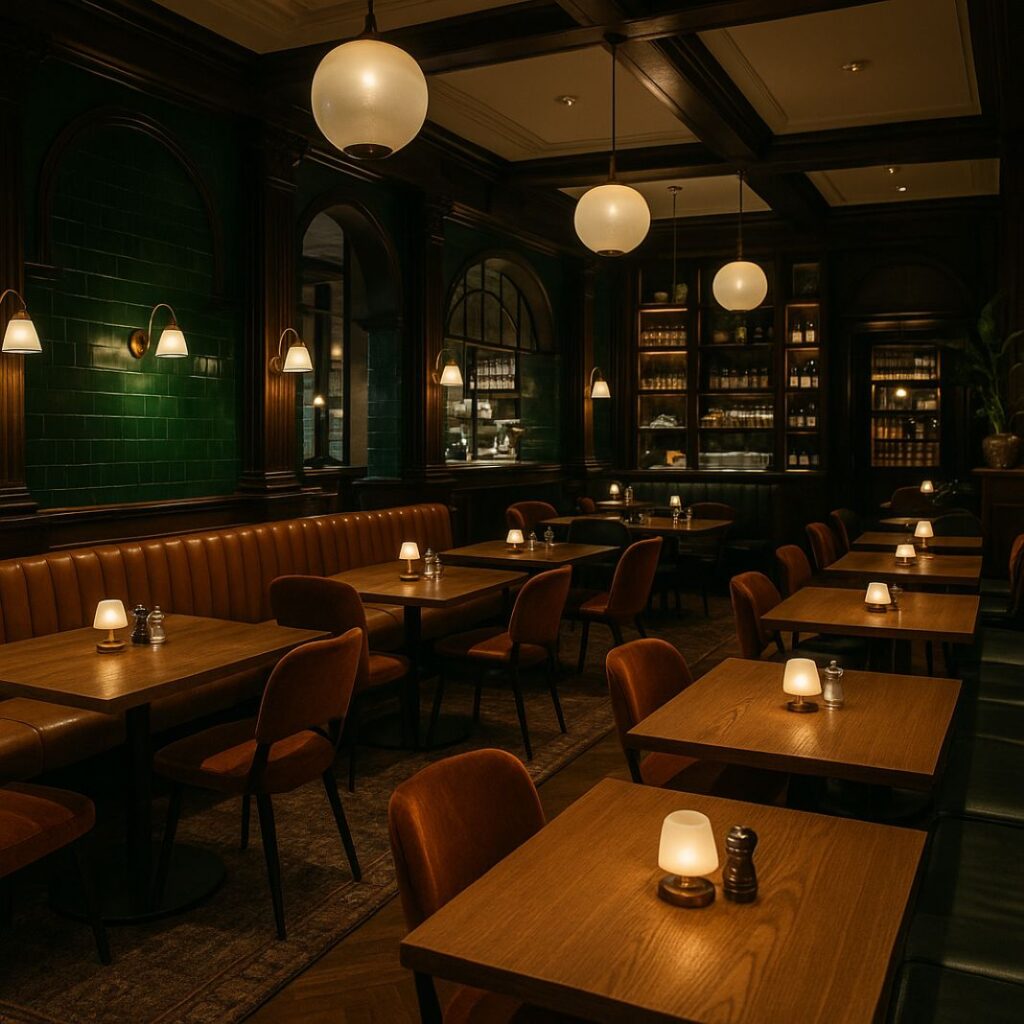
An AI photo displaying various solid oak cafe tables.

Pro Tip: Don’t assume matching standards guarantees durability in dynamic spaces.

How Commercial Spaces Actually Use Tables

The intended use of tables and how they are actually used in commercial environments rarely align.

In offices, people lean on them during casual conversations, move them for meetings, and sometimes stand at them. In hospitality settings, tables support varied and heavy use throughout the day.

Cleaning is frequent and aggressive. Tables are clustered, dragged, and leaned on from every angle. While none of this is misuse, it’s behaviour that universal designs often fail to accommodate.

When Movement, Cleaning, and Reconfiguration Become Stress Tests

Commercial table durability is rarely tested by single impacts. Routine actions, repeated every day, are what stress tables the most.

Dragging tables across uneven floors slowly wears out joints. Strong cleaning products wear down finishes and adhesives. Frequent layout changes introduce small shifts that loosen components over time.

The parts designed for flexibility,like folding legs or castors,tend to fail first. These features offer convenience early on but often become liabilities as stress accumulates.

The table might not collapse,but it becomes unreliable. That reliability loss affects day-to-day operations more than dramatic breakages ever would.

Where Standard Tables Break Down First

Failure tends to start in familiar places:

  • Legs loosen due to movement and uneven surfaces.

  • Edges chip as people grip, lean, or shift them.

  • Fixings wear down after repeated tension and minor knocks.

  • Surfaces fade or scratch under frequent cleaning and use.

While these issues often develop slowly, they create long-term headaches. One wobbly table can affect workflow; a dozen can undermine confidence in the workspace.

Why Small Failures Create Big Operational Problems

Small issues are easy to overlook,but they add up quickly.

A few loose screws or worn edges don’t just mean inconvenience. They create workarounds. Staff avoid certain tables. Maintenance teams spend more time on repeated fixes. Clients and guests notice.

The result is a drag on efficiency, aesthetics, and morale. When replacements don’t match the original set, consistency is lost, and the space starts to feel patched together.

Common Procurement Mistakes That Lead to Furniture Mismatch

While intentions are sound, there are a few recurring procurement oversights that contribute to long-term table failure:

  • Relying solely on specification sheets: Technical compliance does not always translate into operational suitability.

  • Not consulting end users: Those who interact with the furniture daily often have insights into how it will really be used.

  • Ignoring layout change frequency: Spaces that shift regularly need flexible or modular designs, not fixed furniture.

  • Focusing on unit cost over lifecycle value: A lower upfront price can obscure higher long-term maintenance or replacement costs.

  • Assuming cleaning practices are uniform: Variability in cleaning agents and routines can affect finish durability.

By recognising these patterns, buyers can avoid repeat failures and make informed decisions that favour fit-for-purpose furniture over default standardisation.

Custom Tables for Real Commercial Use

Tired of flimsy, off-the-shelf tables? We build to match how your space really works.

Enquire About Made-to-Measure Tables

Why Standardisation Persists Despite Repeated Failures

Even when issues emerge, standardised tables remain popular.

Procurement teams are encouraged to play it safe. Pre-approved models reduce complexity, keep costs visible, and help tick off compliance checklists. These incentives prioritise consistency over suitability.

Standards from bodies like the British Standards Institution offer reassurance but don’t reflect day-to-day challenges. The gap between design compliance and lived experience often goes unaddressed, even within broader facilities management frameworks.

Responsibility is shared across departments, so long-term performance often takes a backseat. Once a standard solution is chosen, repeating it feels easier than questioning it.

Rethinking Suitability Instead of Searching for the “Perfect” Table

Working with specialists who understand commercial demands, such as Tablemaker, can help bridge the gap between operational requirements and long-term value. There is no perfect table. But there are better questions to ask.

  • Who will use the table?

  • What roles does it need to serve?

  • How often will it be moved or cleaned?

Shifting focus from standardisation to suitability allows for smarter choices. It encourages buyers to factor in real use rather than theoretical benchmarks.

Each commercial environment has unique requirements, so not every space benefits from the same design. A busy events area might need durable modular units. A quiet office may benefit from lighter-weight options.

When tables are selected based on how they will genuinely be used, they last longer, perform more effectively, and minimise long-term issues.

Trade-Focused Table Design Support

Architect or designer? We collaborate closely on finishes, sizes, and layouts.

Start a Project with Tablemaker

Tablemaker

55 High St, London N8 7QB

02083416334

HVQM+58 London
 

Posted on

7 Points Facility Managers Look for When Replacing Tables at Scale

7 Points Facility Managers Look for When Replacing Tables at Scale Tablemaker

7 Points Facility Managers Look for When Replacing Tables at Scale

What do facility managers prioritise when replacing tables at scale?

Facility managers look for tables that can withstand heavy use, remain consistent across batches, require minimal upkeep, offer repair options, meet safety standards, support standardisation, and deliver long-term value. These considerations underpin reliable commercial table procurement strategies and guide smart facility furniture replacement decisions.

Table of Contents

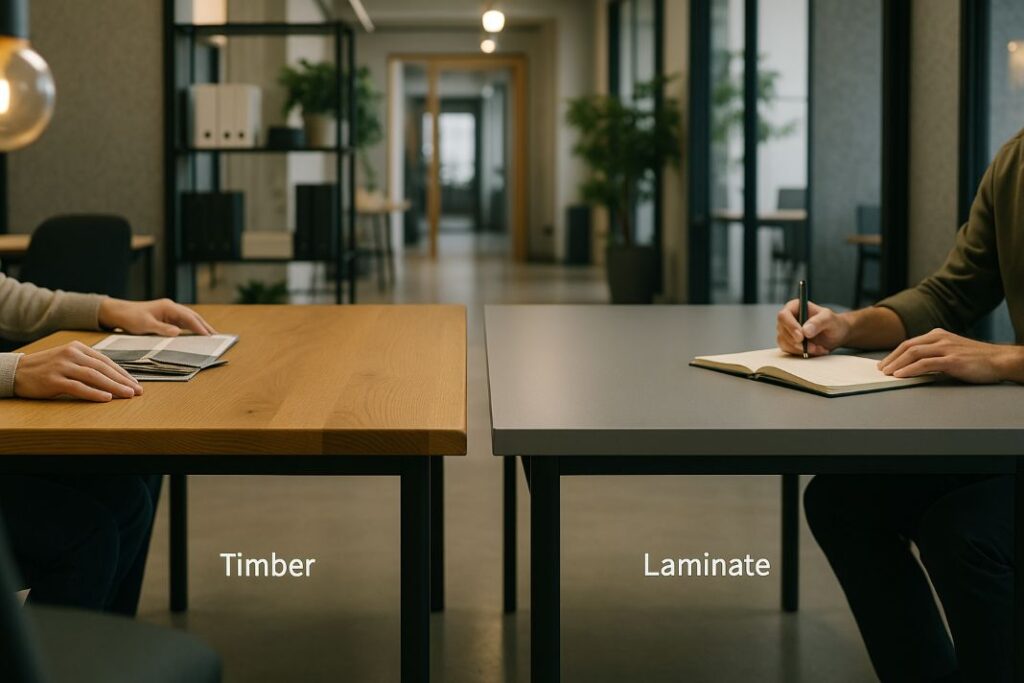
An AI photo comparing Timber vs Laminate desks.

Introduction: Why Replacing Tables at Scale Is a Different Decision

In facilities management, tables are not just pieces of furniture. They are operational assets with implications for safety, functionality, and lifecycle cost. A small flaw that might go unnoticed in a single unit can escalate into a significant operational risk when multiplied across a large estate.

Hospitals, universities, and public sector environments often require tables deployed at scale. Weak points such as joint fatigue or finish deterioration can disrupt operations, escalate costs, and undermine procurement credibility. Replacing tables at scale means adopting a structured, lifecycle-focused approach that prioritises standardisation, operational risk reduction, and asset planning.

Proven Durability Under Daily, High-Volume Use

What makes a commercial table truly durable?

In high-use environments, durability goes beyond the superficial. Tables must hold up under repetitive strain from cleaning, movement, and constant interaction. Over time, even minor weaknesses can lead to:

  • Surface delamination

  • Joint loosening

  • Edge wear

  • Hardware fatigue

Tables tested to BIFMA standards or built to contract-grade specifications are designed to withstand these stresses. For example, BIFMA X5.5 includes cyclic loading tests and static load tests to verify structural integrity under repetitive commercial use. Edge strength, joint reinforcement, and surface resilience all contribute to a table’s ability to endure.

Facility managers need products that demonstrate durable performance under routine use rather than only under ideal conditions. Custom commercial manufacturers such as Tablemaker – Made-to-Measure Tables for Commercial Interiors – often support this by building to specification, using high-performance materials like solid oak, American black walnut, and high-pressure laminates that suit demanding environments.

Pro Tip: Repairability is your insurance policy against costly replacements and downtime.

An AI photo of a custom edge table in a restaurant.

Pro Tip: Always confirm future batch consistency in writing if you’re sourcing tables in phases.

Why does consistency matter when reordering commercial tables?

Consistency across batches, reorders, and sites is essential in multi-site operations. A table that performs well in one location should match exactly when rolled out at scale.

Even subtle inconsistencies such as changes in surface sheen, colour tone, or hardware fitting can cause:

  • User dissatisfaction

  • Misalignment in visual standards

  • Functional mismatch in height or balance

ISO-aligned manufacturing and strict specification lock-in help reduce batch variance. Predictable quality supports visual harmony and functional repeatability across all locations.

What does low-maintenance table design really involve?

Low-maintenance tables do more than resist wear. They reduce the facilities workload, allow for predictable cleaning schedules, and minimise reactive repairs.

Look for tables that:

  • Tolerate commercial-grade cleaning agents

  • Require minimal tightening or adjustment

  • Maintain appearance over time

  • Fit easily into existing maintenance workflows

Predictable upkeep allows facilities teams to plan cleaning and inspections rather than react to sudden failures.

Custom Tables Built for Commercial Use

Built to spec, built to last. Get durable, design-led tables for your business with full trade support.

Get a Quote

What role does repairability play in long-term asset value?

Repairability is a key factor in sustainable procurement. In large estates, full unit replacement is rarely viable for every failure. The ability to replace damaged components such as tops or legs transforms disruption into manageable maintenance.

Modular commercial furniture supports:

  • Longer asset lifespans

  • Spare part sourcing

  • Simpler maintenance routines

  • Waste reduction

  • Alignment with sustainability reporting targets

Repairability lowers lifecycle cost and supports sustainability goals without relying on vague environmental claims.

Why is safety a procurement issue, not just a compliance one?

Safety is essential in public and high-traffic environments. When a table collapses or tips, the focus shifts to procurement documentation and standards.

Tables must meet stability and load requirements under guidance from bodies such as the Health and Safety Executive and BIFMA. For instance:

  • BIFMA X5.5 recommends a 750 Newton static load test for commercial tabletops

  • HSE looks for evidence of load ratings and tipping resistance

Procuring tables with verified test results and documented specifications supports safer outcomes and legal defensibility.

How does standardisation reduce operational friction?

Standardising tables across an estate simplifies logistics and operations. A consistent specification:

  • Reduces training time

  • Simplifies stocking of spare parts

  • Enables easier room reconfigurations

This approach promotes efficiency and reduces cognitive load for staff across maintenance, cleaning, and setup teams. For example, in hospital environments, standardised tables allow quick room reconfiguration without requiring new training or tools.

When might standardisation not be the right choice?

Some environments such as heritage spaces, research labs, or design-focused public areas may require flexibility in furniture choices.

In such cases:

  • Define clear exceptions within a broader framework

  • Document where and why custom specifications apply

  • Balance operational ease with special context requirements

How should value be measured in table procurement?

Short-term price savings often lead to long-term costs. To properly assess value, procurement teams should consider:

  • Lifecycle cost over five to ten years

  • Frequency of replacement

  • Cost and time of repairs

  • Downtime from furniture failures

For example, a table that costs £250 and lasts ten years with minimal maintenance outperforms a £150 table that needs replacing every three years. Tables that are durable, repairable, and consistent deliver better long-term value than lower-priced, higher-maintenance options.

Well-suited to this kind of value-focused approach are workshops like Tablemaker, who specialise in fully custom, trade-built tables for commercial interiors. Their hands-on approach, wide range of finishes, and direct coordination with project teams allow organisations to maintain quality control from design through delivery.

What should you ask suppliers before committing?

A strong procurement outcome starts with supplier clarity. Ask:

  1. Can you guarantee consistency across all batches?

  2. Are durability and safety test results available in writing?

  3. Do you support modular repairs with spare parts?

  4. Will product specifications remain stable over time?

  5. Are your products tested to ISO, BIFMA, or equivalent standards?

These questions help align expectations and avoid surprises during rollouts.

Risk Assessment Checklist: Is Your Current Furniture Fit for Scale?

  1. Are the same models used across all sites?

  2. Do you have documented batch specifications and consistency records?

  3. Can key parts be replaced without full disposal?

  4. Are all tables certified to relevant durability and safety standards?

  5. Is maintenance frequency known and planned?

  6. Has lifecycle cost been evaluated per table model?

Two or more “no” answers may signal the need for a replacement strategy.

Conclusion: A Decision Framework That Scales

When replacing tables at scale, seven key criteria help facility managers and procurement teams make clear, defensible decisions:

  1. Proven Durability

  2. Batch and Reorder Consistency

  3. Low Maintenance

  4. Repairability

  5. Safety and Load Performance

  6. Standardisation

  7. Long-Term Value

This framework reduces risk, promotes operational efficiency, and supports smarter commercial table procurement.

Upgrade to Made-to-Measure Tables

Avoid the hidden costs of off-the-shelf tables. Our custom builds match your exact needs and finish preferences.

Start Your Project

Tablemaker

55 High St, London N8 7QB

02083416334

HVQM+58 London
 

Posted on

What Interior Designers Know About Tables That Buyers Often Miss

What Interior Designers Know About Tables That Buyers Often Miss Tablemaker

What Interior Designers Know About Tables That Buyers Often Miss

What do interior designers understand about tables that buyers often overlook?

Interior designers approach tables with long-term function, durability, and real-world use in mind. Buyers may focus on the visual impression, while designers consider how tables endure everyday behaviour over time. Their insight helps them anticipate wear, prevent issues, and choose pieces that perform in commercial spaces.

Table of Contents

Introduction: Why Tables Reveal the Biggest Gap Between Buying and Specifying

In a busy co-working space, someone drops their bag onto the table’s edge. Another leans against it during a quick chat. Cleaning staff shift chairs in and out several times a day. None of this stands out. However, to an interior designer, these ordinary actions clearly indicate potential trouble.

Tables seem simple, but no other furniture piece takes on more subtle wear, ongoing friction, or behavioural pressure. Designers understand this reality. Buyers often realise it only when signs of strain begin to show.

Visual appeal often leads purchasing decisions. Designers, however, think in terms of long-term outcomes. They anticipate gradual failures that build up unnoticed until the table feels beyond repair.

Why Interior Designers Don’t Judge Tables the Same Way Buyers Do

Designers avoid basing decisions solely on style or preference. Their choices reflect experience, awareness of risk, and long-term accountability. A buyer might admire a table’s look and feel, while a designer considers how it may behave six months later.

Years of work on commercial interiors and FF&E specification help designers spot patterns others miss. They have seen veneer finishes wear unevenly, joints loosen early, or fixings fail after moderate use. Each experience shapes future decisions.

While buying tends to centre on preference, specifying involves responsibility. That shift affects how every part of a table is assessed. Designers examine joinery, structural strength, fixings, and table layout while thinking ahead. This contrast between furniture buyers vs designers highlights why long-term thinking changes the outcome.

Pro Tip: Design intent matters, but daily behaviour defines how long a table will actually last.

An AI photo of a round oak display table in a store.

Pro Tip: Never assume “commercial-grade” means fit for purpose—always check what was tested and how.

The Gap Between How Tables Are Meant to Be Used and How They Actually Are

Showroom displays and product brochures present tables in pristine conditions. In real settings, people lean, perch, drag, and stack. These everyday actions place more stress on tables than intended by the design.

In hospitality venues and office interiors, spaces shift frequently. A table used for a team session today may be relocated for an event tomorrow. Cleaning is done quickly, not delicately. Clients rearrange furniture without hesitation.

Designers prepare for this behavioural reality. Companies like Tablemaker – Made-to-Measure Tables for Commercial Interiors – understand how vital it is to match build quality with real-world demands. When choosing tables for commercial spaces, these small oversights can quickly turn into costly problems. They know intended use rarely matches actual use. Tables for commercial spaces must stand up to real-world behaviour, not just pass lab tests.

The Subtle Stress Points Buyers Rarely Notice Until It’s Too Late

Damage does not usually appear suddenly. It begins with subtle signs. A wobble from uneven floors. A chipped edge from repeated contact with chairs. Fixings that loosen after steady movement, not sudden force.

These are not faults–they are evidence of environmental stress and ongoing wear. Designers learn to recognise early signs and avoid construction that encourages failure over time. These inspections form the backbone of how designers evaluate table durability considerations in real spaces.

By examining table construction, joint tolerances, and joinery details, designers spot weak points in advance. Stylish tables that hide poor craftsmanship beneath polished surfaces rarely last long.

What “Commercial” Really Means in Practice (and Why Designers Are Skeptical)

To buyers, the phrase “commercial-grade” feels like a guarantee. For designers, it prompts questions. There is no consistent definition of ‘commercial-grade’; what qualifies varies greatly depending on context, product, and supplier.

“Commercial” might mean tougher finishes, added weight capacity, or slightly different materials. Designers want clarity. They ask what parts were tested, how they performed, and under what conditions.

The furniture in a quiet meeting room will need different strengths than one in a busy café. Designers rely on practical judgement, not vague labels, to avoid mismatched expectations and premature wear.

Custom Tables Built to Last

Tell us what your space needs and we’ll build a made-to-measure table that’s ready for real use, not just for looks.

Request a Quote

Why Designers Think in Years, Not Purchases

A buyer might wonder how a table looks on delivery. A designer asks how it will look in three years.

Designers plan for long-term performance. A table that wears early, cannot be repaired, or looks dated too quickly undermines its value. It brings added cost and damages confidence in the space.

Lifecycle costing, repairability, and visible wear patterns all influence decisions. Designers prefer materials that handle regular cleaning and shapes that allow replacement of damaged parts. These choices support longevity and reduce disruption.

Clients may not comment on a table that performs reliably for years, but they will certainly notice one that fails prematurely.

When Visual Appeal Quietly Undermines Long-Term Performance

Some tables impress visually but struggle with durability. While slim profiles, high-shine finishes, and sharp corners may align with current trends, they often bring practical challenges in demanding environments.

Designers consider how a table functions in real settings. A sleek, thin top may limit fixing depth. A fashionable finish may scratch easily. Refined edges might chip quickly with routine contact.

Designers respect styling, but they prioritise substance. They may choose a thicker edge, a finish that masks wear, or reinforcements that keep the form intact.

To verify quality, many designers check for tactile clues. They run fingers along edges for sharpness, check beneath the top for fixings, and apply gentle lateral force to test joint movement. These subtle checks reveal more than aesthetics ever will.

These trade-offs demonstrate practical, well-informed decision-making. However, there are specific situations where visual impact rightly takes priority over durability. In reception areas or high-design spaces, style can take the lead—if chosen with intention and backed by basic durability.

What Buyers Can Learn by Borrowing a Designer’s Way of Thinking

Buyers do not need to become designers to benefit from a shift in perspective. At Tablemaker, we regularly collaborate with interior designers and commercial clients to create tables that align with long-term performance expectations. Asking better questions is often enough.

What kind of wear will the table face? How will it be moved, cleaned, and handled day-to-day? What fails first—fixings, surface, or structure?

Designer hesitation reflects experience with consequences. By focusing on outcomes rather than surface labels or first impressions, buyers make smarter purchases that last longer and perform better.

Designers view tables as practical tools that shape daily behaviour and space usability, not just standalone furniture pieces. Buyers can adopt that mindset by considering a few targeted questions. Adopting just a touch of interior designer insight on furniture helps them make choices that last longer and look better doing it:

  • How was this table tested?

  • What lies beneath the surface finish?

  • Are the joints secure and serviceable?

By considering these questions, buyers build confidence, avoid early failures, and select tables that truly suit their space and purpose.

Work With Designers Who Get It

We speak your language—collaborate with Tablemaker to specify tables that meet both creative and commercial demands.

Start a Project

Tablemaker

55 High St, London N8 7QB

02083416334

HVQM+58 London
 

Posted on

What Makes a Table Suitable for Commercial Insurance and Risk Assessments?

What Makes a Table Suitable for Commercial Insurance and Risk Assessments Tablemaker

What Makes a Table Suitable for Commercial Insurance and Risk Assessments?

Why are tables considered in commercial risk assessments?

Tables are rarely questioned until they become a problem. While often seen as background objects, their role in shaping workplace safety is significant. Their design, condition, and how they are used can all influence liability and insurance assessments.

Table of Contents

An AI photo of a round solid oak coffee table.

Why Tables Are Considered in Commercial Risk Assessments

Insurers evaluate how tables function within the entire space. They are not judged in isolation. Instead, they are assessed based on their impact on movement, safety, and interaction.

A stable, well-constructed table can still present risks if it is poorly placed or worn out. The Health and Safety Executive (HSE) includes furniture in its assessment of workplace hazards. These assessments directly affect both public and employer’s liability policies.

Assuming a table is safe simply because it has not caused harm before can be misleading. A single incident, such as a collapse or trip, may alter your risk status instantly. That is why tables are relevant in any comprehensive commercial risk assessment. Including them in your hazard identification process is essential to responsible planning.

How Insurers Judge Furniture Risk (Not How Buyers Do)

While buyers focus on comfort and aesthetics, insurers approach tables from a risk standpoint. They assess how and when failure might occur.

Here is what matters to them:

  • Likelihood and severity: How often could something go wrong, and what would the consequences be?

  • Residual risk: After mitigation, what dangers still remain?

  • Suitability versus durability: A robust table might not be appropriate in every setting.

Insurers use the same logic they apply to ladders or shelving. Anything regularly interacted with must be viewed through a risk lens. That is why insurance suitability for commercial tables extends well beyond appearance. Their decisions are shaped by risk exposure modelling and loss prevention goals.

Pro Tip: Documenting regular table inspections can strengthen your defence in liability claims.

An AI photo of a London restaurant showcasing its square solid oak dining tables.

Pro Tip: Even a visually perfect table can become an insurance red flag if it doesn’t match its environment.

Temporary and Pop-Up Furniture: Special Risks to Consider

Folding tables, mobile desks, and portable setups are widely used in events, education, and retail. While convenient, they often come with increased risks.

Common vulnerabilities include the following:

  • Weaker joints: Folding designs often rely on hinges and clips that are prone to fatigue.

  • Transport wear: Repeated setup and movement can compromise structural integrity.

  • Lightweight builds: These can tip or flex more easily under pressure.

  • Improper setup: A partially locked table can collapse unexpectedly.

Because of these factors, insurers expect more frequent inspections and careful use of temporary furniture in commercial environments. Temporary furniture should undergo the same level of hazard identification as permanent installations.

Environment Matters: Offices, Hospitality, Retail, and Shared Spaces

The right table for one space might be a liability in another. Environments influence how furniture wears, how it is used, and who interacts with it.

Consider the following differences:

  • Offices: Controlled access and low-impact use.

  • Hospitality venues: Frequent movement, spills, and customer contact.

  • Retail spaces: Regular layout changes and exposure to heavy foot traffic.

  • Shared zones: Unpredictable use with little supervision.

Environmental stress, such as heat, moisture, or aggressive cleaning, can also accelerate degradation. Matching furniture to its context is essential to managing workplace furniture liability.

Maintenance, Wear, and the Risk That Builds Over Time

Tables naturally degrade with daily use. Without checks, they can slowly become unstable or hazardous.

Watch for the following:

  • Loose fixings: Screws and bolts may loosen through repeated use.

  • Worn surfaces: Splinters or cracks could injure users.

  • Creeping misalignment: A slow lean might go unnoticed until it becomes a problem.

  • Neglected maintenance: Without records, insurers may assume that risks are not being managed.

Scheduled inspections and repair logs show insurers that lifecycle risk is being monitored and controlled. This supports your duty of care and shows commitment to operational responsibility.

Red Flags: Signs a Table May Raise Insurance Concerns

Use this quick list to identify at-risk tables:

  1. Wobble or instability under mild pressure

  2. No inspection history or recorded maintenance

  3. Positioned in a setting it was not designed for

  4. Visible surface damage or structural wear

  5. Loose or missing components

  6. Temporary furniture used long-term

  7. Clear mismatch between table design and current usage

Each of these is a clear risk indicator that may lead to insurance concern if not addressed promptly.

Request a Custom Quote

Get a made-to-measure commercial table tailored to your exact layout, usage, and risk needs.

Get Your Quote

Responsibility and Liability: Who Carries the Risk Once a Table Is in Use

Once furniture is installed, the burden of safety typically shifts from the supplier to the user. This transition is often misunderstood.

Key points to clarify include:

  • Use-case drift: Has the table ended up in a riskier location than originally intended?

  • Monitoring: Are regular checks being carried out?

  • Preventative care: Were hazards foreseeable and avoidable?

Insurers focus less on assigning blame and more on whether the risk was actively managed. Defining who is responsible early helps prevent disputes later. Clarifying operational responsibility reduces assumptions and supports liability management.

How to Assess Whether Your Tables Would Raise Insurance Concerns

No advanced equipment is needed to perform a meaningful self-assessment. A basic awareness of risks goes a long way.

Here is what to do:

  1. Check for movement, such as rocking, leaning, or sagging

  2. Confirm that the table fits its current use and environment

  3. Look closely for surface and joint wear

  4. Ensure that repair or inspection records are available

By thinking like an assessor, you will spot early warning signs before they lead to incidents. This proactive approach strengthens your insurance profile, aids in loss prevention, and supports a culture of duty of care. For businesses looking to proactively reduce risk through thoughtful table design, suppliers like Tablemaker offer built-to-order solutions that align durability with commercial insurance expectations.

Explore Custom Table Styles

See how our tables combine structural integrity with standout design for commercial interiors.

Browse Our Range

Tablemaker

55 High St, London N8 7QB

02083416334

HVQM+58 London

 

Posted on

Why Contract-Grade Tables Cost More (And When They’re Worth Every Pound)

Why Contract-Grade Tables Cost More (And When They’re Worth Every Pound) Tablemaker

Why Contract-Grade Tables Cost More (And When They’re Worth Every Pound)

Why do contract-grade tables cost more than other commercial tables?

Contract-grade tables are built for high-traffic, high-impact environments where longevity, safety and compliance are critical. Unlike standard commercial options, these tables are designed to withstand repeated use, structural stress and meet demanding industry standards. Their price reflects their purpose: durability, reliability and rigorous testing over time.

Table of Contents

An AI photo of a solid oak cafe tables.

What “Contract-Grade” Really Means – and Why Buyers Often Misinterpret It

Ask ten people what “contract-grade” means, and you’ll likely hear ten different interpretations. Some treat it as marketing language. Others assume it is a sign of luxury. In practice, “contract-grade” is best understood as a classification based on usage, not a symbol of prestige.

In technical terms, contract-grade furniture is engineered for high-traffic environments. Examples include hospitality venues, schools, co-working spaces or public buildings. Organisations like BIFMA (Business and Institutional Furniture Manufacturers Association) and FIRA (Furniture Industry Research Association) set commercial furniture standards that define this category.

Misunderstandings often arise when appearance is mistaken for durability. A stylish piece may lack the structural resilience needed for intense daily use. On the other hand, something that looks plain may exceed expectations in performance. Contract-grade means the furniture is built to handle continuous pressure.

It is also easy to confuse “commercial-grade” with “contract-grade” furniture. While both serve business settings, contract-grade is tested against stricter criteria for strength and safety. Using the wrong grade can lead to premature failure, warranty exclusions, or safety concerns.

Understanding the language of specification, use-case matching, and usage classification helps buyers avoid costly regrets and ensures they choose furniture designed for the environment it will serve.

Why Contract-Grade Tables Cost More Than Other Commercial Tables

Cost differences between standard commercial tables and contract-grade tables come down to performance expectations and durability under pressure.

Contract-grade tables are built to handle repetitive strain, frequent movement and high-intensity use. These scenarios include dragging across hard floors, supporting heavy loads or enduring accidental misuse. They are expected to last in challenging settings.

What looks similar on the outside often hides critical engineering tolerances, reinforced joints and enhanced construction. These design features significantly increase a table’s failure threshold and extend its design lifespan.

In large-scale commercial fit-out projects, the cost of replacement multiplies quickly. This is why many hospitality procurement models invest in contract-grade tables upfront. This approach helps mitigate risk and reduce long-term outlay.

When viewed in this way, higher prices reflect risk-informed design decisions, not unnecessary markup. If you are comparing contract-grade vs commercial furniture, consider how your tables will be used and what failure could cost you.

Pro Tip: Tables fail at the joints first — ask how they’re reinforced before you buy.

An AI photo of a boutique shop oak display table.

Pro Tip: Always match furniture spec to real-world use, not idealised assumptions.

What You’re Actually Paying For: Materials, Construction and Testing

For commercial spaces where aesthetics meet functionality, it’s essential to choose products that are both robust and tailored to fit. At Tablemaker – Made-to-Measure Tables for Commercial Interiors, we specialise in solid wood, custom-built tables designed specifically for high-use environments like cafes, offices and retail settings.

To understand why contract-grade tables cost more, it helps to break the price into visible and invisible value.

Materials are selected not just for looks, but for performance. Laminates are tougher. Subframes use robust components. Surfaces are designed for high levels of surface durability, resisting dents, stains and abrasion.

Contract-grade table construction often includes subframe reinforcement, industrial joinery and durable fittings that are rarely found in lower-spec tables. These features protect against long-term joint fatigue and shifting under load.

Then there is the unseen process of furniture durability testing. Standards set by BIFMA and FIRA include load testing, stability assessments and sometimes fire performance classifications. These simulate years of usage in compressed timelines.

These are the attributes that prevent collapses, reduce wear and maintain functionality. While the cost is higher, so is the peace of mind.

Why Lower-Cost Tables Fail Faster in Real Commercial Use

Low-cost tables often perform well in theory but struggle in real-world commercial settings. This happens because their design rarely accounts for actual user behaviour.

Staff lean on edges. Customers drag furniture across floors. Shared spaces lead to unpredictable use. All of this accelerates wear patterns, loosens joints and wears down finishes.

In co-working spaces or hospitality environments, tables are used constantly. These use cases include work, dining, meetings and more. These intensive demands quickly expose structural weaknesses.

When commercial table durability is mismatched with real usage, early failure follows. Recognising how tables are truly used helps avoid oversights and ensures products can withstand usage intensity.

Upfront Price vs Long-Term Cost – What the Numbers Reveal Over Time

Initial savings often mask future costs. Tables that are cheaper to buy may be more expensive to maintain and replace.

Lower-cost models tend to wear out or become unstable within a few years. This short replacement cycle comes with hidden expenses. These include operational downtime, disposal costs and disruptions during refits.

Contract-grade tables reduce these problems. With longer design lifespans, they provide consistent performance and reduced disruption. This contributes to a more stable budget and improved return on investment.

Thinking in terms of total cost of ownership furniture encourages smarter decisions. It is not about spending more, but spending wisely.

To put this into perspective, imagine two scenarios:

  1. Option A: A commercial table costing £120 is used in a high-traffic staff canteen. It begins to wobble and show signs of damage after three years and needs replacing. Over a ten-year period, that table is replaced three times, costing £360—excluding labour and disruption.

  2. Option B: A contract-grade table costing £260 is used in the same space. It holds up for the full ten years without significant issues. The initial investment is higher, but total expenditure is lower, and the space avoids repeated downtime.

This simple timeline highlights the hidden value of longevity.

Ready for Tables Built to Fit, Last and Impress?

We custom-build solid wood tables for high-traffic spaces across hospitality, retail and offices. Designed to perform. Built to order.

Get a Quote Today

When Contract-Grade Tables Are Worth the Extra Investment

Some spaces and operations demand higher resilience, making contract-grade tables a smart and necessary choice.

They are ideal for:

  1. High-traffic, public-facing environments such as cafés, libraries or waiting areas

  2. Rooms with frequent reconfiguration, where furniture is often moved or restacked

  3. Brand-critical spaces where aesthetics and performance impact customer perception

  4. Risk-sensitive settings, including schools, healthcare and council buildings

These are places where breakdowns affect safety, operations and brand trust. In these settings, contract-grade furniture proves its value by avoiding problems, not just lasting longer.

When Contract-Grade Tables Aren’t Necessary – and What to Choose Instead

Not every setting needs maximum durability, which is why flexibility in specification can help businesses get more value from their furniture. Whether you need full-stave oak tables for a premium hospitality venue or laminated birch plywood for a short-term retail install, Tablemaker works with interior designers and architects to deliver exactly what’s needed — without overbuilding or overspending.

Contract-grade is not always essential. In low-use environments, a mid-grade commercial table may meet your needs while protecting your budget.

Good examples include:

  1. Private offices or infrequently used meeting spaces

  2. Short-term installations, like training setups or temporary events

  3. Budget-conscious projects, where over-specification offers no extra benefit

If you are wondering about alternatives to contract-grade tables, mid-grade commercial options are a reliable middle ground. These options are particularly suitable in environments with limited wear and tear.

In these cases, intelligent product specification can stretch your investment further. By aligning furniture classifications with your actual needs, you avoid overspending while still getting dependable performance.

Effective procurement is about fit. It is not just about finish or price.

Buyer FAQs: Common Questions Answered

Do I need contract-grade furniture for a staff kitchen?
Only if it experiences heavy daily use. For quieter, internal-use areas, mid-grade furniture may suffice.

Can I use residential tables in a co-working space?
Yes, but it is generally not recommended. Domestic furniture is not tested for commercial durability or liability requirements.

Is it worth paying extra for tables in meeting rooms?
If the room sees frequent use or hosts clients, yes. If it is a rarely used space, a lighter spec may do the job.

What should I ask my supplier to confirm contract-grade status?
You should request documentation on test standards (e.g. BIFMA or FIRA), warranty terms and usage classification.

How do I know if I’m over-specifying?
You can review the actual usage, foot traffic and potential risks in your space. A supplier or designer can help align grade to needs.

What happens when you under-specify furniture?
You may face early failures, repair costs and disruption to daily operations. In high-traffic areas, under-specifying can cost more in the long run.

Work with Makers Who Understand Commercial Interiors

From durability to design, we collaborate with designers, architects and business owners to deliver made-to-measure tables that meet the brief.

Start Your Project

Tablemaker

55 High St, London N8 7QB

02083416334

HVQM+58 London

 

Posted on

9 Costly Mistakes Businesses Make When Buying Commercial Tables

9 Costly Mistakes Businesses Make When Buying Commercial Tables Tablemaker

9 Costly Mistakes Businesses Make When Buying Commercial Tables

What are the most common mistakes businesses make when buying commercial tables?

Commercial tables are often an afterthought until problems arise. These issues do not usually appear immediately after installation. They reveal themselves gradually through daily wear, poor fit, or the need for premature replacement. Selecting the wrong tables can disrupt operations, reduce productivity, and become more expensive over time. Recognising these risks helps businesses avoid costly commercial furniture procurement errors and invest in long-term success.

Table of Contents

Mistake 1: Choosing Commercial Tables Based on Price, Not Lifespan

When decisions are driven by price alone, long-term costs often rise. What seems like a budget-friendly option can lead to frequent replacements, interruptions, and added labour.

Key factors that are often overlooked include:

  • The actual lifespan of the table

  • Replacement costs while the space is in use

  • Strength and quality of the materials

Affordable tables may carry hidden expenses. In commercial environments, value over time is far more important than the initial cost. Businesses looking to avoid common table buying mistakes should consider the full cost of ownership and view tables as infrastructure, not just décor.

Mistake 2: Buying Tables Without Defining How They’ll Actually Be Used

At Tablemaker – Made-to-Measure Tables for Commercial Interiors, we often see how versatile use cases shape the success of a space. Commercial tables that begin life as a focal point for meetings can quickly double as hot desks, lunch spaces, or display platforms. Without factoring in these behavioural overlaps, businesses end up with tables that fall short in daily use.

Commercial tables often serve multiple roles, but that is not always considered. A dining area might double as a workspace, or a meeting table may also be used for displays. Without clear planning, tables quickly become unsuitable.

Common gaps in planning include:

  • Assuming a single, fixed function

  • Ignoring daily work patterns

  • Prioritising looks over practicality

Observing how people actually use the space leads to better table selection. In multi-use environments, functionality should guide every choice. Clearly defining your business table requirements helps avoid mismatches from the start.

Pro Tip: Ask suppliers for actual load capacity and joinery details before placing an order.

An AI photo of a restaurant dining table in Mayfair, London

Pro Tip: Always test table dimensions in real space, not just on a floorplan.

Mistake 3: Assuming “Commercial Grade” Automatically Means Durable

The label “commercial grade” is common but lacks a consistent definition. While it suggests strength, it often conceals a wide range of quality.

Potential issues include:

  • Weak structural components

  • Surfaces that wear down under pressure

  • Parts not built for heavy or repeated use

Instead of relying on terminology, assess actual performance. Look for certification, manufacturing techniques, and evidence of strength. The durability of commercial furniture depends on design, not just labels. Always verify that products meet contract furniture standards for your intended use.

Mistake 4: Getting Table Sizes Wrong for Real Movement and Flow

A table might technically fit a space but still restrict access. What works in a layout plan may create bottlenecks and frustration in practice.

Important layout considerations include:

  • Adequate room for pulling out chairs

  • Smooth flow during peak times

  • Accessibility for all users

Effective space planning accounts for both furniture and movement. Buying tables for commercial use requires understanding how people interact with the environment. Evaluating commercial layouts thoroughly can prevent costly rework and layout failures.

Custom Tables Built to Fit Your Space

No more compromise. Get solid wood commercial tables in your exact size, finish, and material.

Request a Custom Quote

Mistake 5: Ignoring Table Construction and What Fails First

Structural problems tend to begin with minor signs. Loose joints, chipped edges, or wobbly legs often indicate deeper issues.

Vulnerable areas include:

  • Stress-bearing joints and subframes

  • Edging that deteriorates easily

  • Fasteners that loosen over time

Sturdy construction is essential. Ask how the table is made, what materials are used underneath, and where it might fail first. This insight helps avoid premature failure and improves long-term resilience.

Mistake 6: Overlooking How Tables Age Under Daily Commercial Use

Tables in commercial settings do not always break, but they wear out. Over time, surfaces dull, legs wobble, and the overall look deteriorates.

Typical ageing signs include:

  • Dull finishes caused by cleaning and contact

  • Movement from loosened joints

  • A worn appearance that affects brand image

Choosing high-resistance finishes and tough materials extends usability. Factoring in wear from the start protects long-term value. Understanding how commercial furniture ages helps businesses plan ahead and avoid early replacements.

Mistake 7: Choosing Table Designs That Can’t Adapt as the Space Changes

As a business grows or changes, fixed furniture can become a barrier. A table that cannot adapt may need replacing sooner than expected.

Look for adaptable features such as:

  • Modular sections that reconfigure easily

  • Lightweight frames for easier movement

  • Neutral designs that suit multiple uses

Tables that support layout changes add flexibility and save money. Planning for future needs prevents unnecessary purchases. Overlooking adaptability is a common decision blind spot that can become more costly over time.

Adaptable tables also contribute to sustainability by reducing early disposal and frequent reordering. Flexible commercial tables are a practical, future-proof choice.

Mistake 8: Forgetting About Cleaning, Maintenance, and Downtime

Tables that require delicate care or special cleaning can interrupt workflow. If materials cannot handle commercial cleaning, wear will accelerate.

Plan for:

  • Surfaces that resist strong cleaning products

  • Materials that hide stains and marks

  • Low-maintenance components with minimal upkeep

Easy-to-clean tables reduce operational stress and help maintain hygiene. This keeps spaces professional and efficient. Facilities management teams benefit greatly from furniture that does not compromise maintenance schedules and limits downtime.

Mistake 9: Ordering Tables Without Specialist Commercial Guidance

Working with a dedicated maker or supplier who understands commercial requirements can make a real difference. Tablemaker, a North London workshop, collaborates with designers, architects, and business owners to produce made-to-measure solid wood tables built specifically for commercial interiors. This type of hands-on partnership ensures the right questions are asked upfront — saving time, money, and headaches later.

Without expert advice, it is easy to overlook key specifications. General suppliers may not understand the technical needs of commercial spaces.

Typical problems include:

  • Unclear terms on warranties and service

  • Specifications that do not match the space’s usage

  • Missing industry compliance or standards

Specialist suppliers can guide better decisions, ask the right questions, and reduce future regret. Their insight limits risk and improves results. Seeking guidance from commercial furniture experts prevents costly specification mismatch and ensures furniture meets the demands of commercial fit-out projects.

Checklist: What to Ask a Specialist Commercial Supplier

  1. What load capacity is this table rated for?

  2. What kind of joinery or fixing method is used?

  3. Is the table tested to contract-grade or heavy-use standards?

  4. What support is available after purchase?

  5. Are there options for modularity or future layout changes?

Better Questions to Ask Before You Order

Being informed helps avoid mistakes. Here are five key questions every business should ask before committing to a commercial table purchase:

  1. How will this table actually be used each day?

  2. Can it handle the wear of our specific environment?

  3. Does it allow for future space or layout changes?

  4. What is the realistic lifespan, not just the warranty?

  5. What happens if it needs repair, replacement, or support later?

Conclusion: Smarter Commercial Table Decisions Start With Better Questions

Every mistake on this list is avoidable with a bit of planning. Choosing commercial tables is more than selecting something that fits the look of the room.

To make better choices:

  • Start with a clear idea of how the table will be used

  • Consider changes in layout or function over time

  • Focus on durable, tested construction that lasts

Better questions lead to better outcomes. These tables should serve the business rather than create problems. Commercial tables should be treated as long-term assets that support both function and longevity.

Closing Takeaway

Think of commercial tables as infrastructure, not décor. Choose once, choose well.

Explore Our Trade Materials Guide

See what makes our tables last in busy spaces. Oak, walnut, Formica, and more — all tailored to fit.

View Materials & Finishes

Tablemaker

55 High St, London N8 7QB

02083416334

HVQM+58 London
 

Posted on

Custom Desk Tops for Home Offices vs Commercial Workspaces: Key Differences

Custom Desk Tops for Home Offices vs Commercial Workspaces Key Differences Tablemaker

Custom Desk Tops for Home Offices vs Commercial Workspaces: Key Differences

What are the real differences between custom desk tops for home offices and commercial workspaces?

The true differences between home office and commercial workspace desk tops go far beyond looks or price. They stem from how the desk is used, how often, and under what kind of stress. In homes, desks are usually handled by one person with predictable habits. In workplaces, multiple users, higher frequency, and more chaotic behaviours introduce wear, impact, and environmental challenges that home setups rarely face.

Table of Contents

An AI photo displaying different desk top finishes.

How Home and Commercial Desk Top Requirements Actually Differ

Many people assume that a desk is just a desk. If it looks sturdy, surely it will do the job anywhere, right? Not quite. A better analogy would be comparing a private car to a taxi. While they may appear similar, one is engineered for occasional use, the other for relentless, daily operation by different drivers with varying habits.

In home environments, desk tops are often used by a single person. This predictability reduces the chance of unexpected knocks, spills, or misuse. Commercial spaces are different. The same surface might support meetings, hot-desking, or be used by individuals unaware of how to treat the furniture properly. This randomness introduces what could be called a behavioural load, which refers to unexpected stress that accumulates quickly.

Visual toughness often deceives. A desk that looks solid may perform well under light use but degrade quickly when shared or heavily leaned on. Many failures arise not from manufacturing defects but from mismatched expectations.

Understanding these behavioural and environmental differences helps decision-makers avoid superficial comparisons and instead focus on true functional needs.

Pro Tip: Desk edges are your early warning system—if they’re wearing out, the surface is next.

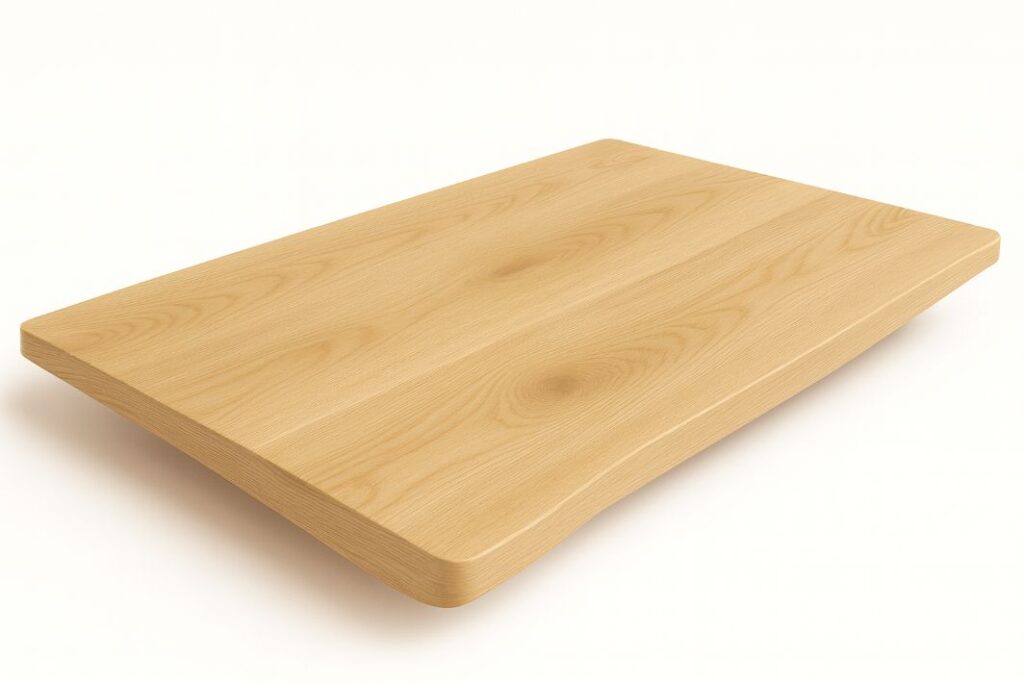
An AI photo of a solid oak desk top.

Pro Tip: Reinforce all monitor arm areas before installation to avoid core damage.

Why Home Office Desk Tops Fail in Commercial Spaces

When a desk top designed for domestic use ends up in a commercial setting, failure is often inevitable, not due to poor quality, but because the surface was never meant to cope with the intensity of workplace use.

Behaviour plays a large role. Home users typically take care of their furniture. At work, users might lean hard on the edges, drag heavy objects, or rest monitor arms that exert continuous pressure on one point. Over time, these actions lead to premature wear, edge degradation, and even structural sagging.

Many domestic desk surfaces simply lack the abuse tolerance needed for commercial demands. Failure often begins visually. Finishes dull or wear away faster. Corners chip. Veneers lift. However, underneath that, deeper problems may be forming. Without the right substrate or load tolerance, a desk top may warp or crack under repeated abuse.

Reframing these failures as foreseeable consequences, rather than bad luck, helps businesses and designers make better-informed choices.

Get a Quote for Your Custom Desk Top

Need a desk top that fits your space and survives real use? We build for how you actually work.

Get a Fast Quote

Common Mistakes When Using the Wrong Desk Tops

Some desk top failures are entirely avoidable. Here are common errors seen when residential-grade surfaces are used in workplace settings:

  1. Prioritising appearance over performance – A desk may look robust but lack the internal strength for shared use.

  2. Forgetting reinforcement around fixings – Areas for monitor arms or grommets are often not reinforced, causing cracking.

  3. Using domestic finishes in heavily cleaned environments – These surfaces cannot cope with daily disinfecting and break down quickly.

  4. Ignoring load ratings – Perching, leaning, or installing arms on unsupported spans can lead to sagging.

Avoiding these pitfalls helps extend lifespan and reduce replacement costs.

Material Construction: What’s Inside Matters More Than the Surface

Many people judge a desk by its finish. While a beautiful surface may appeal visually, it says little about structural performance. What matters most is what lies beneath.

Solid wood, veneered cores, MDF, plywood, and particleboard all behave differently. For example, MDF provides smoothness but can absorb moisture easily. Plywood offers better resistance to warping. Particleboard is cost-effective but often lacks strength for intensive use.

Commercial settings benefit from dense substrates and high core integrity. Over time, all materials move slightly, expanding, contracting, and flexing. Choosing a stable core reduces the risk of cracks, splits, or sagging.

Think of the inside of a desk like layers in a sandwich. Each one affects how the whole structure performs. While two surfaces might look alike on the outside, one could be reinforced for structural stress, while the other is more cosmetic. Understanding these differences empowers better specification.

For example, at Tablemaker — a North London workshop specialising in made-to-measure commercial tables — clients often prioritise core quality and movement resistance as much as the surface finish. It’s this kind of attention to what’s inside that protects against visible and structural failures down the line.

Thickness, Weight, and Load: Designed for One User vs Many

Desks in commercial spaces must carry more than just laptops. They bear the weight of monitor arms, heavy paperwork, users leaning or even perching. The design assumptions between home and commercial desks are vastly different.

At home, point loads are rare and predictable. In contrast, offices may have users who rest body weight on the edge or mount equipment without considering structural limits. This introduces significant span resistance and deflection stress.

Thicker desk tops with higher load tolerance prevent sagging. Reinforcements, such as steel bars or cross-bracing, may be necessary for wider spans. These are often omitted in home-grade furniture.

Choosing the right thickness is not just about looks. It is about ensuring long-term structural stability across different usage patterns.

Edges, Corners, and Impact: Where Wear Shows First

In commercial spaces, damage often appears at the edges and corners before anywhere else. These areas take the brunt of accidental impacts, leaning, dragging of objects, or being knocked by chairs.

Durable edge profiles—rounded, sealed, or reinforced—reduce vulnerability. Veneer lift or chipping often starts at weakly bonded corners, especially in particleboard cores. Once edges degrade, the desk top can look aged and worn, even if the surface remains intact.

From a visual standpoint, edge damage significantly affects perceptions of cleanliness and quality. In design terms, making edges the protagonist of durability planning can help delay visible ageing.

Understanding that wear starts from the outside in allows for smarter material and construction choices.

Finishes, Cleaning, and Maintenance in Real Working Environments

Desks in offices are cleaned more frequently and with stronger chemicals than those at home. This routine can degrade finishes rapidly if materials are not compatible.

Domestic cleaning might involve a gentle wipe-down. Commercial cleaning often involves daily use of disinfectants, sprays, and abrasive cloths. Over time, this chemical exposure erodes protective layers and dulls the finish.

Choosing a finish that withstands repeated cleaning cycles without breaking down is vital. A beautiful finish that cannot tolerate daily maintenance is a poor fit for shared or public environments.

Finish durability should be evaluated not just by appearance but by its chemical resistance and long-term performance in real-world cleaning routines.

Cable Management, Fixings, and Future Changes

In offices, desk tops are rarely left untouched. Grommets are added, monitors mounted, and cables drilled through. These office desk modifications introduce structural risks if not properly planned for.

Home desks may never be altered. However, commercial desk tops must allow for future flexibility. Reinforced zones for fixings, desk grommet installation, and structural tolerance to drilling can make the difference between a long-lasting installation and a compromised surface.

Improvising fixings can split substrates or reduce load capacity. Planning for future changes, even if none are initially required, ensures desks remain adaptable without risk.

Commercial desk tops must be thought of as systems, not static items. Future-proofing them with the right reinforcements reduces long-term cost and disruption.

Choosing the Right Desk Top Without Over- or Under-Specifying

Not every desk needs to be built for battlefield conditions, but under-specifying can lead to expensive mistakes. The key is to align expectations with actual usage.

Some home users may benefit from commercial-grade surfaces if they use their desks heavily. Conversely, overspending on industrial durability for a quiet, occasional-use home office may be unnecessary.

When It’s Acceptable to Use Home-Grade Desk Tops

While most commercial settings require robust construction, there are a few exceptions where home office desk tops can work:

  1. Private offices with low daily use – Where one person works consistently without harsh use.

  2. Breakout or lounge areas – Spaces that serve as temporary workstations or informal zones.

  3. Start-ups or short-term setups – Where budget constraints limit options and usage is light.

These situations still benefit from thoughtful selection, but full commercial-grade specification may not be essential.

Informed custom desk top specification helps avoid common regret. Balancing home vs commercial desk decisions with lifecycle thinking ensures solutions match both needs and longevity.

For commercial clients working with custom sizing, specialist finishes, or particular aesthetics like modern rustic or Scandinavian, companies such as Tablemaker can help align durability with design. Every project should be built around how the desk will actually be used.

Ultimately, choosing the right custom desk top is less about budget and more about understanding behaviour, frequency, and environment. Making decisions with this clarity helps avoid both premature failures and overbuilt excess.

Explore Our Materials and Finishes

See what full-stave oak, black walnut, and birch plywood really look like. Built to last, made to order.

Browse Materials

Tablemaker

55 High St, London N8 7QB

02083416334

HVQM+58 London

 

Posted on

5 Ways to Upgrade an Existing Standing Desk Without Replacing the Frame

5 Ways to Upgrade an Existing Standing Desk Without Replacing the Frame Tablemaker

5 Ways to Upgrade an Existing Standing Desk Without Replacing the Frame

How can you improve a standing desk without replacing the frame?

You can upgrade a standing desk by improving the surface, enhancing comfort, and increasing stability, all without changing the motorised frame. From swapping the desk top to refining finishes, these adjustments can significantly elevate your daily experience.

Table of Contents

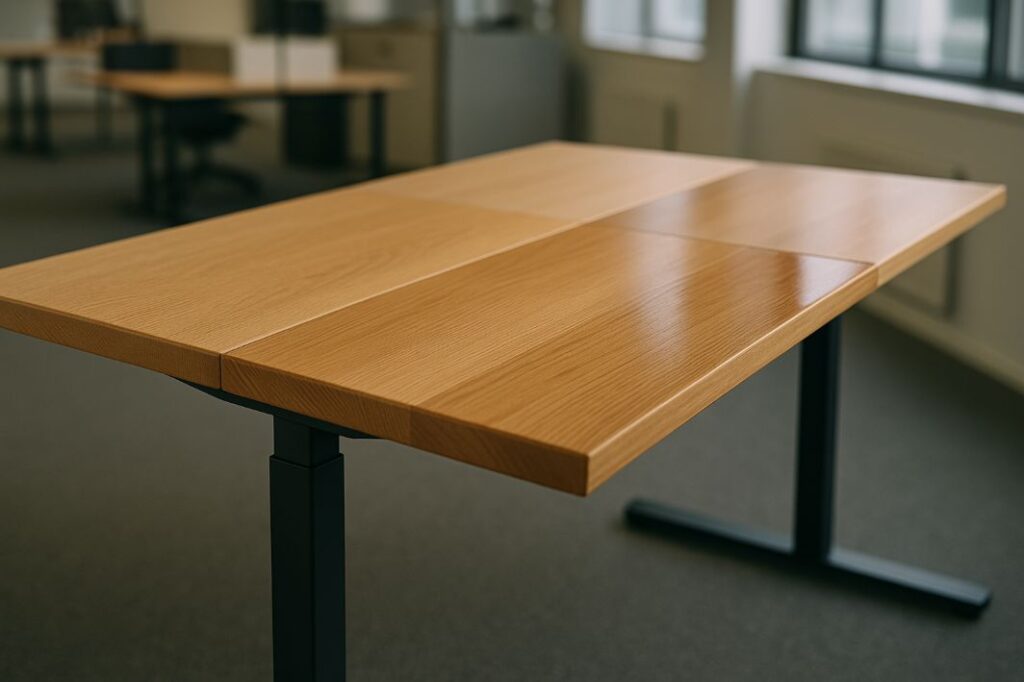
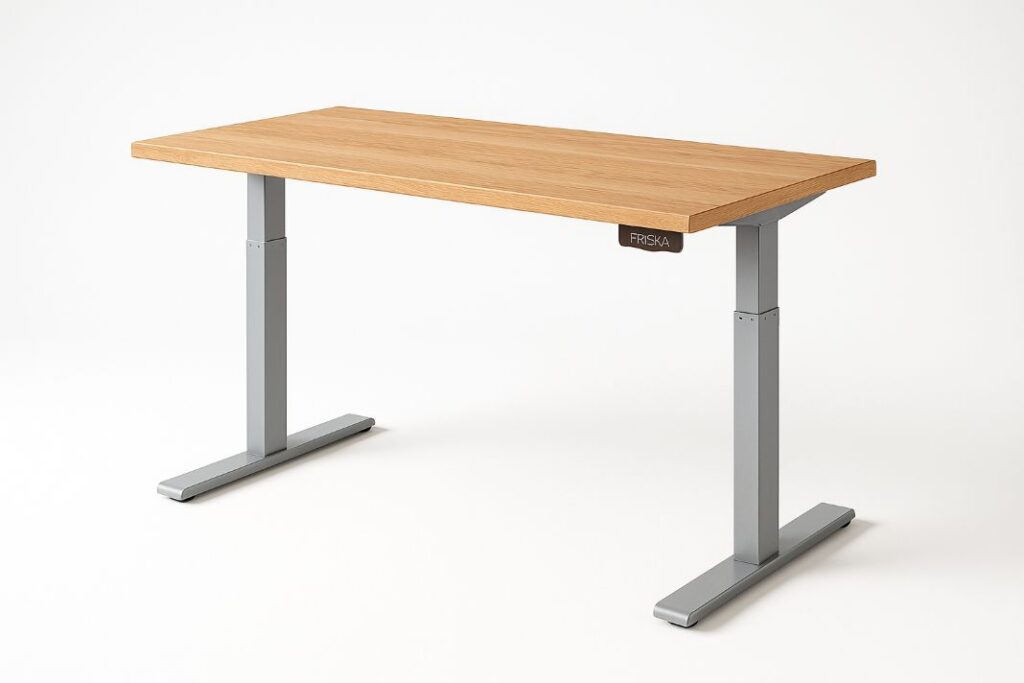
An AI photo of an electric desk with a custom top

When a Standing Desk Works – But Doesn’t Feel Right

There comes a point when a desk that once felt like the right choice begins to feel just slightly off. The motorised frame still moves smoothly. It functions as expected. Yet, working at it each day feels a little less enjoyable than it once did. The desk is not broken, but it no longer feels quite right.

Many people experience this during the life of their home office setup. It is not a sign of failure in your original choice. It is more a quiet friction – the kind that builds over time, through subtle mismatches in texture, finish, or feel. Rather than replacing everything, it may be the experience itself that needs attention rather than the hardware.

If your standing desk frame is still working well, it can be the base for something better. Small changes to the parts you interact with most can dramatically improve how the whole desk feels.

Pro Tip: Look for tops that can be refinished instead of replaced to get real long-term value.

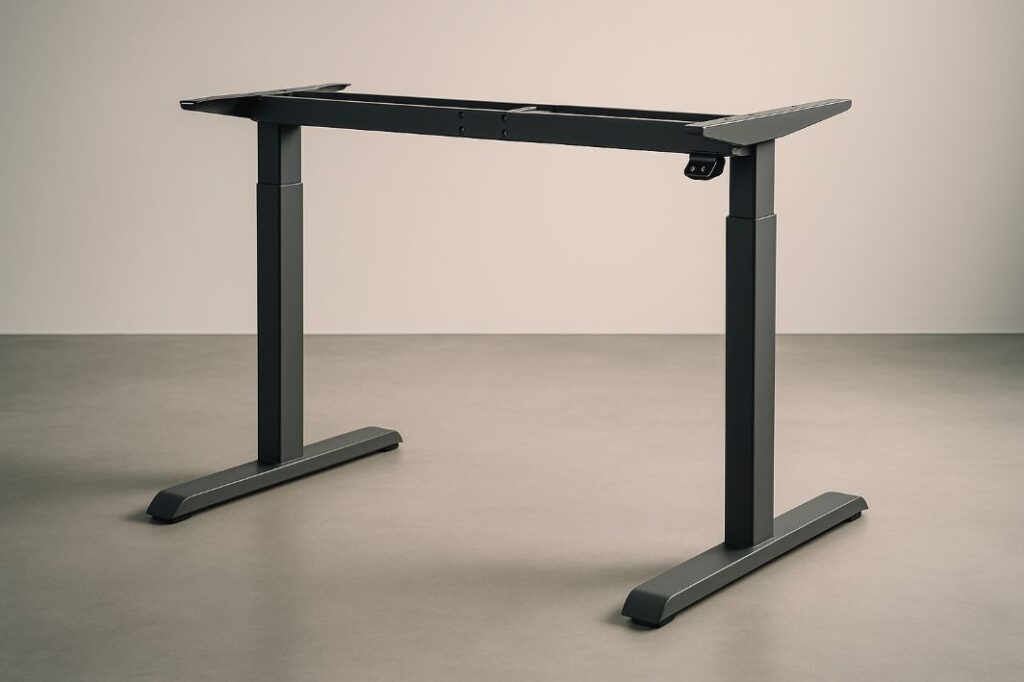
An AI photo of an electric desk frame

Pro Tip: A desk’s surface affects more than aesthetics — it’s what your body interacts with most.

1. Upgrade the Desk Top (It’s the Part You Actually Touch)

Why the Surface Matters

The top of the desk is where all the action happens. Your hands rest there, your tools are placed there, and your attention naturally focuses on it. While the motor and legs quietly do their job in the background, the surface is what defines your experience.

If the surface looks worn or feels unsatisfying, it affects your entire setup. Even with a reliable motorised frame, a low-quality surface can make the desk feel temporary. Swapping out the top allows you to keep the functioning frame while transforming how the desk feels and looks.

A solid wood or custom desk top adds not just durability, but also a noticeable improvement in daily use. At Tablemaker, a North London workshop specialising in made-to-measure commercial tables, custom surfaces are crafted with both function and daily interaction in mind. This is the part you see and touch every day, making it the most impactful place to invest.

2. Choose a Thicker, More Stable Surface to Reduce Wobble

How Surface Thickness Impacts Stability

Checklist: Signs It’s Time to Upgrade the Surface

  1. Your monitor wobbles when typing or adjusting height.

  2. Clamp-on accessories do not stay secure.

  3. The surface feels thin or sounds hollow when tapped.

  4. The finish feels cold, slippery, or chipped.

  5. You feel movement or vibration when writing or leaning.

Many standing desks feel slightly unstable – a bit of shake when typing or movement as the desk adjusts. It is easy to assume the motor or legs are to blame, but often the problem lies with the desk top itself.

Thin tops tend to flex more, especially when the desk is at full height. A thicker, denser surface increases rigidity and distributes weight more effectively across the frame. The increased structure helps reduce vibrations and makes the desk more stable overall.

Focusing on the top, rather than replacing the frame, often solves the problem more effectively. A heavier, more robust desk top makes the entire setup feel steadier and more reassuring.

Upgrade Your Workspace Surface

Enhance the comfort, stability, and look of your standing desk with a custom solid wood top.

Get a Custom Quote

3. Improve Comfort with Better Edges and a More Forgiving Finish

Where Comfort Comes From

Comfort depends not only on posture and chair height, but also on how the desk feels to the touch. Cold, rigid finishes and sharp edges often lead to discomfort during long working sessions.

Rounded edge profiles and natural finishes, such as hardwax oil, improve tactile comfort and reduce pressure on arms and wrists during long work sessions. These small refinements have a big impact on how enjoyable the desk is to use.

Refinishable surfaces also extend lifespan. Hardwax oil finishes can be reapplied as needed, helping the desk top age gracefully rather than wearing out. This makes maintenance part of ownership, not a chore.

4. Make Accessories Work Properly by Fixing the Surface First

Why Accessories Need a Solid Base

Accessories like monitor arms, cable trays, and clamps rely on a solid surface. If the desk top is too thin, inconsistent, or soft, these accessories might not stay firmly in place.

A thicker, stronger surface improves grip strength and load stability. It helps keep accessories aligned and functioning as intended. A firm, well-balanced surface supports better attachment points and minimises unwanted movement.

Rather than troubleshooting accessories that do not perform well, it is often more effective to first check the surface they attach to. An upgraded desk top provides the consistent foundation accessories need to work at their best.

5. Upgrade Once, Not Repeatedly: Think in Terms of Longevity

Build a Setup That Lasts

Instead of making frequent small changes, consider one meaningful upgrade using high-quality materials. This approach saves time, reduces waste, and leads to a more satisfying workspace.

Durable materials like solid wood, finished with hardwax oils, offer long-term value. They resist wear, can be maintained, and develop character over time. This aligns with a sustainable furniture mindset that values longevity and repairability.

Focusing on longevity helps you avoid the cycle of constant replacements. It brings quiet confidence to your setup, knowing it will last. When a desk surface matures well, it becomes part of your routine, not a recurring problem to solve.

A Better Desk Without Starting Again

How Surface Quality Enhances Height Presets

Most motorised standing desks include programmable height presets – allowing you to shift quickly between seated and standing positions. But if the surface lacks stability or comfort, those preset positions can lose their effectiveness.

A solid, well-finished desk top means every preset height feels just right. Your forearms rest comfortably, monitors stay level, and tools remain in place – whether you are working low or high. By upgrading the surface, you enhance the benefits of the frame’s existing features.

Bringing Everything Together

Improving your standing desk does not mean starting from scratch. If the frame still works, keep it. Focus on the parts you interact with daily, such as the desk top, its finish, and the finer details. Whether for home or commercial settings, companies like Tablemaker offer materials and design options that let you upgrade the essentials without altering the frame.

Sometimes, the answer to a better setup is not a new desk, but an improvement of the one you already have. With small, thoughtful upgrades to surface comfort, stability, and finish, your existing frame can support a refreshed, more satisfying workspace that meets your needs long into the future.

Trade and Commercial Orders Welcome

Interior designers, architects, and business owners — we create made-to-measure tables for your spaces.

See Trade Options

Tablemaker

55 High St, London N8 7QB

02083416334

HVQM+58 London

 

Posted on

Quality Control in Mass-Produced vs. Custom Commercial Furniture

Quality Control in Mass-Produced vs. Custom Commercial Furniture = Tablemaker

Quality Control in Mass-Produced vs. Custom Commercial Furniture

What is the difference in quality control between mass-produced and custom commercial furniture?

Quality control (QC) in commercial furniture varies significantly between mass-produced and custom-made pieces. Mass production applies systemised checks, automation, and batch testing to maintain consistency at scale. In contrast, custom furniture is inspected piece by piece, with hands-on oversight and direct maker involvement. Commercial buyers benefit from understanding these two approaches, helping them ensure their choices meet both durability demands and operational expectations.

Introduction: Why Quality Control Determines Commercial Furniture Performance

In commercial environments, furniture must handle more than occasional use. It is exposed to constant contact, frequent movement, and high footfall. From café chairs to hotel reception desks, durability is shaped by the quality control processes behind each item. This article explores how mass-produced and custom furniture manage QC differently – and why those differences matter when choosing furniture for demanding spaces.

Pro Tip: Always test samples under real lighting conditions to catch colour mismatches early.

Pro Tip: Involve the maker before finalising finishes and joinery—it avoids costly redesigns.

How does production philosophy influence quality control in commercial furniture?

Mass production prioritises consistency. QC is embedded in each stage through systems such as Lean manufacturing and Six Sigma, helping to minimise error and maintain uniformity. Standardised materials and methods ensure predictable results, forming the backbone of quality assurance in production environments.

Custom furniture takes a more individualised approach. Makers rely on visual checks, tactile judgment, and experience to guide the process. Adjustments are made manually to ensure each item meets specific expectations.

These different philosophies affect everything from tolerance thresholds to workflow structure. Both methods can achieve contract-grade QC, but they serve different commercial needs.

Furniture That’s Built to Last

Tired of replacing worn-out chairs and tables? Our contract-grade furniture meets commercial QC standards from day one.

Discuss Durable Designs

What does quality control look like in mass-produced commercial furniture?

Factories use automated tools – such as CNC routers and conveyor lines – to deliver consistent results. Quality checks are placed at multiple QC inspection stages throughout production. Batch sampling identifies defects before full production runs are completed.

Key metrics include yield rates, defect percentages, and calibration records. These figures help maintain repeatability, which is especially important in large-scale hospitality or retail projects.

Despite the advantages of automation, minor flaws may still occur if only samples are assessed. Buyers need to understand where mass production delivers best and where to apply extra scrutiny.

How is quality control managed in custom-made commercial furniture?

In custom workshops, quality control is achieved through ongoing manual inspection. Timber is selected individually, joinery is tested as it is fitted, and finishes are tailored to suit the material. Decisions are guided by tools like moisture meters and the maker’s hands-on expertise.

Each piece undergoes complete evaluation rather than representative sampling. While this allows for greater precision and personalisation, it also means small variations between units are likely.

This model suits venues that prioritise uniqueness and craftsmanship. However, it may not meet the consistency needed for repeatable orders.

Elevate your space with Tablemaker’s custom commercial furniture, designed for daily performance and made to reflect your brand’s identity.

How do material selection and preparation affect quality?

Material preparation plays a vital role in furniture performance. Mass producers rely on engineered panels or composite boards pre-graded for strength and moisture control. Kiln-drying is used to reduce movement risk, and materials are prepared in large batches.

In contrast, custom makers hand-select FSC-certified solid timber. Each board is evaluated for grain, stability, and tone. Moisture is tested on a per-piece basis to ensure stability in real-world use.

Understanding how timber is prepared helps explain why seemingly identical items can perform so differently under pressure.

How does joinery influence structural strength and long-term durability?

Joinery quality directly affects strength and stability. Factories use CNC technology to create consistent joints that meet commercial load ratings. These are often validated through testing protocols such as EN 16139 and BIFMA.

Custom furniture often features joints that are adjusted to suit the grain, stress points, or design of each piece. This approach can deliver excellent individual strength, though it may be harder to replicate precisely.

When choosing commercial furniture – especially for high-traffic commercial environments – it is important to understand how joinery choices support long-term durability and furniture performance under load.

How do finishing methods differ between mass and custom furniture?

Factory finishes are applied through automated spray systems. These offer consistency in texture and colour, and finishes are usually tested under EN 15185 standards for durability and abrasion resistance.

In custom workshops, finishes are applied by hand. Makers adjust layers based on the timber’s absorbency and tone, often using oils, waxes, or lacquers. This creates depth and variation that may not be present in machine-applied coatings.

The choice between these approaches often depends on setting. High-turnover venues may prefer hard-wearing consistency, while more design-focused spaces can benefit from custom finishes with visible character.

What testing standards apply to commercial furniture?

Mass producers usually follow a clear set of industry standards – including EN 15372, EN 16139, and ISO 9001 – covering load, fire safety, and durability. These standards are documented and traceable, which is important for procurement teams.

Custom makers may use the same materials and techniques but might not conduct official testing unless specified. Some will offer informal evidence or conduct small-scale internal tests.

In any commercial project where safety, compliance, or performance is critical, it is essential to ask for proof of testing and understand the scope of quality assurance in production.

What happens to QC when you scale up furniture orders?

Mass production excels at scale. Whether you order ten units or two hundred, dimensions, finish, and structural performance will be consistent. Spec sheets and batch records support accurate replication and batch variation control.

Scaling with custom furniture introduces more variables. Grain pattern, tone, and finishing can shift slightly between batches – even when designs are matched.

Buyers planning large or multi-site installations should discuss these differences early to avoid unwanted variation.

How do documentation, traceability and warranty terms differ?

Mass-produced furniture is backed by formal documentation, including serial numbers, calibration records, and structured warranty terms. This system allows buyers to trace batches, submit claims easily, and plan replacements.

In contrast, custom shops may offer more limited paperwork. Some rely on informal assurance or simple care guidelines. While service can still be strong, gaps in documentation could lead to uncertainty.

Red flags to watch for:

  1. Lack of a clearly defined warranty period.

  2. Vague or missing written warranty terms.

  3. No tracking system for batches or individual items.

  4. Verbal promises with no written follow-up.

  5. No clear process for managing replacements or faults.

When sourcing commercial furniture, buyers should always clarify how documentation and support are handled.

Which QC Model Fits Your Commercial Space? Practical Use-Case Guidance

Each type of space benefits from different QC strengths:

  1. Restaurants and cafés often require durability and fast replacements, making mass-produced options ideal.

  2. Hotels may combine both models – mass production for guest rooms and custom designs for lobbies.

  3. Offices tend to favour repeatability in shared spaces, with bespoke options reserved for reception or executive zones.

  4. Boutique spaces can showcase brand identity with custom pieces that highlight craftsmanship. can showcase brand identity with custom pieces that highlight craftsmanship.

Choose the QC model that best fits your durability needs, budget, and aesthetic goals.

QC Evaluation Checklist: Questions to Ask Any Furniture Supplier

  1. Which quality control and commercial standards do you follow (e.g. EN 16139, BIFMA, ISO 9001)?

  2. Can you walk me through your QC inspection stages?

  3. What testing or durability evidence do you provide?

  4. How is consistency maintained across production runs?

  5. What tolerances do you allow in finish, dimensions, and joinery?

  6. Do you track production batches or provide serialisation?

  7. What does your warranty include and exclude?

  8. Can I view long-term use examples of your commercial furniture in similar venues?

Conclusion: Making an Informed Choice Between Mass-Produced and Custom QC

Each QC model brings distinct strengths. Mass-produced furniture offers reliable outcomes, shorter lead times, and repeatability with full documentation. Custom-made furniture delivers focused craftsmanship, in-depth material consideration, and design-led flexibility.

By understanding how quality assurance in production affects performance, buyers can make more confident procurement decisions that suit the real demands of their commercial space.

Glossary: Quality Control Terms Explained

  • Batch Testing – Sampling a portion of products from a larger group to assess defects or inconsistencies.

  • Tolerance – The acceptable margin of error in measurements or finishes.

  • Traceability – The ability to track each item back to a production run or supplier.

  • Moisture Content – The percentage of water within timber, which affects movement and durability.

  • Calibration Logs – Records showing the adjustment and accuracy of measurement tools or machines.

  • Joinery – The method by which furniture components are joined, such as mortise-and-tenon or dowel joints.

  • Compliance Documentation – Certificates or records that show products meet required safety or performance standards.

  • Yield Rate – The proportion of products that meet quality requirements during production.

  • Batch Variation Control – Processes used to maintain consistency between production runs.

  • Furniture Performance Under Load – How well furniture maintains strength and stability when bearing weight or stress.

  • Inspection Stages – Key points in the production process where quality is checked for compliance and consistency.

  • High-Traffic Commercial Environments – Public or business settings where furniture is subjected to frequent use and higher wear.

Downloadable Tool: Procurement QC Checklist

Use the following checklist to guide conversations with furniture suppliers and assess the reliability of their quality control process:

  • What quality control and commercial standards do you follow (e.g. EN 16139, BIFMA, ISO 9001)?

  • Can you walk me through your QC inspection stages?

  • What testing or durability evidence do you provide?

  • How is consistency maintained across production runs?

  • What tolerances do you allow in finish, dimensions, and joinery?

  • Do you track production batches or provide serialisation?

  • What does your warranty include and exclude?

  • Can I view long-term use examples of your commercial furniture in similar venues?**

Bespoke Without the Guesswork

Get custom pieces with full documentation, joinery specs, and lifecycle QC insight — no compromises.

Bespoke Oak Tables

Tablemaker

55 High St, London N8 7QB

02083416334

HVQM+58 London

 

Posted on

The Interior Designer’s Checklist for Working With a Furniture Maker

The Interior Designer’s Checklist for Working With a Furniture Maker -Tablemaker

The Interior Designer’s Checklist for Working With a Furniture Maker

What should an interior designer prepare before working with a furniture maker?

To ensure a smooth collaboration, interior designers should prepare a clear project brief, accurate technical drawings, confirmed material choices, and a realistic budget. These essentials align design goals with what is practically achievable. This helps avoid delays and ensures a streamlined process from concept through to installation.

Define Your Project Brief and Design Intent Clearly

Start by creating a precise and well-organised brief. This document should clearly outline the purpose of the furniture, who will use it, how it supports the space, and the overall design story. Makers need more than aesthetic references. They require defined functions, client priorities, and clearly stated constraints.

Avoid broad or vague goals. Include information such as the target style, materials under consideration, expected use cases, and any influences from the wider design scheme. Doing so helps the maker understand exactly what you need. It also ensures fewer revisions throughout the process. Providing a well-documented design intent helps streamline custom furniture collaboration and supports effective design collaboration from the outset.

Pro Tip: Always test samples under real lighting conditions to catch colour mismatches early.

Pro Tip: Involve the maker before finalising finishes and joinery—it avoids costly redesigns.

Compile Essential Measurements and Technical Drawings

Detailed drawings transform your concept into a buildable design. Provide scaled elevations, critical dimensions, and tolerances. Ensure these are clearly labelled and cross-checked. Without precise information, there is a higher risk of build errors or delays.

Incorporate FF&E schedules or GA drawings if they are relevant, especially in commercial projects. Mark up spatial flow, access zones, and any site limitations that could affect the design. Pay close attention to installation tolerances and physical access during delivery. Using a comprehensive technical drawings checklist ensures smoother production.

Need Custom Furniture Built to Spec

Ensure your designs are built precisely and beautifully by expert makers who understand design intent.

Get a Custom Quote

Finalise Material Choices and Preferred Finishes

Material decisions influence both the appearance and performance of the finished piece. Identify your timber species, veneers, finish types, and whether sustainability certifications are required. Communicate preferences early, as makers often need time to source specific materials.

Use accurate language to describe textures and tones. For example, matte lacquer, open-grain ash, or waxed oak. Indicate where materials will be touched frequently or exposed to wear. This ensures the appropriate level of durability and reduces surprises during fabrication. When choosing wood species for furniture, consider both visual appeal and practicality. Choosing responsibly sourced timber and low-VOC finishes can further align the project with sustainable design principles.

For designers working on bespoke desks or workstations, Tablemaker solid wood desk tops provide a highly customisable and durable surface option. Their range includes sizes and finishes that suit contemporary and traditional schemes alike, making them ideal for design-led interiors.

Establish Your Budget and Understand Cost Factors

Clarify your budget from the beginning. Break it down where necessary to reflect different cost drivers. Timber grade, labour time, joinery complexity, and finish quality all influence pricing. Ask for detailed breakdowns or price ranges to better understand the trade-offs involved.

Incorporate value engineering where appropriate. For example, reducing the number of curved components or selecting a standard timber section can reduce costs without compromising structural integrity. Discussing these elements early improves outcomes and helps maintain the project schedule. Understanding furniture maker pricing factors allows designers to anticipate and manage potential adjustments. For bespoke furniture builds, early budget clarity helps avoid last-minute changes.

Confirm Lead Times and Align Project Schedules

Furniture production involves several key stages. These include material acclimatisation, cutting, assembly, finishing, and curing. Each one requires sufficient time, especially with specialist finishes or non-standard materials. Understand how these timelines impact your overall programme.

Ask your maker for a production schedule and align it with your project’s critical path dates. Allow extra time for delivery, installation, and snagging. Consider environmental factors, such as humidity, which can influence drying times and material behaviour. Planning for furniture production lead times helps prevent avoidable delays.

Share Reference Images and Functional Requirements

Support your written brief with curated visual references. These might include mood boards, previous projects, or carefully selected imagery. Combine these with detailed functional notes. Be sure to include information about load capacity, clearances, storage requirements, and ergonomic considerations.

Images help convey proportions, style, and finish tone. Functional details ensure that the piece serves its intended purpose. Together, they provide the maker with both design direction and technical clarity, reducing the risk of misinterpretation. Including visual and functional reference points ensures accurate outcomes. Incorporate ergonomic design principles to enhance comfort and usability.

Review Construction Methods and Feasibility with the Maker

Once your concept is clear, review the structural feasibility with your furniture maker. Discuss joinery options, structural support, and material limitations. Some visually compelling designs can prove impractical to construct or maintain over time.

Leverage your maker’s experience and insight. They can advise on weight distribution, long spans, and hidden fixings that contribute to stability. Use these discussions to refine the specification where needed, without compromising the design. Exploring bespoke furniture feasibility early in the process prevents structural challenges later on.

Questions to Ask Your Furniture Maker

  1. What joinery method would you recommend for this type of piece?

  2. Are there any structural concerns with this design?

  3. How do you manage material movement over time?

  4. Can this detail be executed within the current budget?

  5. Are there simpler alternatives that would preserve the design intent?

These questions encourage a collaborative discussion and ensure both form and feasibility are addressed in equal measure.

Approve Samples, Prototypes and Any Mock-Ups

Test your ideas before full production using samples and prototypes. Review grain direction, finish consistency, and colour matching. If the design includes bespoke elements, such as a curved drawer or a flush handle, request a physical mock-up for evaluation.

This stage serves as a form of quality control. It also builds trust between designer and maker by confirming that design choices are viable and well-executed. Document all feedback thoroughly to ensure alignment. Sample approvals and prototype testing help to reduce production risks.

Plan Delivery Logistics, Access Routes and Installation Needs

Make sure the finished piece can be delivered and installed without issue. Measure every access point it will pass through. This includes doorways, stairwells, and lifts. Account for the furniture’s weight, its manoeuvrability, and how it will be packaged.

  1. Measure all access points, including doorways, hallways, and ceiling heights.

  2. Confirm lift and stair access for the delivery route.

  3. Coordinate installation timings with other trades on site.

Be aware of site conditions, such as restricted delivery hours or the need for floor protection. Taking these steps prevents unnecessary delays or property damage. Planning for custom furniture installation at this stage avoids challenges during the final phase of the project.

Glossary of Common Joinery Terms

  1. Mortise and Tenon: A classic joint where a projection (tenon) fits tightly into a cavity (mortise), offering strength and stability.

  2. Dovetail Joint: Interlocking ‘tails’ and ‘pins’ that resist being pulled apart. Often used in drawer construction.

  3. Mitre Joint: Two angled cuts join to form a corner. Commonly seen in picture frames or trim.

  4. Biscuit Joint: A thin oval-shaped ‘biscuit’ is glued into slots in adjoining pieces. It strengthens alignment.

  5. Domino Joint: Similar to a biscuit but created with a Festool Domino tool. Offers precision and strength for large-scale pieces.

Understanding these terms helps you communicate more effectively with your maker. It also helps you assess the craftsmanship involved in the final product.

Complete Final Quality Checks and Formal Sign-Off

Before installation, conduct a careful and structured inspection of the finished piece. Look for defects such as uneven finishes, exposed fixings, or irregular joints. Confirm that all specifications match the approved drawings.

Use a checklist to guide your review. Take photos of key areas and record any outstanding issues. Only sign off when everything meets your expectations. This final check ensures accountability and concludes the project on a professional note. A documented furniture quality checklist protects both parties and provides a clear record of standards met.

Want a Done-for-You Furniture Production Plan?

We turn your concept into a build-ready roadmap that makers can follow with zero confusion.

View Offers

Tablemaker

55 High St, London N8 7QB

02083416334

HVQM+58 London