
8 Ways Real Timber Beats Laminates in High-Traffic Commercial Spaces
What makes real timber better than laminate in high-traffic commercial areas?
Real timber offers longer-lasting strength, resilience, and repair options that laminate cannot match. In fast-paced hospitality settings, it endures heavy use, harsh cleaning routines, and environmental stress, delivering stronger long-term value and visual appeal.
In this article about timber vs laminates, we have covered:
- What makes real timber better than laminate in high-traffic commercial areas?
- Introduction: Why Timber Still Outperforms Modern Laminates
- What does high-traffic furniture use look like in practice?
- 1. How does timber handle wear compared to laminate in commercial spaces?
- 2. Why are timber edges stronger in high-traffic environments?
- 3. Can timber resist cleaning products and heat better than laminate?
- 4. Why is refinishing timber an advantage in commercial venues?
- 5. How does timber enhance aesthetics over time?
- 6. What makes timber more sustainable than laminate?
- 7. Why does laminate fail structurally in commercial use?
- 8. What is the long-term financial value of timber tables?
- How to choose durable timber tables for commercial hospitality
- Conclusion: The long-term case for solid timber in commercial spaces
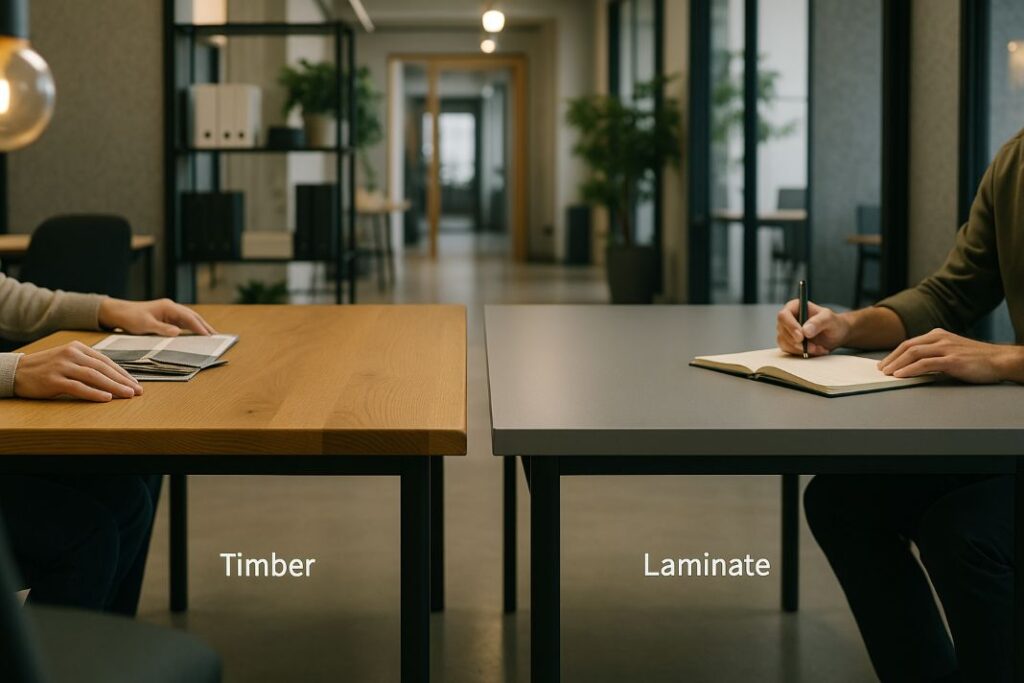
An AI photo of timber vs laminate tables
Introduction: Why Timber Still Outperforms Modern Laminates
Picture a busy café on a Saturday morning. Tables are full. Mugs clink. Cutlery drops. Prams brush past corners. Staff wipe down surfaces between customers. This is not a staged setting. It reflects the daily demands placed on commercial furniture.
In a high-traffic hospitality environment, surface appearance becomes secondary to performance. Hospitality furniture must endure impact, moisture, heat, and frequent cleaning. Laminates may seem sufficient initially, but in real-world venues, they wear out quickly. Real timber maintains its strength and appearance over time. This guide outlines eight reasons timber consistently outperforms laminate in demanding commercial environments.
Pro Tip: Always confirm that your timber supplier offers FSC or PEFC certification to meet sustainability standards.
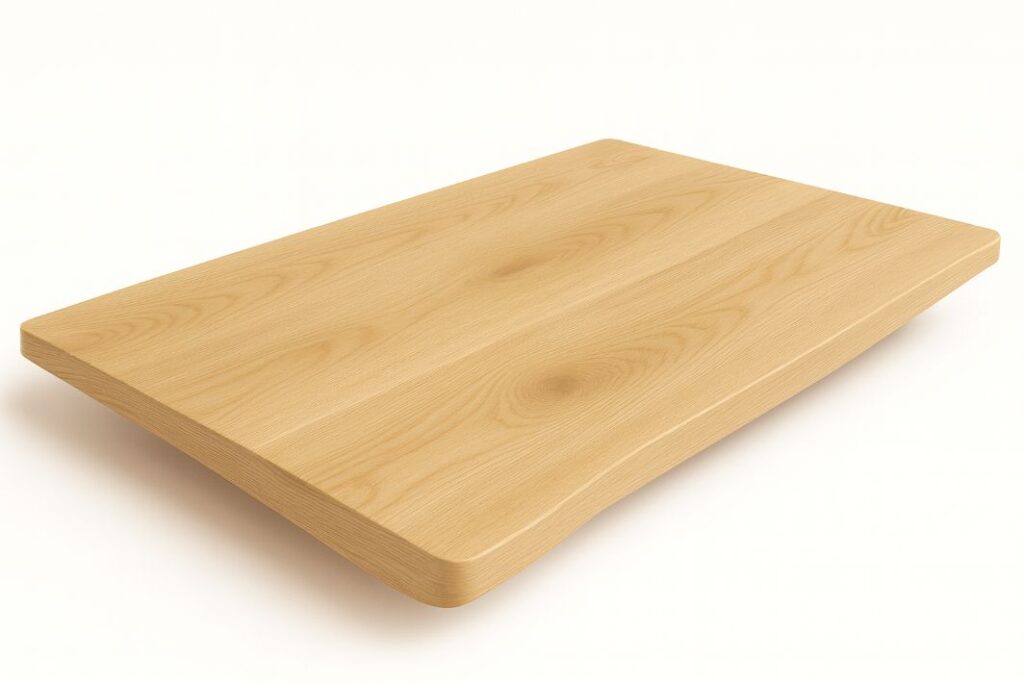
An AI photo of a custom oak table top.
Pro Tip: Refinishing a solid timber table can add another 5 years to its service life for a fraction of the cost of replacement.
What does high-traffic furniture use look like in practice?
“High-traffic” in hospitality is not just a marketing term. It describes constant turnover, repeated cleaning, and sustained wear.
While a domestic table might serve one or two meals per day, a café or restaurant table could be used by over 100 guests in a single day. It will be wiped repeatedly, bumped by chairs and trays, and exposed to heat and spills. These routines cause micro-abrasions and stress.
Laminate materials often fail under this intensity. Their thin surface layers degrade, and the core lacks the strength for long-term use. Solid timber tolerates high-impact use and wears more slowly, making it ideal for heavy-use contract-grade furniture.
Book a Free Timber Furniture Consultation
Let us help you choose the right materials for your venue’s unique needs.
Call Tablemaker1. How does timber handle wear compared to laminate in commercial spaces?
Solid timber is dense and consistent throughout. Laminates rely on a decorative printed layer over a manufactured core like MDF or particleboard.
That surface might resist light wear. Once it is compromised, however, the core offers no durability. In contrast, high-density hardwoods such as oak and beech resist compression and mechanical damage.
Timber is more effective in commercial settings, our Tablemaker experts find. It resists daily impacts and can be refinished to maintain its surface. Laminates cannot be repaired. Once damaged, replacement becomes the only option, shortening restaurant table lifespan.
Key takeaways:
Timber is solid throughout, providing long-lasting surface strength.
Laminate’s surface wears quickly and cannot be repaired.
Timber is more cost-effective over time in high-use environments.
2. Why are timber edges stronger in high-traffic environments?
Edges and corners endure the most impact. Customers, trolleys, chairs, and cleaning staff frequently knock into them.
Laminate edges are protected with glued-on bands. These can chip, peel, or break away under pressure. Once exposed, the core material absorbs moisture and deteriorates. Delamination issues are especially common with chipped laminate edges.
Timber has no separate edge. The same material continues throughout. It can be shaped, repaired, and restored, even after heavy wear.
Key takeaways:
Laminate edge banding often chips and peels.
Timber corners are repairable and age better.
Solid edges prevent moisture damage and extend lifespan.
3. Can timber resist cleaning products and heat better than laminate?
Commercial tables must tolerate frequent exposure to cleaning chemicals, steam, moisture, and heat.
Laminate surfaces often warp or bubble when exposed to high temperatures. Moisture penetrates their seams and reaches the inner core. This leads to swelling, delamination, and surface breakdown.
Timber treated with durable finishes like acid-catalysed or polyurethane lacquer resists these effects. The finish seals the surface and prevents damage, even with daily cleaning.
Key takeaways:
Timber finishes create a sealed, durable barrier.
Laminate seams allow moisture and heat to cause damage.
Timber withstands rigorous cleaning routines without degrading.
4. Why is refinishing timber an advantage in commercial venues?
One of timber’s key advantages is that it can be restored. Light sanding and a fresh coat of lacquer can remove years of wear.
This reduces the need for replacements and cuts waste. Many businesses include timber refinishing in regular maintenance cycles.
Laminates do not offer this option. When damaged, they must be replaced completely.
Key takeaways:
Timber can be refinished multiple times.
Refinishing extends lifespan and reduces waste.
Laminates cannot be repaired once damaged.
5. How does timber enhance aesthetics over time?
Timber gains character with age. Over time, its surface develops a natural sheen and depth that add warmth to interiors.
Laminate surfaces lose their printed finish and visual appeal. Gloss fades and patterns wear away, leaving the surface looking tired.
For businesses that prioritise atmosphere and style, timber offers lasting visual impact.
Key takeaways:
Timber develops an attractive, natural patina.
Laminate loses gloss and fades unevenly.
Aged wood adds character and warmth to interiors.
6. What makes timber more sustainable than laminate?
Timber is a renewable material. With proper sourcing and certification, it supports circular economy practices.
Laminate furniture is made from synthetic resins and paper bonded to engineered cores. These are not recyclable and typically end up in landfill.
Timber can be reused or repurposed. A single table may last decades, reducing waste and environmental impact.
Key takeaways:
Timber is renewable and recyclable.
Laminate components are difficult to separate or recycle.
Timber supports circular economy goals and long-term value.
Are there times when laminate still makes sense?
Yes. Laminates may be suitable for short-term use or low-traffic spaces, such as seasonal cafés or budget-driven fit-outs. In these situations, upfront cost takes priority over longevity.
7. Why does laminate fail structurally in commercial use?
Laminate tables are built on MDF or particleboard cores. These materials absorb moisture over time, even with surface protection.
Once exposed, the core swells and softens. The table may begin to warp, bow, or split, even if the surface looks intact.
Timber has no internal seams or layers. It remains stable under pressure and continues performing in high-use environments.
Key takeaways:
Laminate substrates swell when exposed to moisture.
Structural failure in laminates happens internally.
Solid wood maintains integrity under pressure.
8. What is the long-term financial value of timber tables?
Timber may cost more initially, but it requires fewer replacements and can be renewed.
Laminates often require full replacement when damaged. This increases operational costs, downtime, and waste.
For operators managing multiple venues, timber offers consistency, resilience, and strong return on investment. This directly impacts contract furniture performance in long-term hospitality use.
Key takeaways:
Timber offers a better total cost of ownership.
Refurbishment reduces downtime and replacement costs.
Laminate tables need frequent replacement, increasing long-term spend.
How to choose durable timber tables for commercial hospitality
To make the best long-term investment, use this quick reference guide when evaluating timber furniture for your venue:
Hardwood species: Choose oak, ash, or beech for superior strength and wear resistance.
Finish type: Look for acid-catalysed or polyurethane lacquers that are rated for commercial use.
Board thickness: A top thickness of 30mm or more improves durability and visual presence.
Edge design: Rounded, bullnose, or bevelled edges reduce impact damage.
Joinery quality: Prioritise mortise-and-tenon or dowel joints for better structural integrity.
Sustainability credentials: Ask for FSC or PEFC certification to confirm ethical sourcing.
Manufacturer support: Ensure the supplier provides maintenance guidance and aftercare options.
Conclusion: The long-term case for solid timber in commercial spaces
In hospitality venues, material performance is critical. Timber consistently outlasts laminates in strength, aesthetics, and long-term cost control. It withstands constant use, repeated cleaning, and daily impacts without degrading.
It also aligns with sustainability goals, supports brand identity, and reduces operational disruption. For businesses that value durability and return on investment, solid wood remains the benchmark choice for high-traffic durability and commercial reliability. Contact Tablemaker, the best commercial furniture supplier in London for more expert advice today.
See Our Contract-Grade Timber Range
Explore durable, repairable furniture built for busy hospitality settings.
View Products
Tablemaker
55 High St, London N8 7QB
02083416334
HVQM+58 London