
7 Dining Table Designs That Instantly Match Your Venue’s Personality
How does dining table design influence your venue’s personality and atmosphere?
Dining table design shapes the emotional feel of a venue, guides customer behaviour, and subtly strengthens your brand. Whether it’s a cosy café, a fine-dining restaurant, or a lively bistro, tables anchor the guest experience. Their materials, forms, and finishes influence how people move through your space and how they remember it. For venue owners seeking table design inspiration, understanding how each style impacts guest flow, mood, and brand perception is essential.
In this article about dining table designs, we have covered:
- How does dining table design influence your venue’s personality and atmosphere?
- 1. Round Pedestal Tables: Ideal for Social, Relaxed, Conversation-Led Spaces
- 2. Scandinavian-Style Oak Tables: Perfect for Clean, Modern, Minimalist Concepts
- 3. Rustic Farmhouse Tables: Best for Warm, Characterful, Comfort-Driven Cafés
- 4. Industrial Metal-Base Tables: A Strong Match for Urban, Edgy, Contemporary Venues
- 5. Fine-Dining Oak Tables with Polished Finishes: Designed for Refined, High-End Ambience
- 6. Communal Solid-Oak Tables: Built for Sociable, Group-Focused Dining Experiences
- 7. Compact Bistro Tables: The Go-To Option for Energetic, Space-Limited Café Settings
- Choosing Tables That Reflect Your Venue’s Identity and Influence Guest Experience
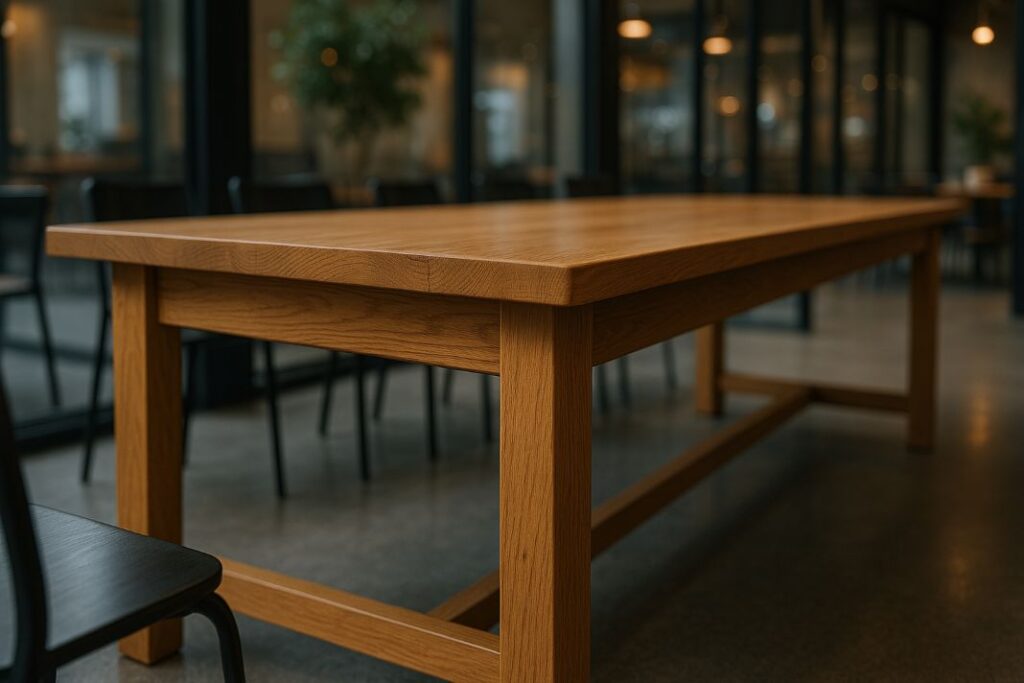
An AI image of a solid oak dining table.
1. Round Pedestal Tables: Ideal for Social, Relaxed, Conversation-Led Spaces
Round pedestal tables support relaxed interaction and open conversation. With no corners, guests sit on equal footing, which encourages inclusivity and shared experience. These tables also reduce visual clutter and improve legroom.
They work particularly well in small cafés and brunch settings where flow, comfort, and a casual tone are important. A round restaurant table in warm wood softens a room full of straight lines and anchors the space with warmth.
Key Benefits:
They enhance social interaction and inclusivity.
They improve guest flow and legroom.
They work well in open-plan, casual venues.
Layout Mistake to Avoid:
Avoid placing round tables in narrow spaces or corridors where movement is already restricted, as this can disrupt seating ergonomics.
Ask Yourself:
Do you want to encourage shared conversation?
Is the layout spacious enough to accommodate a circular footprint?
Will guests have enough leg clearance around the pedestal base?
Pro Tip: Match table materials to your lighting. Oak reflects warmth while metal can cool the mood fast.
Pro Tip: Always measure your clearance zones before committing to a table style. Poor spacing ruins flow.
2. Scandinavian-Style Oak Tables: Perfect for Clean, Modern, Minimalist Concepts
Scandinavian oak tables bring calm, clarity, and light into interior spaces. Their pale finishes and simple lines reflect daylight and enhance the sense of spaciousness. These minimalist dining tables are ideal for wellness-focused venues, Nordic-inspired menus, or interiors with clean lines.
They complement biophilic design elements such as greenery and natural textures. These oak tables support brand coherence for health-led concepts and help shape a visual tone rooted in purity and intention.
Key Features:
Pale oak tones reflect light and open up small rooms.
Clean, minimalist lines complement wellness-focused brands.
Straight edges support efficient layout planning and operational flow.
Layout Mistake to Avoid:
Avoid mixing with bold or ornate decor that disrupts the minimalist feel and visual harmony.
Ask Yourself:
Do you want your venue to feel airy, light, and uncluttered?
Are the interiors already leaning toward Nordic or natural styles?
Will guests benefit from a clean and distraction-free setting?
3. Rustic Farmhouse Tables: Best for Warm, Characterful, Comfort-Driven Cafés
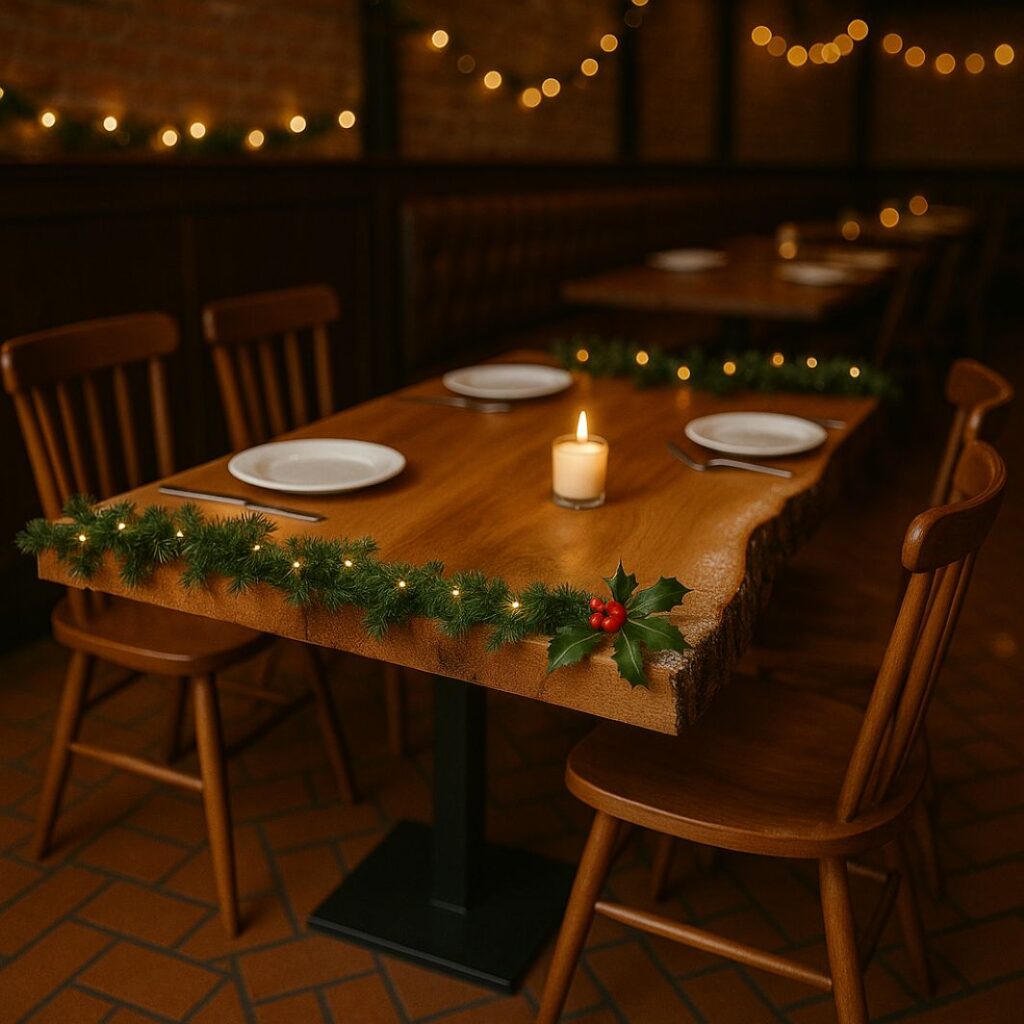
Rustic restaurant tables add texture, character, and warmth through exposed grain, natural imperfections, and tactile surfaces. These farmhouse dining tables reinforce venue identities built around comfort, nostalgia, and slower-paced hospitality.
They are ideal for bakeries, brunch spots, and artisanal cafés. A rich patina forms over time, adding a layer of storytelling to the experience. When combined with warm lighting and soft furnishings, they create a setting that encourages guests to relax.
Material Highlights:
Hand-finished wood offers authenticity and warmth.
Visible grain patterns add depth and charm.
Patina develops with age and guest interaction.
Layout Mistake to Avoid:
Avoid combining with sleek or industrial elements that undermine the rustic tone.
Ask Yourself:
Do you want to create a nostalgic or artisanal atmosphere?
Will natural imperfections and ageing surfaces complement your brand?
How will this design choice affect long-term maintenance and mood setting?
Upgrade Your Venue’s Visual Identity
Discover custom furniture packages that elevate your entire guest experience.
Get Your Free Design Consult4. Industrial Metal-Base Tables: A Strong Match for Urban, Edgy, Contemporary Venues
Industrial metal-base tables add structure, contrast, and an urban sensibility to design. With dark wood tops and powder-coated or raw steel bases, these modern urban venue tables are suitable for street-food hubs, contemporary restaurants, or interiors with exposed finishes.
They provide visual weight and high durability, making them ideal for fast-paced, high-traffic settings. When balanced with soft textures, light oak, or greenery, these tables can create contrast without overwhelming the space.
Material Features:
Steel bases provide structural durability.
Wood tops soften visual intensity and support atmosphere setting.
Balanced contrast supports edgy, modern hospitality settings.
Layout Mistake to Avoid:
Avoid filling small rooms with multiple heavy pieces, as this reduces spatial flexibility and disrupts hospitality layout standards.
Ask Yourself:
Does your venue reflect an urban, industrial style?
Will these materials align with your existing fit-out?
Do you need furniture that withstands frequent use and supports operational flow?
5. Fine-Dining Oak Tables with Polished Finishes: Designed for Refined, High-End Ambience
Polished oak tables introduce a sense of elegance and composure to hospitality environments. With darker tones, reflective surfaces, and sculpted profiles, these tables support a slower dining rhythm and elevate presentation.
They work best in softly lit rooms where intimacy, formality, and sophistication are part of the experience. These luxury oak tables enhance atmosphere and reinforce premium service expectations.
Key Characteristics:
Polished finishes create intimacy and visual depth.
Sculpted edges elevate visual presentation and guest perception.
Dark tones signal refinement and occasion.
Layout Mistake to Avoid:
Avoid placing fine-dining tables too close together, as this detracts from exclusivity and comfort.
Ask Yourself:
Is your venue designed for formal, longer dining sessions?
Do polished finishes align with your lighting scheme?
Will guests respond to a high-end, carefully curated experience?
6. Communal Solid-Oak Tables: Built for Sociable, Group-Focused Dining Experiences
Communal dining tables bring a high-energy, social element to any layout. These long restaurant tables increase seating density, encourage group interaction, and suit concepts that revolve around shared experiences.
They are particularly effective in food halls, casual dining venues, or social-first hospitality models. The use of solid oak ensures they can withstand frequent use while adding warmth to the setting.
Behavioural Benefits:
They promote guest interaction and shared experiences.
They increase operational efficiency through dense seating.
They reinforce a dynamic, lively atmosphere and dining environment.
Layout Mistake to Avoid:
Avoid forcing communal tables into privacy-led venues or formal dining rooms where mood setting and guest expectations may clash.
Ask Yourself:
Does your venue benefit from a sociable, group-friendly setting?
Is your floorplan open enough for shared seating?
Will communal energy enhance or detract from your brand experience?
7. Compact Bistro Tables: The Go-To Option for Energetic, Space-Limited Café Settings
Compact bistro tables are ideal for quick-service environments where space is limited and guest turnover is high. Their efficient footprint suits small cafés, patios, and high-street venues with tight layouts.
Both square and round models are practical options. Square tables allow better use of corners and walls, while round ones keep foot traffic flowing smoothly.
Key Features:
They enable quick turnover and efficient layouts in compact interiors.
They fit seamlessly into tight spaces and outdoor areas.
They support UK hospitality guidelines for guest flow and clearance.
Layout Mistake to Avoid:
Avoid using oversized chairs or over-decorating, as this restricts movement and reduces seating capacity.
Ask Yourself:
Does your layout rely on compact, high-turnover seating?
Are you trying to maximise floor capacity without compromising comfort?
Will smaller tables support the pace of your service style?
Choosing Tables That Reflect Your Venue’s Identity and Influence Guest Experience
Dining tables reflect your venue’s tone, pace, and overall design narrative. Everything from surface finish to base style communicates who you are and how guests should feel.
Begin by identifying the mood and behaviour you want to encourage. Should guests settle in and stay a while, or move through the space with energy? Table selection should follow that vision.
Common Mistakes to Avoid:
Avoid prioritising trends over practical design needs.
Do not disregard spatial requirements and guest flow.
Avoid selecting styles that clash with the venue’s overall identity.
Ask Yourself:
What emotions or behaviours do I want to encourage?
Does my table layout support guest comfort and operational goals?
Is there a clear relationship between design, function, and brand personality?
Every dining table style mentioned above is designed to match a particular hospitality setting, support a defined guest behaviour, and strengthen a venue’s personality with clarity. Consulting commercial furniture suppliers or hospitality design professionals can help refine choices. When chosen with purpose, tables serve as more than just furniture. They become anchors of mood, flow, and lasting brand identity.
Build a Layout That Boosts Guest Flow
Let’s plan your space around tables that optimise comfort and turnover.
View Tables
Tablemaker
55 High St, London N8 7QB
02083416334
HVQM+58 London