
Why Contract-Grade Tables Cost More (And When They’re Worth Every Pound)
Why do contract-grade tables cost more than other commercial tables?
Contract-grade tables are built for high-traffic, high-impact environments where longevity, safety and compliance are critical. Unlike standard commercial options, these tables are designed to withstand repeated use, structural stress and meet demanding industry standards. Their price reflects their purpose: durability, reliability and rigorous testing over time.
Table of Contents
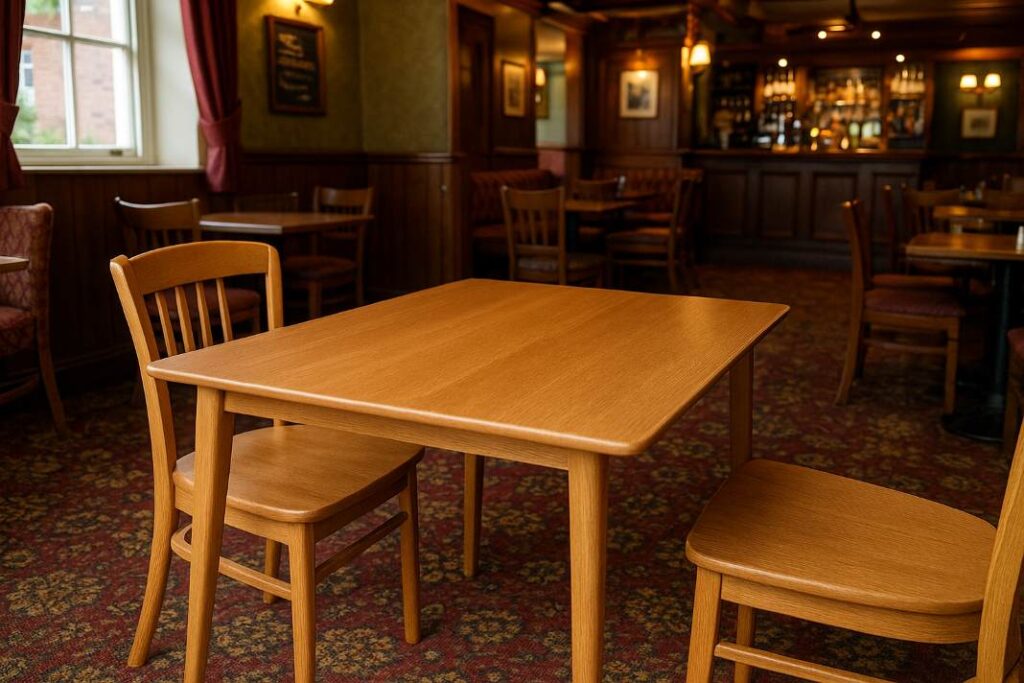
An AI photo of a solid oak cafe tables.
What “Contract-Grade” Really Means – and Why Buyers Often Misinterpret It
Ask ten people what “contract-grade” means, and you’ll likely hear ten different interpretations. Some treat it as marketing language. Others assume it is a sign of luxury. In practice, “contract-grade” is best understood as a classification based on usage, not a symbol of prestige.
In technical terms, contract-grade furniture is engineered for high-traffic environments. Examples include hospitality venues, schools, co-working spaces or public buildings. Organisations like BIFMA (Business and Institutional Furniture Manufacturers Association) and FIRA (Furniture Industry Research Association) set commercial furniture standards that define this category.
Misunderstandings often arise when appearance is mistaken for durability. A stylish piece may lack the structural resilience needed for intense daily use. On the other hand, something that looks plain may exceed expectations in performance. Contract-grade means the furniture is built to handle continuous pressure.
It is also easy to confuse “commercial-grade” with “contract-grade” furniture. While both serve business settings, contract-grade is tested against stricter criteria for strength and safety. Using the wrong grade can lead to premature failure, warranty exclusions, or safety concerns.
Understanding the language of specification, use-case matching, and usage classification helps buyers avoid costly regrets and ensures they choose furniture designed for the environment it will serve.
Why Contract-Grade Tables Cost More Than Other Commercial Tables
Cost differences between standard commercial tables and contract-grade tables come down to performance expectations and durability under pressure.
Contract-grade tables are built to handle repetitive strain, frequent movement and high-intensity use. These scenarios include dragging across hard floors, supporting heavy loads or enduring accidental misuse. They are expected to last in challenging settings.
What looks similar on the outside often hides critical engineering tolerances, reinforced joints and enhanced construction. These design features significantly increase a table’s failure threshold and extend its design lifespan.
In large-scale commercial fit-out projects, the cost of replacement multiplies quickly. This is why many hospitality procurement models invest in contract-grade tables upfront. This approach helps mitigate risk and reduce long-term outlay.
When viewed in this way, higher prices reflect risk-informed design decisions, not unnecessary markup. If you are comparing contract-grade vs commercial furniture, consider how your tables will be used and what failure could cost you.
Pro Tip: Tables fail at the joints first — ask how they’re reinforced before you buy.
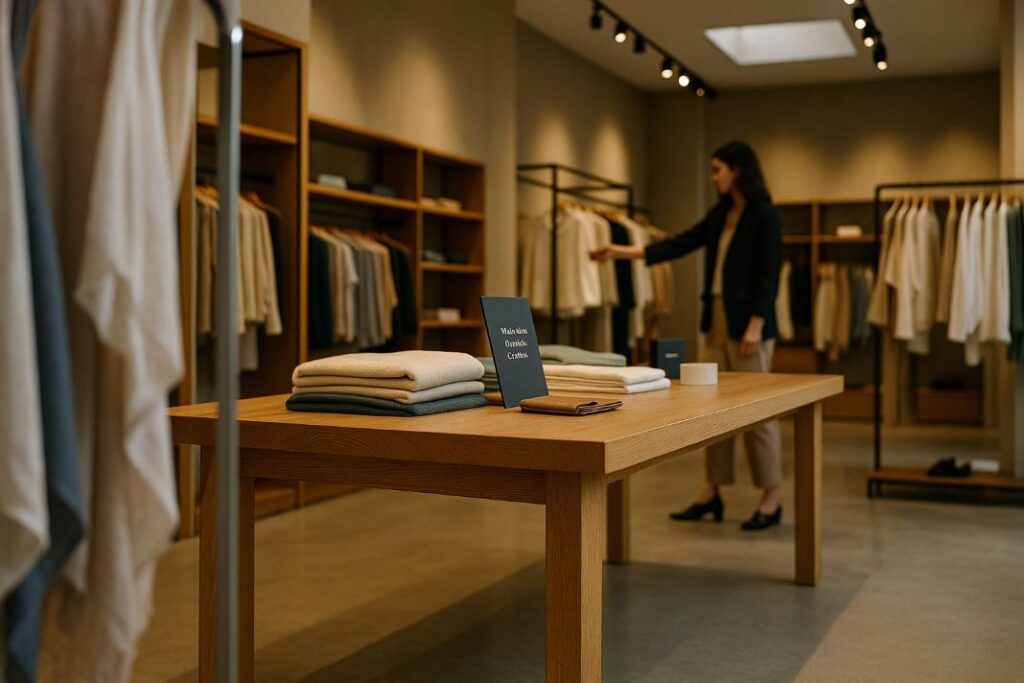
An AI photo of a boutique shop oak display table.
Pro Tip: Always match furniture spec to real-world use, not idealised assumptions.
What You’re Actually Paying For: Materials, Construction and Testing
For commercial spaces where aesthetics meet functionality, it’s essential to choose products that are both robust and tailored to fit. At Tablemaker – Made-to-Measure Tables for Commercial Interiors, we specialise in solid wood, custom-built tables designed specifically for high-use environments like cafes, offices and retail settings.
To understand why contract-grade tables cost more, it helps to break the price into visible and invisible value.
Materials are selected not just for looks, but for performance. Laminates are tougher. Subframes use robust components. Surfaces are designed for high levels of surface durability, resisting dents, stains and abrasion.
Contract-grade table construction often includes subframe reinforcement, industrial joinery and durable fittings that are rarely found in lower-spec tables. These features protect against long-term joint fatigue and shifting under load.
Then there is the unseen process of furniture durability testing. Standards set by BIFMA and FIRA include load testing, stability assessments and sometimes fire performance classifications. These simulate years of usage in compressed timelines.
These are the attributes that prevent collapses, reduce wear and maintain functionality. While the cost is higher, so is the peace of mind.
Why Lower-Cost Tables Fail Faster in Real Commercial Use
Low-cost tables often perform well in theory but struggle in real-world commercial settings. This happens because their design rarely accounts for actual user behaviour.
Staff lean on edges. Customers drag furniture across floors. Shared spaces lead to unpredictable use. All of this accelerates wear patterns, loosens joints and wears down finishes.
In co-working spaces or hospitality environments, tables are used constantly. These use cases include work, dining, meetings and more. These intensive demands quickly expose structural weaknesses.
When commercial table durability is mismatched with real usage, early failure follows. Recognising how tables are truly used helps avoid oversights and ensures products can withstand usage intensity.
Upfront Price vs Long-Term Cost – What the Numbers Reveal Over Time
Initial savings often mask future costs. Tables that are cheaper to buy may be more expensive to maintain and replace.
Lower-cost models tend to wear out or become unstable within a few years. This short replacement cycle comes with hidden expenses. These include operational downtime, disposal costs and disruptions during refits.
Contract-grade tables reduce these problems. With longer design lifespans, they provide consistent performance and reduced disruption. This contributes to a more stable budget and improved return on investment.
Thinking in terms of total cost of ownership furniture encourages smarter decisions. It is not about spending more, but spending wisely.
To put this into perspective, imagine two scenarios:
Option A: A commercial table costing £120 is used in a high-traffic staff canteen. It begins to wobble and show signs of damage after three years and needs replacing. Over a ten-year period, that table is replaced three times, costing £360—excluding labour and disruption.
Option B: A contract-grade table costing £260 is used in the same space. It holds up for the full ten years without significant issues. The initial investment is higher, but total expenditure is lower, and the space avoids repeated downtime.
This simple timeline highlights the hidden value of longevity.
Ready for Tables Built to Fit, Last and Impress?
We custom-build solid wood tables for high-traffic spaces across hospitality, retail and offices. Designed to perform. Built to order.
Get a Quote TodayWhen Contract-Grade Tables Are Worth the Extra Investment
Some spaces and operations demand higher resilience, making contract-grade tables a smart and necessary choice.
They are ideal for:
High-traffic, public-facing environments such as cafés, libraries or waiting areas
Rooms with frequent reconfiguration, where furniture is often moved or restacked
Brand-critical spaces where aesthetics and performance impact customer perception
Risk-sensitive settings, including schools, healthcare and council buildings
These are places where breakdowns affect safety, operations and brand trust. In these settings, contract-grade furniture proves its value by avoiding problems, not just lasting longer.
When Contract-Grade Tables Aren’t Necessary – and What to Choose Instead
Not every setting needs maximum durability, which is why flexibility in specification can help businesses get more value from their furniture. Whether you need full-stave oak tables for a premium hospitality venue or laminated birch plywood for a short-term retail install, Tablemaker works with interior designers and architects to deliver exactly what’s needed — without overbuilding or overspending.
Contract-grade is not always essential. In low-use environments, a mid-grade commercial table may meet your needs while protecting your budget.
Good examples include:
Private offices or infrequently used meeting spaces
Short-term installations, like training setups or temporary events
Budget-conscious projects, where over-specification offers no extra benefit
If you are wondering about alternatives to contract-grade tables, mid-grade commercial options are a reliable middle ground. These options are particularly suitable in environments with limited wear and tear.
In these cases, intelligent product specification can stretch your investment further. By aligning furniture classifications with your actual needs, you avoid overspending while still getting dependable performance.
Effective procurement is about fit. It is not just about finish or price.
Buyer FAQs: Common Questions Answered
Do I need contract-grade furniture for a staff kitchen?
Only if it experiences heavy daily use. For quieter, internal-use areas, mid-grade furniture may suffice.
Can I use residential tables in a co-working space?
Yes, but it is generally not recommended. Domestic furniture is not tested for commercial durability or liability requirements.
Is it worth paying extra for tables in meeting rooms?
If the room sees frequent use or hosts clients, yes. If it is a rarely used space, a lighter spec may do the job.
What should I ask my supplier to confirm contract-grade status?
You should request documentation on test standards (e.g. BIFMA or FIRA), warranty terms and usage classification.
How do I know if I’m over-specifying?
You can review the actual usage, foot traffic and potential risks in your space. A supplier or designer can help align grade to needs.
What happens when you under-specify furniture?
You may face early failures, repair costs and disruption to daily operations. In high-traffic areas, under-specifying can cost more in the long run.
Work with Makers Who Understand Commercial Interiors
From durability to design, we collaborate with designers, architects and business owners to deliver made-to-measure tables that meet the brief.
Start Your Project
Tablemaker
55 High St, London N8 7QB
02083416334
HVQM+58 London