

Made to Measure Table Top UK: How It Works (Sizes, Edge, Finish, Delivery)
What does “made to measure” mean for a table top?
A made-to-measure table top is one that is built to specific size requirements rather than standardised dimensions. Unlike fully bespoke furniture, which may involve one-off design for shape or structure, made-to-measure focuses on precision sizing, edge style and finish, offering flexibility within an established construction format. This approach allows the table top to fit particular spaces or bases without the cost or wait associated with full custom builds.
Sizing flexibility without full customisation
Standard furniture often comes in fixed lengths and widths, typically rounded to the nearest 10 or 20 centimetres. While convenient for large-scale production, this puts constraints on real homes and working environments. A made-to-measure table top, by contrast, is dimensioned to fit the needs of the customer, down to the centimetre.
Key points of contrast:
- Standard sizing: Predefined sizes, limited variation, not designed to fit specific frames or spaces.
- Made-to-measure: Adjustable in 1cm increments, compatible with existing bases, adaptable to awkward layouts.
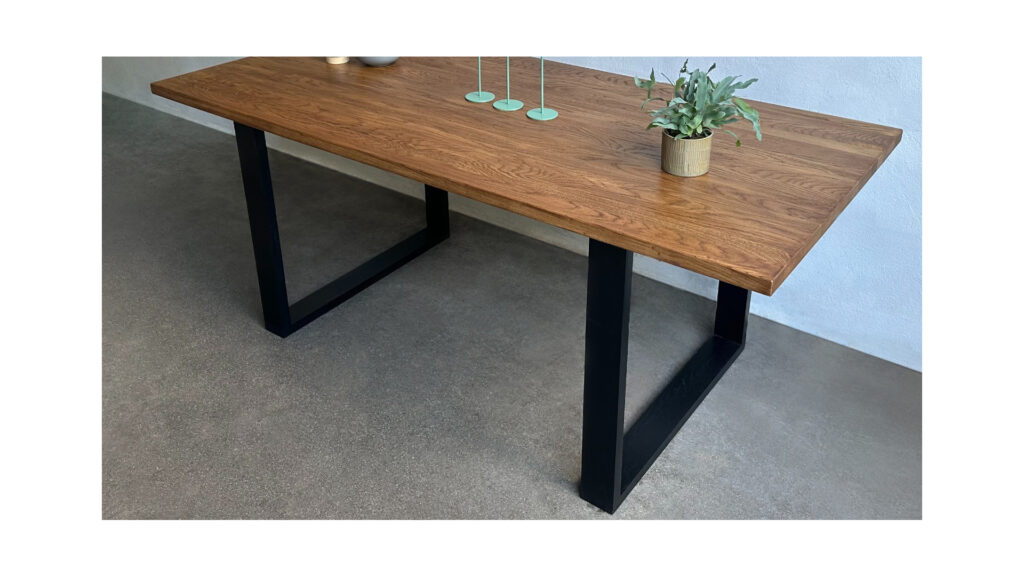
This approach proves especially useful where dimensions are constrained by radiators, alcoves or shared desk configurations. Tablemaker, for instance, regularly produces tops for fixed metal frames, sit-stand desks or irregular spaces where off-the-shelf solutions fall short.
Accuracy in fit helps improve function and longevity. Poor sizing can lead to overhangs that cause instability or bases that interfere with knees. A made-to-measure surface supports how the piece will actually be used, not just how it looks.
Table of Contents
Choosing the Right Size: What You Need to Know
A table top that is correctly sized feels natural in the space and supports its intended use. Whether it is for dining, daily work or collaborative tasks, getting the dimensions right is a straightforward process once you understand the key factors.
Key considerations for sizing
- Width and depth For dining and desks, depth affects how much usable surface you have. A dining table should usually allow around 60cm per person along its edge. For desking, 70 to 80cm depth allows for screens and writing. Width varies more but should leave space for movement on all sides.
- Overhang and frame fit On most bases, the top should extend slightly beyond the frame for comfort and proportion. Overhangs of 2 to 5cm per side are common. Measure your base first, particularly for metal or sit-stand frames, to ensure compatibility.
- Leg clearance and seating If legs are placed toward the ends of the table, legroom becomes important. Think about how many people you plan to seat regularly and whether chairs will tuck under comfortably.
- Made-to-measure increments Unlike fixed collections, Tablemaker allows ordering in 1cm increments across a broad size range, which means you can match your existing frame or fit tight nooks without compromise.
Sizing checklist:
- Measure your existing base including width between legs.
- Consider adjacent furniture or walls.
- Decide if overhang is mainly aesthetic or functional.
- For shared desks, ensure enough width for each user.
- Account for plug access or cable routing if placing against a wall.
A well-proportioned top supports the longevity of the frame and helps avoid common sizing regrets.
Pro Tip: Measure to the nearest centimetre and always check for wall plugs or sockets that may restrict placement.
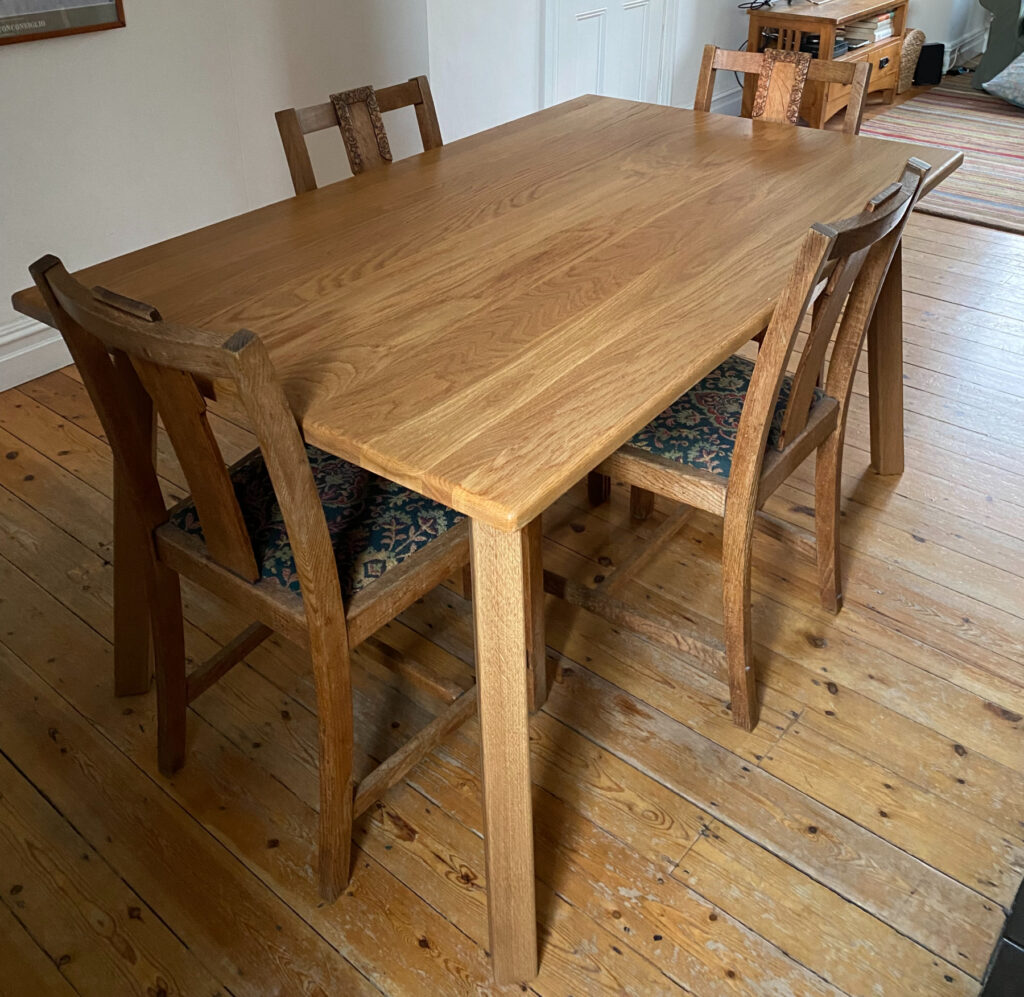
Pro Tip: Choose a matte or satin finish in family homes or shared spaces to minimise the visibility of marks.
Edge Profiles: Subtle Details That Change the Look
The edge shape of a table top plays a modest but often underestimated role in how the piece looks and feels. It also affects perceived thickness, comfort and how the surface fits with other elements in a space.
Common edge styles explained
Square edge Clean and minimal, this shape has a 90-degree transition from surface to face. It suits modern or architectural interiors. The line is precise and can feel sharp to the touch, which some find less forgiving in high-traffic areas.
Chamfered edge Angled back underneath, this creates a lighter profile when viewed at a distance. It draws less attention to the thickness of the top and blends easily into styles. It’s a popular choice for both desks and dining tables.
Roundover edge Gently softened at the top corner, this profile is comfortable under hand and reduces the chance of chipping on high-use surfaces. It works well in family homes or collaborative environments where touchpoints are frequent.
Each style has its merits depending on context. A sharp edge may suit a minimal interior but feel less forgiving over time. Slight rounding, even if subtle, often improves the lived-in experience.
Tablemaker offers a range of edge options selected during the ordering process. The finish is shaped by hand and sanded smooth to preserve the natural grain and avoid breakage at the corners.
Finish Options: Protection, Colour and Maintenance
The finish of a table top protects the timber, affects how it feels under hand, and defines its visual tone. Selecting the right finish involves balancing appearance, durability and future care.
Why hardwax oil is used
Tablemaker applies hardwax oil as standard to all solid wood table tops. This finish penetrates the wood while also forming a light protective film, allowing the surface to remain breathable and repairable without peeling or flaking over time. It offers a durable middle ground between natural feel and practical resistance to everyday wear.
Appearance and colour tone
The type of oil and number of coats affect colour and grain contrast. Most finishes deepen the wood’s natural grain slightly, but options are available for those preferring a paler or more neutral tone. Satin and matte sheens are more common than gloss due to their ease of upkeep and reduced reflections.
Repair and refinishing
One of the strengths of solid wood finished with hardwax oil is its longevity. Unlike lacquer or veneer, it can be spot-sanded and re-oiled as needed. Scratches and dents can usually be repaired without replacing the surface, which supports long-term ownership.
Upkeep and cleaning
General maintenance requires only a non-abrasive cloth and a mild cleaning solution. No specialist products are needed. Re-oiling every year or two, depending on use, keeps the surface sealed and looking its best.
What to expect:
- Finish enhances but does not mask the wood’s character.
- Light routine care is sufficient for most environments.
- Top can be re-oiled or sanded locally if wear occurs.
- Matte and satin options hide marks better than gloss.
- Colour depth varies slightly across boards due to natural variance.
Request a Quote
Send us your dimensions and preferences to get a tailored quote for a made-to-measure table top.
Get My QuoteDelivery and Lead Times: What to Expect
Made-to-measure does not always mean waiting months. Tablemaker produces nearly all orders within two to three weeks at its UK workshop. This pace is maintained by handling production in-house rather than outsourcing or batch manufacturing.
Production and packing
Each table top is built from kiln-dried timber selected for grain and stability. After cutting and gluing, the top is planed, sanded, straightened and finished before packing. Straightening bars are fitted where needed across the underside to reduce movement from humidity changes. Packaging is designed to protect corners and edges, with clear indications for the delivery team.
Delivery process
Once finished and packed, the top is shipped via a UK courier, with most deliveries booked at a weekday time slot. Access notes can be provided during ordering. Tops are usually handled by two-person teams due to weight and size.
For customers close to the workshop, collection is sometimes available by appointment. The dispatch team will advise on safe transport and lifting if collecting personally.
Before delivery:
- Measure doorways, stairs or tight passages carefully.
- Clear space indoors for unpacking and inspection.
- Check that your base or frame is ready to receive the top.
- Have two people available to lift, especially for larger sizes.
A made-to-measure top should arrive aligned with its intended use and space, not treated as a decorative object. With proper sizing, protective finish and timely delivery, it is designed to serve as a practical surface for years, with the option to adapt as life or layout changes.
View Edge Profiles
Explore our available edge styles and see how each profile changes the look and feel of your table.
Explore Edge Options
Tablemaker
55 High St, London N8 7QB
02083416334
HVQM+58 London