Posted on

How to Protect and Maintain Your Oak Table During the Festive Season

How to Protect and Maintain Your Oak Table During the Festive Season -Tablemaker

How to Protect and Maintain Your Oak Table During the Festive Season

How can you protect and maintain your oak table during the festive season?

An oak dining table is not just a piece of furniture; it becomes a festive focal point. Whether you are gathering for Christmas dinner or crafting with the children, your table experiences more activity in December than at any other time of year. That increased use brings greater risk. Heat, moisture, and decorations can all damage oak surfaces. This guide provides practical tips to help you protect your table and keep it looking beautiful, both during and after the holiday season.

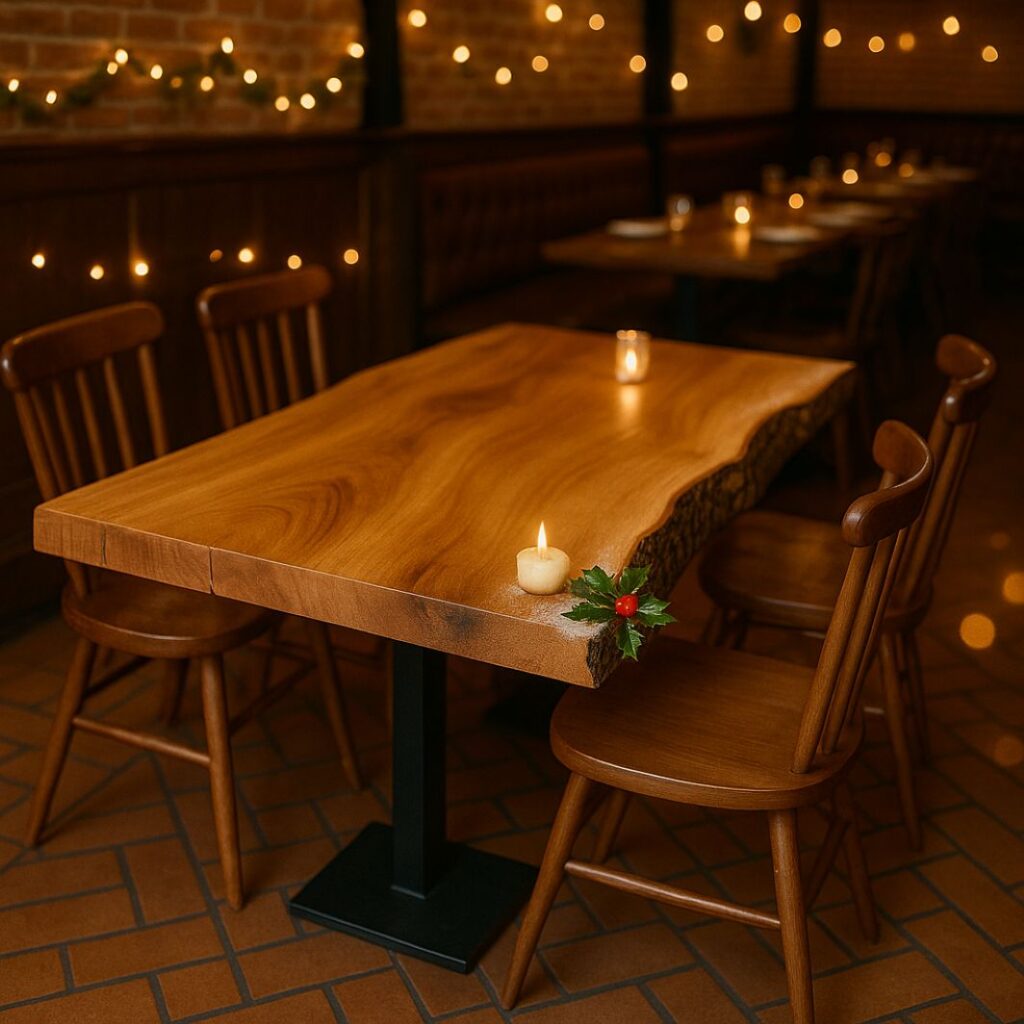
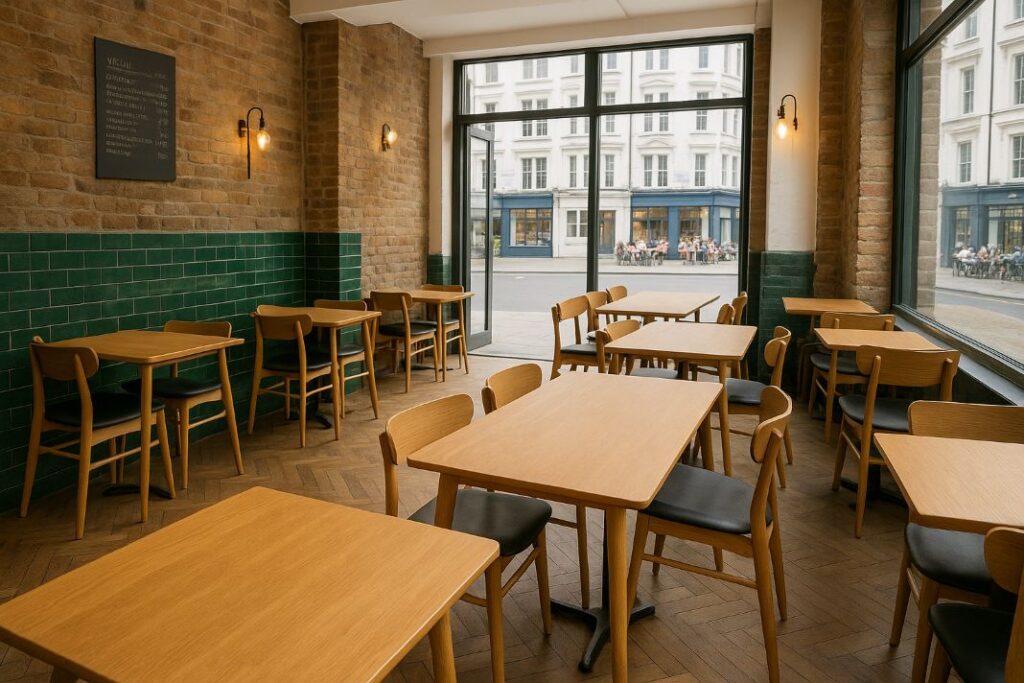
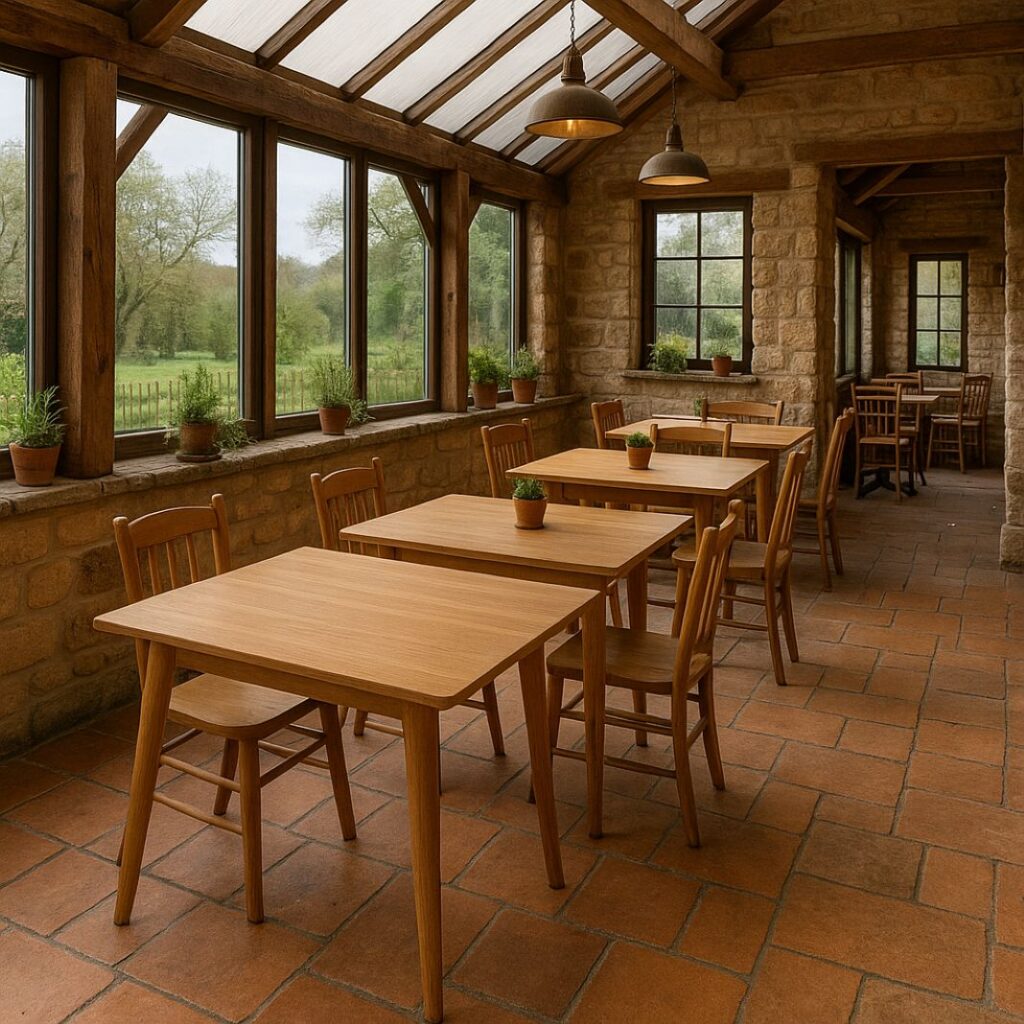
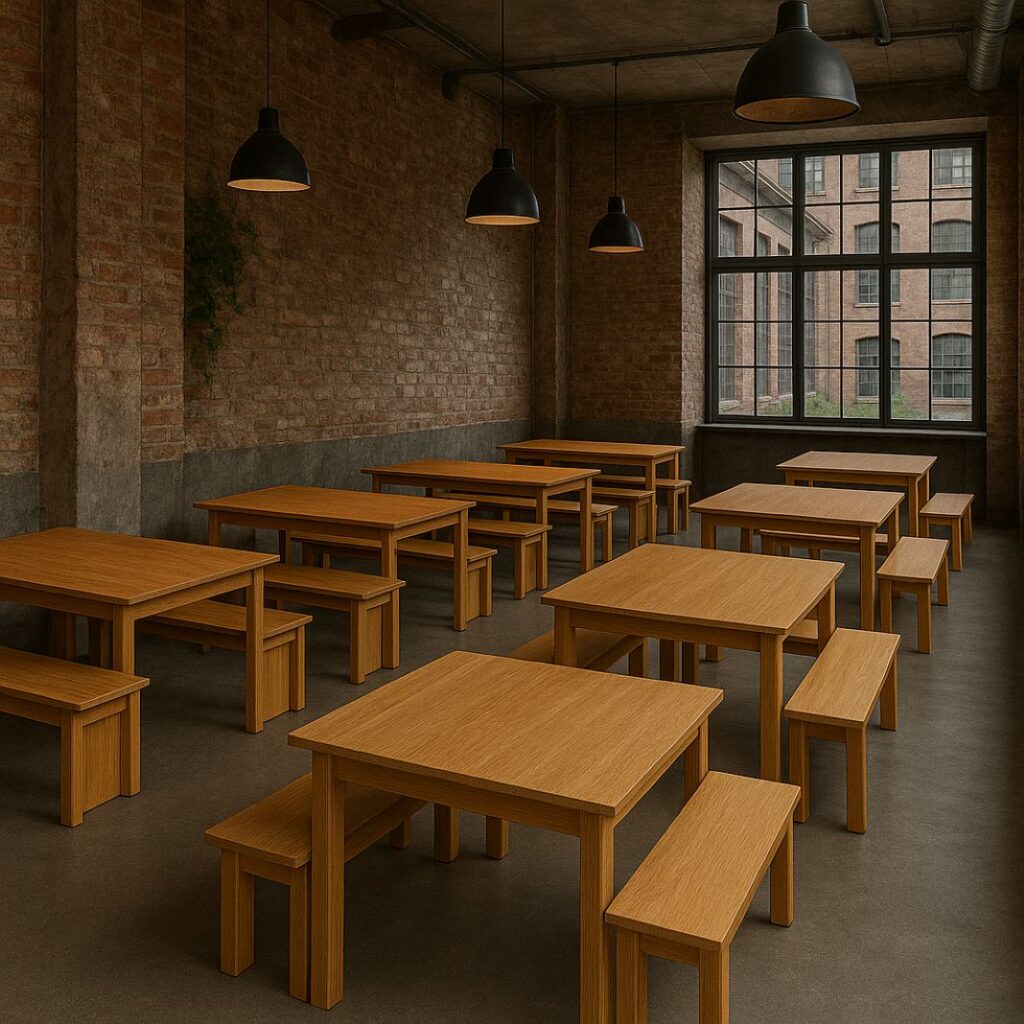
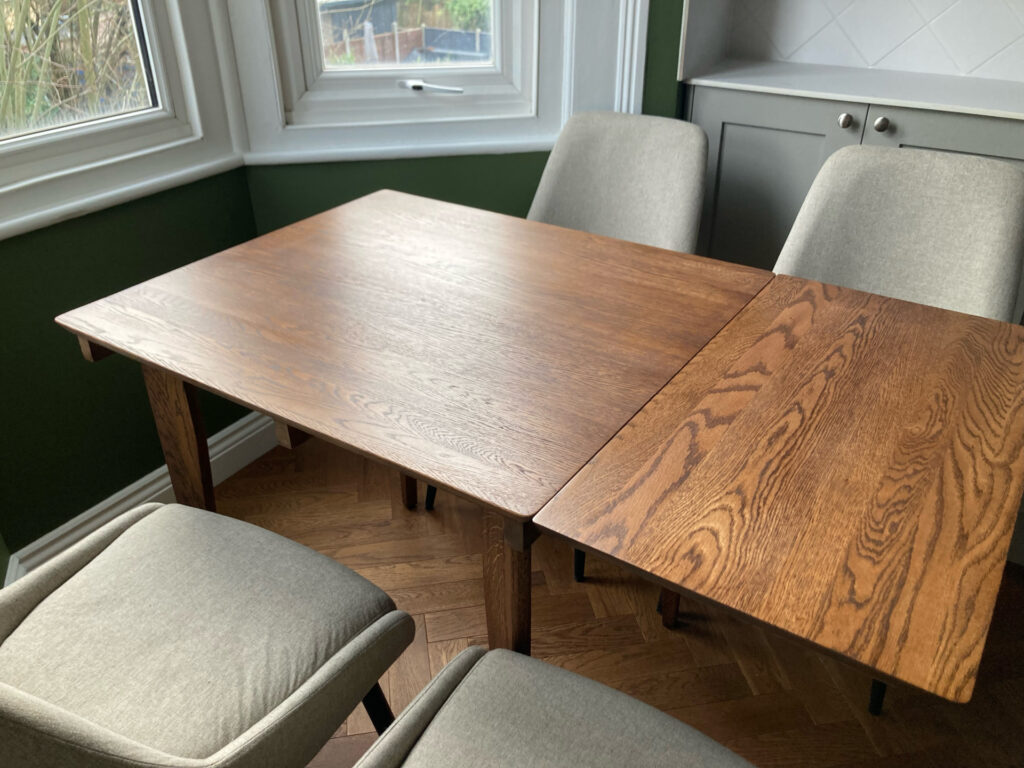
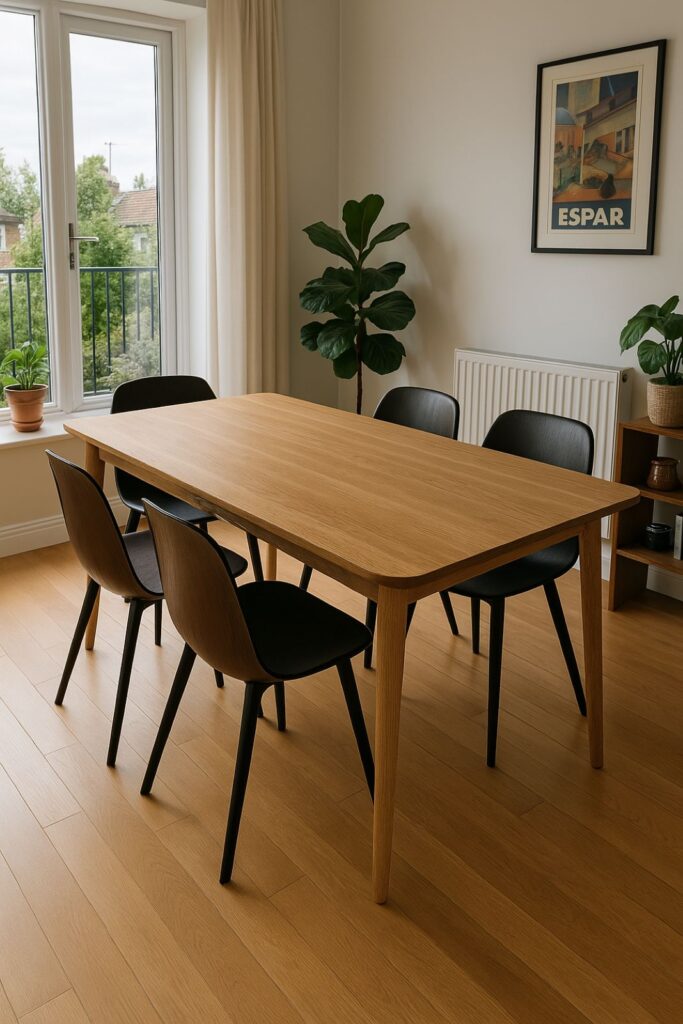
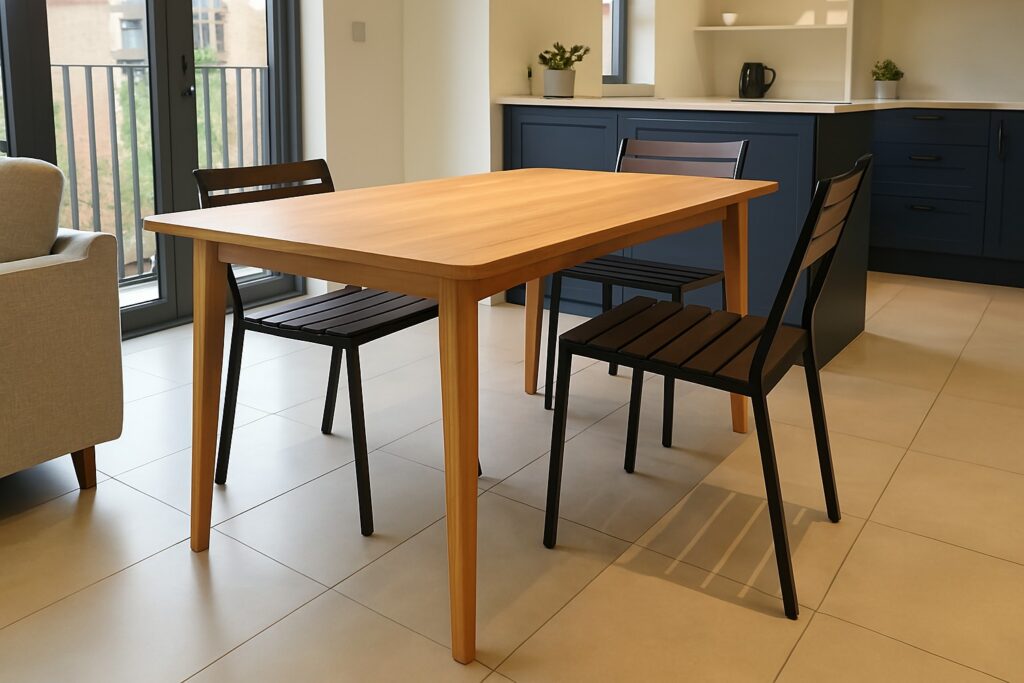
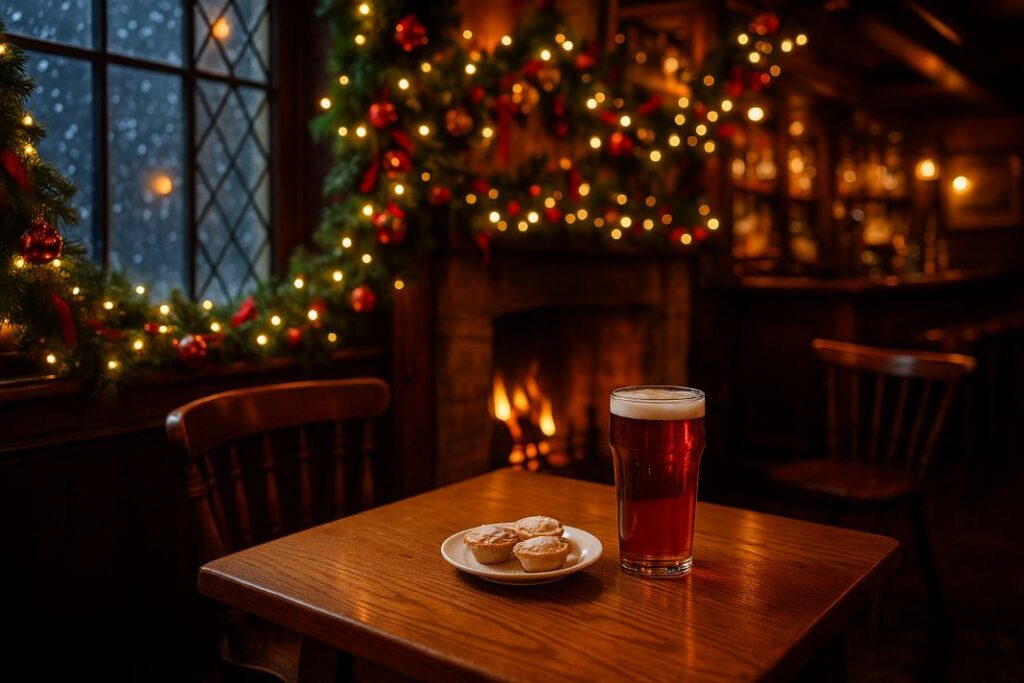
An AI photo of a festival oak table in a UK pub.

Why Your Oak Dining Table Needs Extra Care During the Festive Season

During the festive period, your oak table becomes more than a place to eat. It hosts guests, supports decorations, and serves seasonal meals. Increased use brings a higher chance of spills, burns, and scratches.

Oak is strong, but it is not immune to damage. Heat can leave pale rings. Moisture may cause staining. Decorations and dishes can create lasting scratches. Preparing your table in advance is much easier than repairing it later. Protecting oak from heat and scratches now helps you avoid stress and preserve your table’s finish for many Christmases to come.

Pro Tip: Always test any heat removal method on an unseen part of the table first to avoid worsening marks.

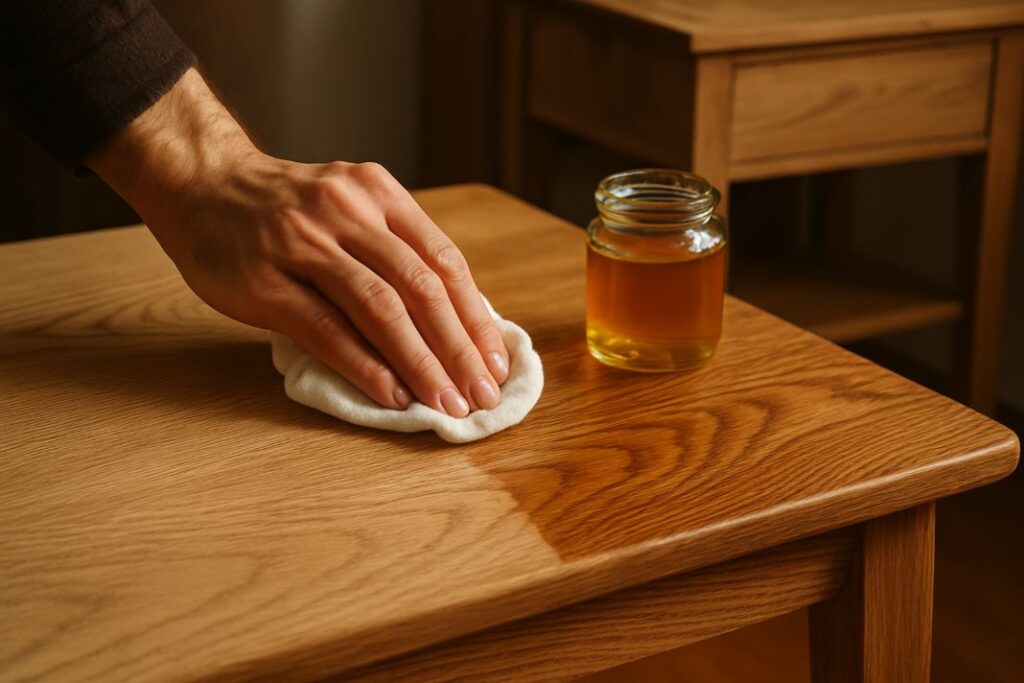
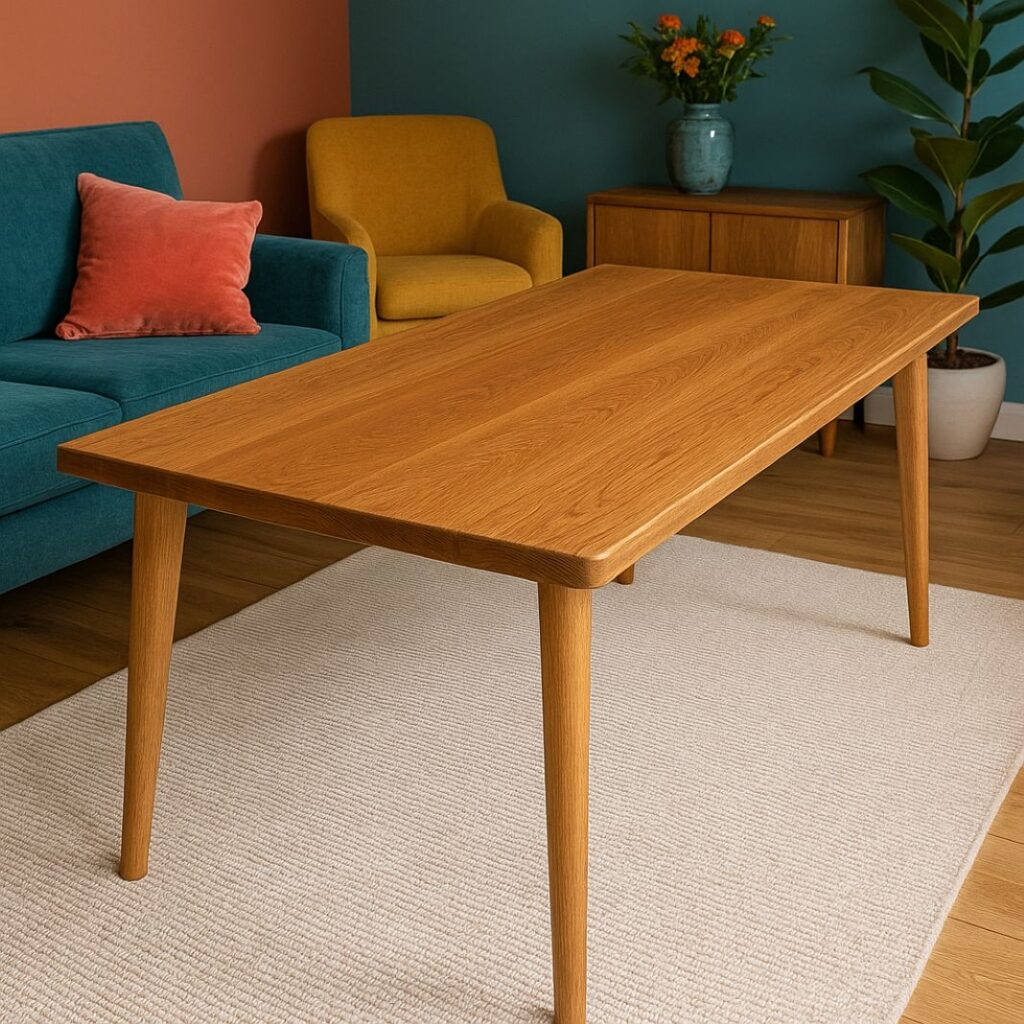
An AI photo of oak table maintenance with hardwax oil.

Pro Tip: After every festive season, leave the table uncovered for at least 24 hours to allow natural airflow and timber rebalancing.

Oak Under Pressure: How Winter Weather and Holiday Use Impact Your Table

Indoor environments change during winter. Central heating lowers humidity, and dry air causes timber to contract. This movement might affect extension joints and lead to small cracks. Managing oak table climate control in heated homes is especially important.

Sudden shifts in temperature from hot dishes or icy drinks can damage your table’s finish. Clouding, fading, or other surface changes may follow. Using the wrong cleaning product can also wear away protective coatings. When you understand how oak behaves under pressure, you can prevent problems before they appear.

Prep Like a Pro: Pre-Season Steps to Shield Your Oak Table

A little advance care makes a big difference. Here is how to get your table ready for the season:

The Week Before

  1. Clean the surface with a microfibre cloth and a wood-friendly product.

  2. Check for dullness or dryness. Re-oil or wax if needed.

  3. Stick felt pads underneath trays, ornaments, and serving boards.

The Day Before

  1. Add a layer of protection with a runner, cloth, or clear overlay.

  2. Test candles for stability and use holders that catch wax.

  3. Place heat-resistant mats where hot items will be served.

An Hour Before Guests Arrive

  1. Make sure decorations are cushioned or resting on fabric.

  2. Set out coasters and napkins at each seat.

  3. Give the table a final check for exposed or unprotected areas.

These actions prevent long-term damage and allow you to relax when guests arrive.

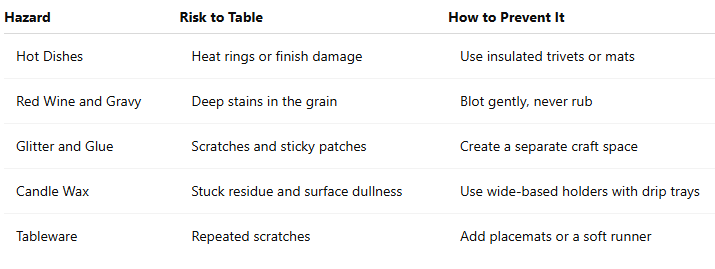
Holiday Hazards: Common Festive Threats to Oak Tables

Get Expert Help Protecting Your Furniture

Not sure your oak table is ready for the season? Let our specialists assess it and recommend the right protection.

Book a Furniture Care Consultation

Knowing these risks helps you stay ahead during the holiday season.

Protection That Looks Good: Stylish Solutions for Safe Hosting

You can protect your oak table and still impress your guests. Try these stylish ideas:

  • Layer a linen or velvet runner over a clear protector for elegance and safety.

  • Use ceramic or wooden trivets that match your décor.

  • Choose cork-backed coasters that will not slide or scuff.

  • Set centrepieces on trays to avoid direct contact with the table.

Keep candles away from garlands and always elevate them slightly. With careful planning, you can entertain beautifully without taking risks.

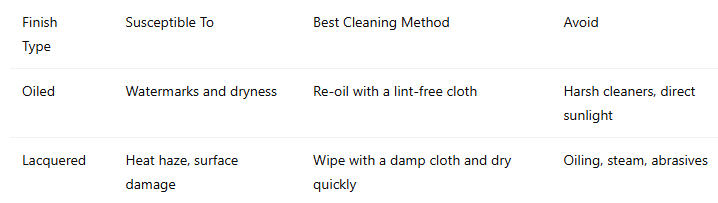
Finishes Matter: Oak Finish Comparison Table

Your table’s finish affects how it reacts to use. Here is a quick guide:

Understanding your finish helps you choose the right care routine for festive table protection.

Decoration Dos and Don’ts for Oak Table Protection

Keep your table safe while decorating by following these suggestions:

Dos:

  1. Use cloth-backed runners to cushion heavy or rough décor.

  2. Choose soft-edged garlands or faux greenery.

  3. Pick wooden or ceramic ornaments instead of glittered or metal ones.

Don’ts:

  1. Do not spray glitter or fake snow near your table.

  2. Avoid using sticky pads or tape directly on the wood.

  3. Refrain from placing water-filled ornaments unless they rest on a waterproof base.

These tips ensure your decorations do not put your table at risk.

After the Party: Post-Festive Maintenance and Repair Tips

Once the guests have left, give your table some care:

  • Wipe it with a lightly damp cloth and dry immediately.

  • Check for spills, wax drips, or stains.

  • Reapply oil if the finish appears dull (for oiled tables only).

  • Leave the table uncovered for a day to allow it to breathe and stabilise.

This routine helps preserve your table’s condition and appearance.

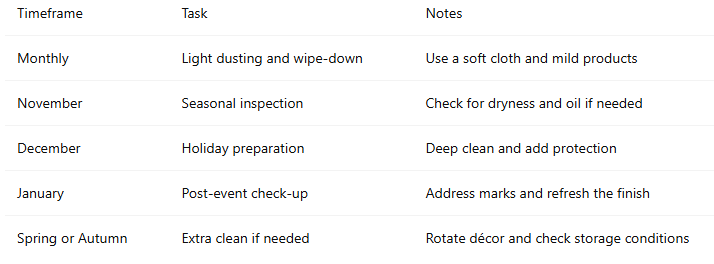
Care Calendar: Annual Oak Table Maintenance Schedule

A consistent care schedule ensures your oak table remains in excellent condition all year.

Quick Fixes for Accidents: What to Do When Things Go Wrong

Quick action can prevent lasting damage:

Wine spill?

  • Blot with paper towel, then wipe with water and dry.

Wax on the surface?

  • Let it cool. Gently lift with a plastic edge and clean the residue.

Heat mark showing?

  • Cover with a cloth. Press gently with a warm iron for a few seconds. Test first.

Scratch appear?

  • Buff with oil or apply a polish pen in the correct oak tone.

Avoid harsh cleaners or anything acidic. These substances may cause more damage.

Final Thoughts: Keep the Memories, Not the Marks
Your oak table is part of your home’s story. From festive meals to quiet winter mornings, it deserves protection and appreciation. With thoughtful preparation, you can enjoy the season and protect what matters.

Whether your table is a family heirloom or a handcrafted piece from Tablemaker, caring for it ensures it will be ready for every celebration to come.

Explore Our Handcrafted Oak Table Collection

Looking for a table that’s built to handle festive seasons for decades? View our solid oak designs, made to last and loved for generations.

Browse Our Oak Tables
Tablemaker

55 High St, London N8 7QB

02083416334

HVQM+58 London
 

Posted on

From Rustic to Nordic: Festive Table Inspiration for Winter Interiors

From Rustic to Nordic Festive Table Inspiration for Winter Interiors -Tablemaker

From Rustic to Nordic: Festive Table Inspiration for Winter Interiors

What is the best way to style a winter table from rustic to Nordic elegance?

The most effective way to style a winter table from rustic to Nordic elegance is to combine natural materials, neutral tones, and thoughtful layering. This approach balances the textured warmth of rustic design with the clean simplicity of Nordic interiors. The result is a festive table setting that feels inviting, serene, and cohesive.

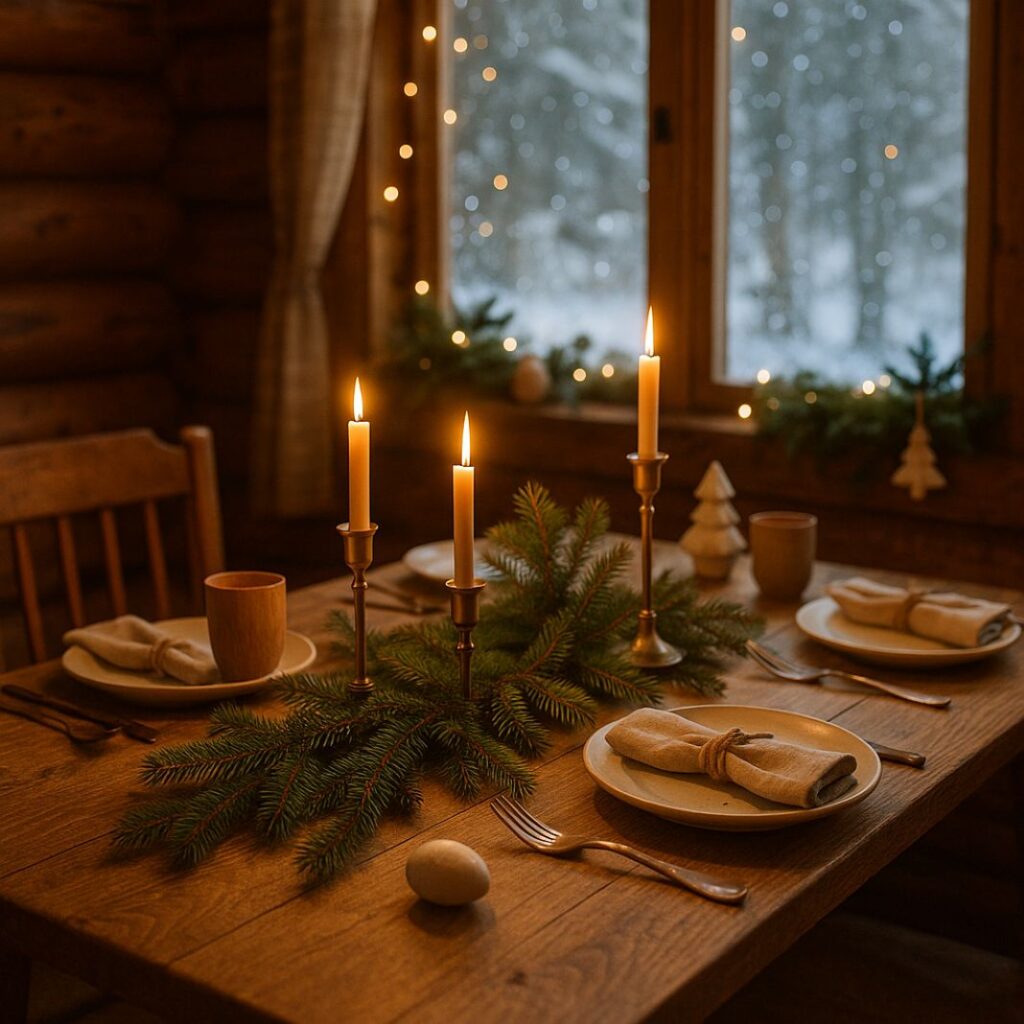
An AI photo of a cosy winter dining table set blending Rustic and Nordic styles.

Welcome to the Winter Table Style Journey

Winter encourages a slower rhythm and a closer connection to our surroundings. As the season unfolds, the festive table becomes more than a place to eat. It transforms into a focal point for gathering and celebration. Styling it with intention helps to set the tone for your entire winter interior.

This Christmas table styling guide will help you:

  1. Understand the emotional power of winter table settings

  2. Create rustic warmth with texture and natural details

  3. Embrace Nordic elegance and the comfort of hygge

  4. Blend rustic and Nordic styles for a cohesive, unique table

  5. Connect your table design to your wider holiday interiors

  6. Find elegant, affordable festive styling ideas

  7. Follow a step-by-step checklist for styling with confidence

Pro Tip: Use tone-on-tone layering for texture without overwhelming the eye.

An AI photo of a rustic-style dining table during preparation

Pro Tip: Candlelight is your styling multiplier — mix heights and holders for maximum effect.

Rustic Christmas Table Styling: Cosy Textures and Natural Warmth

A rustic table setting evokes comfort and authenticity. It features organic textures, handmade details, and an earthy palette that echoes the outdoors.

Begin with a wooden table, preferably one that is reclaimed or weathered for character. If not, add a natural linen runner or textured cloth to bring in warmth. Use burlap placemats or woven chargers to introduce depth, and opt for tones inspired by nature such as cinnamon, sage, warm cream, and soft red.

For your centrepiece, keep things natural and layered. Use pine cones, moss, rosemary, and groupings of beeswax candles. Include ceramic mugs, hand-lettered place cards, and simple wooden touches.

Tone-on-tone layering helps to build warmth. A knitted napkin ring over a linen napkin adds both texture and charm. This rustic Christmas tablescape is perfect for relaxed hosting. It creates an inviting, lived-in atmosphere.

Helpful sources:

  • Etsy: reputable online marketplace for handmade and vintage goods

  • Tablemaker: a known provider of modular wood-based tableware

  • Country Living: a trusted lifestyle magazine covering seasonal interiors

Ready to Elevate Your Seasonal Styling?

Create show-stopping winter interiors that feel effortless and look timeless.

Book Styling Consultation

Nordic-Inspired Winter Tables: Simple Elegance Meets Hygge

Nordic styling is about clarity, calm, and thoughtful restraint. A Nordic festive table feels composed, airy, and grounded in purpose.

Choose a soft, neutral palette. White, pale grey, and muted green set a tranquil mood. Let pale wood remain uncovered or add a narrow runner in natural linen. Select minimalist ceramics in matte finishes and choose glassware with clean lines.

Foliage should be subtle. A single fir garland or eucalyptus arrangement adds texture without clutter. Light tall candles in plain holders. Tie linen napkins with twine or herbs for a refined finish.

Understanding Hygge Through Table Styling

Hygge is about warmth, ease, and simple moments of connection. Through table styling, it comes to life in candlelight, natural materials, and relaxed hosting.

  • Use multiple candles for an ambient glow

  • Add texture with linen, wood, and soft ceramics

  • Invite comfort with wool seat pads and warm drinks

This is not about styling for show. It is about creating a space that welcomes conversation and time spent together.

Explore these sources:

  • Nordic Nest: a legitimate online store for Scandinavian design products

  • Ferm Living and Hygge House: brands and platforms that promote Nordic aesthetics

  • IKEA: globally recognised retailer of Scandinavian-inspired homeware

How to Blend Rustic Charm with Nordic Calm for a Unique Holiday Table

Blending rustic and Nordic aesthetics offers flexibility, contrast, and harmony. These hybrid festive tablescapes draw on both charm and simplicity. Both styles value natural elements, texture, and seasonal palette cohesion. This makes them easy to mix.

Start with what they have in common:

  • Wood and ceramics form a solid foundation

  • Greenery works in both minimalist and natural looks

  • Candlelight softens and connects contrasting elements

Styling tips for a transitional holiday table:

  • Pair Nordic plates with rustic mugs and wooden accents

  • Mix glassware with natural linens and foliage

  • Use consistent shapes or colours to maintain cohesion

Edit with care. Keep decorative items purposeful. Avoid clutter. Highlight the beauty of each texture or object.

Let your table evolve. A cosy December table can become lighter and simpler after Christmas. It follows seasonal shifts.

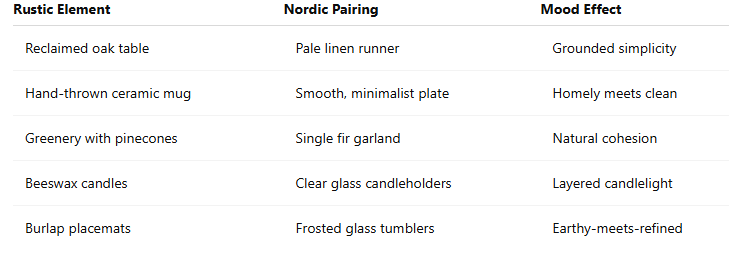
Style Pairings at a Glance

Sources to explore:

  • Pinterest: widely used visual platform for style inspiration

  • House & Garden UK and Ideal Home: reputable UK design publications offering seasonal guides

Styling the Whole Space: Making Your Table Fit the Winter Interior

Your festive table should feel naturally integrated into your home. Think of it as part of the room’s broader winter story. That includes lighting, materials, and textures.

Match your table style to the space. Rustic settings work well with golden lighting and textured fabrics. Nordic designs benefit from lighter walls, soft neutrals, and clean finishes.

Ways to bring it all together:

  • Use throws and cushions in table palette tones

  • Extend greenery and candlelight to sideboards or shelves

  • Use ambient lighting in layers such as candles, fairy lights, and floor lamps

Hosting from Day to Evening: A Festive Table Layout Flow

  • Morning / Brunch: Maximise natural light with pale woods, fresh foliage, and clear glass

  • Afternoon: Dim overhead lights, introduce neutral ceramics, add herbs as subtle accents

  • Evening: Bring in ambient candles, deeper textures, and rich tones like cranberry or charcoal

Browse seasonal collections at:

  • Dunelm and John Lewis Christmas Interiors: well-established UK retailers offering holiday décor

  • Toast Home: known for its tactile, seasonal, and design-conscious interiors

Easy, Elegant and Budget-Friendly Festive Styling Tips

Great festive styling does not have to be costly. Many elements can be made, found, or adapted without overspending. If you are looking for how to style a festive table on a budget, these ideas will help:

  • Collect branches, berries, and cones for natural centrepieces

  • Reuse glass jars as candleholders or mini vases

  • Make place cards from recycled paper and simple ink

  • Use battery-powered lights in places where candles are not safe

Affordable sources to explore:

  • Flying Tiger and IKEA: trusted for affordable, accessible home styling accessories

  • Not On The High Street: a UK-based platform for curated, handmade décor items

These simple rustic Christmas table ideas add personality and character without stretching your budget.

Final Flourish: Your Rustic-to-Nordic Table Styling Checklist

Use this festive table styling checklist to guide your planning:

  1. Choose your theme: rustic charm, Nordic simplicity, or a style fusion

  2. Set your colour palette: earthy tones or soft neutrals

  3. Gather your base materials: wood, linen, greenery, ceramics, candles

  4. Layer intentionally: runner, plates, organic centrepiece

  5. Build lighting: combine candles, string lights, and soft fixtures

  6. Extend style across the room: sideboards, textiles, lighting

  7. Add personal touches: handmade items or meaningful pieces

Your holiday table is more than decoration. It is a seasonal centrepiece for celebration. Whether rustic, Nordic, or a blend of both, let it reflect the tone of your winter interior and the joy of gathering.

Transform Your Dining Table into a Seasonal Statement Piece

Bring rustic charm and Nordic elegance to life with custom table styling solutions tailored to your home.

Get Your Table Styled

Tablemaker

55 High St, London N8 7QB

02083416334

HVQM+58 London
 

Posted on

7 Reasons Why Now’s the Best Time to Order a Made‑to‑Order Table Before Christmas

7 Reasons Why Now’s the Best Time to Order a Made‑to‑Order Table Before Christmas -ablemaker

7 Reasons Why Now’s the Best Time to Order a Made‑to‑Order Table Before Christmas

How to order a made-to-order table before Christmas in the UK

Placing your order for a custom dining table now helps you avoid the seasonal rush, sidestep last-minute stress, and welcome a handcrafted centrepiece in time for the festivities. As UK joinery workshops reach capacity, delivery cut-off dates loom, and timber supply chains tighten, this is the ideal window to act. A custom table is more than furniture. It is the centrepiece of your festive gatherings and a cornerstone for years of memories.

An AI photo of a Christmas solid oak dining table in a London cafe.

Introduction: The Heart of Christmas Starts Here

Picture a warm dining room filled with the smell of roast dinner, the sound of glasses clinking, and guests gathered around a beautifully made oak table. This is where memories are made.

In the UK, festive preparations often begin weeks ahead. Families plan meals, write guest lists, and hang decorations. Yet the dining table is often overlooked until time runs out. Ready-made furniture might arrive quickly, but made-to-order designs take time. These are built from the ground up, using responsibly sourced timber and traditional craftsmanship.

Ordering now ensures your vision is prioritised. You gain early access to materials, enjoy a smoother design process, and leave time for perfect finishing.

Here are seven reasons why acting now makes all the difference if you want your table in time for Christmas.

Pro Tip: Ask your maker early about finish samples to avoid last-minute decisions.

An AI photo of a solid oak dining table in a UK pub

Pro Tip: Always check courier cut-off dates when placing custom furniture orders in November.

1. Beat the Christmas Rush: Workshop Slots Are Already Filling Up

Why do UK tablemakers reach capacity so quickly before Christmas?

Bespoke joinery is about craftsmanship, not mass production. Lead times typically range from four to eight weeks. By mid-November, many UK furniture workshops are already fully booked for pre-Christmas delivery.

Each table has a place in a carefully structured schedule. A single delay, such as a postponed timber delivery or a staffing issue, can push back the entire queue. When the calendar is full, new orders cannot be added.

Placing your order early means you will be prioritised. You gain access to better materials, more consistent updates, and a smoother journey from design to delivery.

Design Your Perfect Table

Tell us your vision and we’ll help bring it to life in time for Christmas.

Start Your Custom Table Now

2. Timber, Treatments & Time: Why Materials Matter More in Winter

Why does winter affect custom oak table production?

Timber naturally responds to temperature and humidity. During winter, it expands and contracts more, which means it needs to be expertly handled to avoid cracking or movement later on.

Finishes such as oils and sealants also take longer to cure in cooler weather. Without proper drying time, they may produce uneven textures or result in tacky surfaces.

When you order early, your table has the time it needs to be crafted properly. This includes moisture testing, careful drying, and accurate application of finishes. All of these steps contribute to long-term durability.

What does FSC-certified timber actually mean?

FSC certification confirms that your table’s timber has come from responsibly managed forests. These forests are protected with strong environmental and ethical standards. Choosing FSC-certified oak supports both sustainability and accountability.

3. More Choice, Less Stress: Customisation Is Easier Before Peak Season

Want to design your perfect Christmas table without pressure?

With a made-to-order table, you can customise every aspect, including dimensions, timber type, leg shape, finish, and added features like extensions. These decisions deserve time and care.

Ordering early gives you breathing space to review samples, adjust preferences, and discuss the details with your maker. When workshops are busy, their flexibility often shrinks and change requests become harder to accommodate.

By getting ahead of the crowd, you maintain control over your design and avoid unnecessary stress.

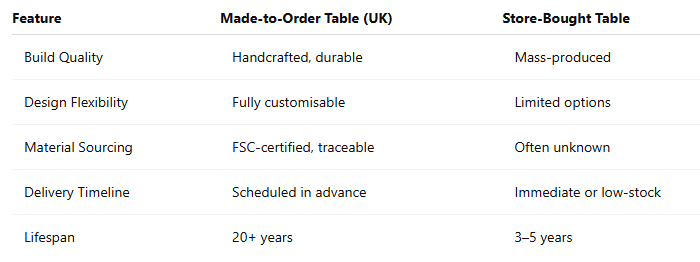
Made-to-Order vs Store-Bought: A Quick Comparison

4. Don’t Risk Delays: Delivery Cut-Offs Are Closer Than You Think

How can you avoid delivery delays for made-to-order furniture?

Even if your table is built on time, getting it delivered is another challenge. UK courier services, including Royal Mail, DPD, and specialist furniture carriers, operate with strict holiday schedules. For large items, their cut-off dates often arrive earlier than most people expect.

Unpredictable conditions such as snow, strikes, or busy routes can make last-mile delivery unreliable. Furniture that requires two-person handling often needs to be booked weeks in advance.

Ordering now secures your slot in the courier calendar and helps avoid disappointment.

5. Be Guest-Ready: Your Table Sets the Stage for Christmas Hosting

What is the one thing every festive host needs?

A generous, beautiful table that seats everyone comfortably. Whether it is carving the roast, pouring mulled wine, or playing games after dinner, the dining table is the hub of celebration.

A made-to-order table transforms your space. It adds character, accommodates guests with ease, and eliminates the need for borrowed or mismatched furniture.

Christmas Hosting Checklist

  1. Measure your dining space and guest list.

  2. Choose table size, leg style, and timber.

  3. Check production timelines with your maker.

  4. Plan your tableware and festive décor.

  5. Confirm delivery and allow time for setup.

This checklist ensures your space, style, and schedule are all ready before guests arrive.

6. Get More Value: Early Orders Avoid Price Hikes & Rushed Costs

Why does ordering early help avoid made-to-order furniture surcharges?

Yes, and it adds more peace of mind too. As December nears, makers often introduce rush charges, couriers apply seasonal surcharges, and materials become more expensive or harder to source.

When you place your order now, you lock in current pricing, avoid last-minute fees, and reduce the chances of scheduling or delivery complications.

Ordering early is not just practical. It is financially smarter.

7. Order Once, Enjoy for Years: A Table That Lasts Beyond the Holidays

Why is investing in a bespoke dining table worth it?

A custom-built dining table is a long-term investment. Designed for everyday living and crafted using sustainable, durable timber, it will support your family for decades.

From Sunday breakfasts to milestone celebrations, it becomes part of your home’s rhythm. Choosing a made-to-order table is a way to bring together quality, sustainability, and timeless design.

You are not just buying for this year. You are investing in every moment that follows.

Conclusion: The Time to Act Is Now

Each of these reasons highlights why placing your order now matters. From securing materials and production time to avoiding delivery bottlenecks and price rises, taking early action gives you the smoothest path to a truly personal table.

Tablemaker offers custom-built oak tables handcrafted in the UK, using sustainable methods and classic techniques. Whether you are ready to start your order or want help refining the details, now is the time to act.

Make this Christmas one to remember around a table designed to last a lifetime.

Beat the Delivery Rush

Slots are filling fast across UK workshops. Reserve yours today to stay ahead.

View Shop

Tablemaker

55 High St, London N8 7QB

02083416334

HVQM+58 London
 

Posted on

How to Style a Solid Oak Dining Table for Christmas Dinner

How to Style a Solid Oak Dining Table for Christmas Dinner -Tablemaker

How to Style a Solid Oak Dining Table for Christmas Dinner

How do you style a solid oak dining table for Christmas dinner?

Styling a solid oak dining table for Christmas starts by embracing its natural tone, visible grain, and inviting warmth. Begin by understanding the table’s finish. Then, choose a colour scheme that complements rather than clashes. Layer natural fabrics, use protective runners that still allow the wood to show, and design a centrepiece that draws attention without overwhelming. With a thoughtful approach, your oak table becomes a stunning and functional centrepiece for the season.

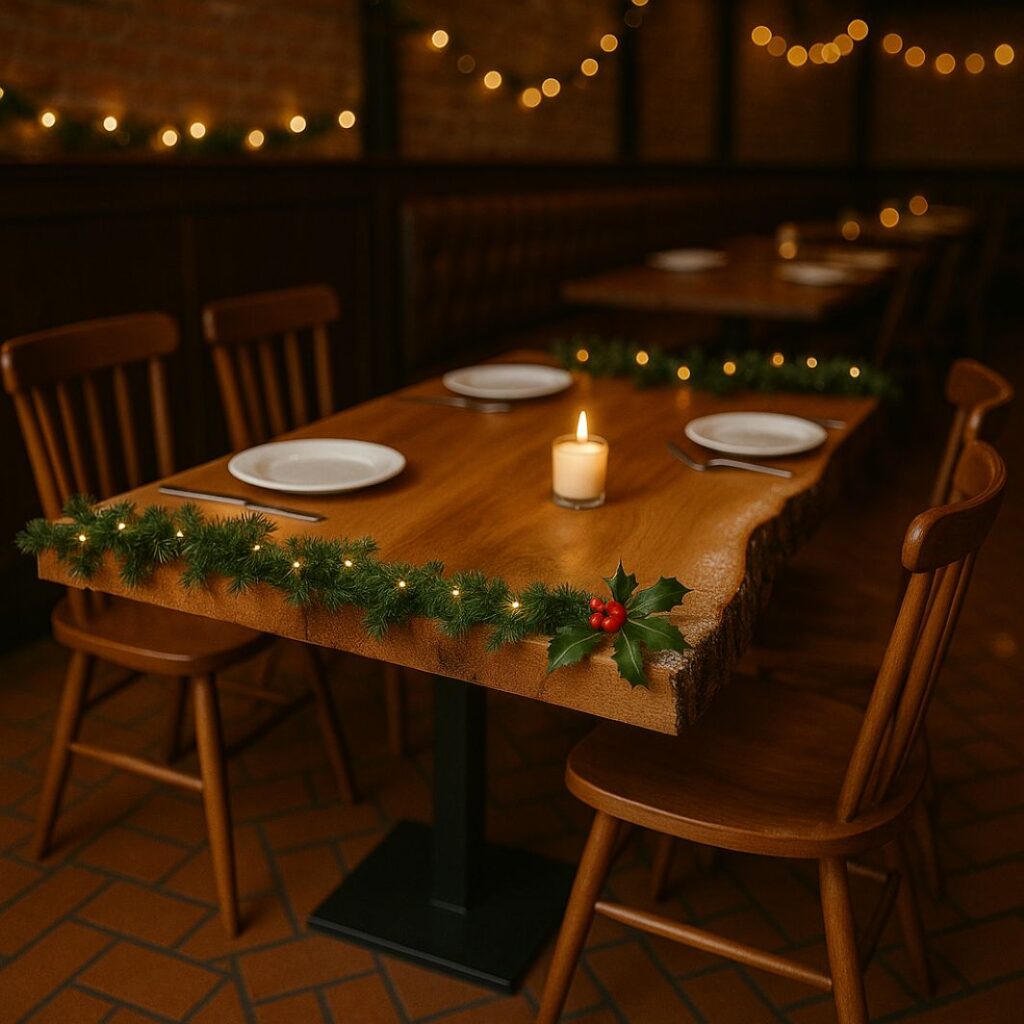
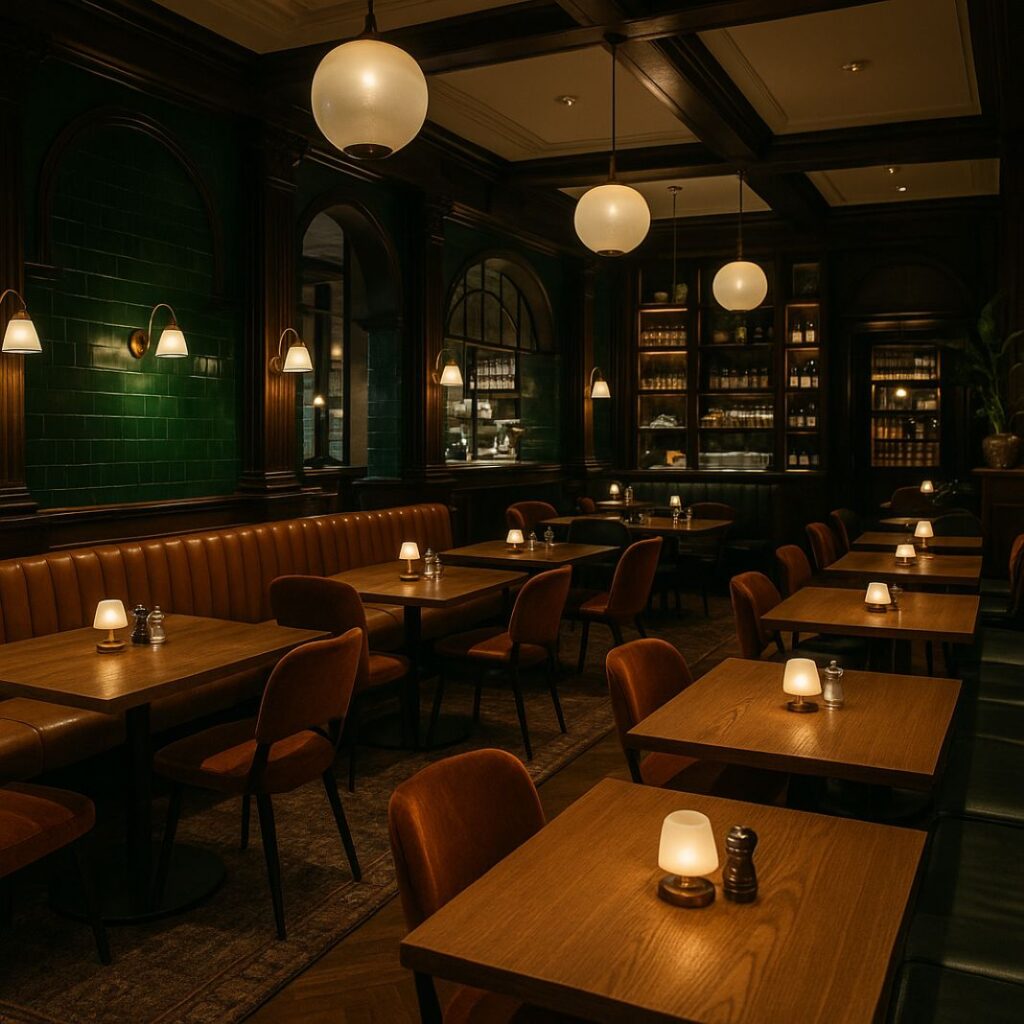
An AI photo of a commercial Christmas dining table in a Restaurant.

Get to Know Your Solid Oak Dining Table

Each oak table has unique features. Before decorating, take a close look at its tone, grain, and finish. Determine whether it is rustic and knot-filled or smooth with a sleek satin coat. These traits influence both your styling choices and how much wood you will want to keep visible.

Oak is a dense and textured hardwood that offers richness in both appearance and feel. Compared to pine or walnut, it has more visual presence. Expose key areas, such as the table edges or a central strip, to show off the wood’s natural beauty. Apply a gentle polish or wax to enhance the patina without making the surface too glossy.

Tables crafted in the UK often meet solid hardwood standards and frequently use FSC-certified oak. Whether yours comes from a British maker like Tablemaker or another source, you should aim to highlight its craftsmanship. Showcase the woodgrain and allow the material to speak for itself. When styled well, oak wood combines durability, warmth, and timeless character.

Pro Tip: Always test your centrepiece’s height by sitting at the table to ensure clear sightlines.

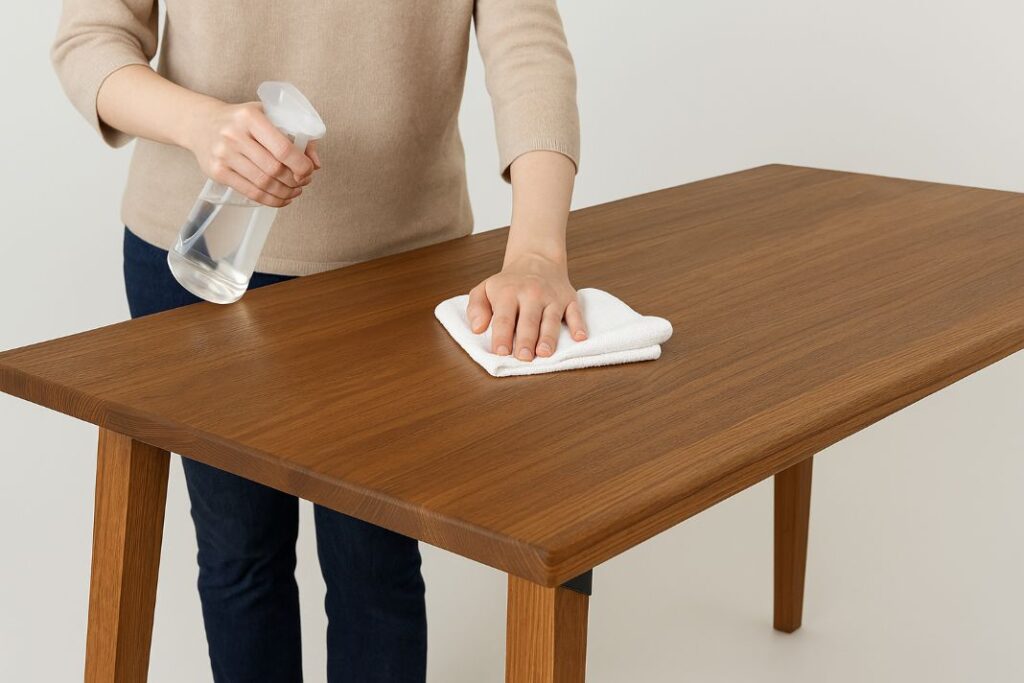
An AI photo of a Christmas dining table being wiped before preparation.

Pro Tip: Use unscented candles to avoid competing with food aromas and preserve guest comfort.

Pick a Christmas Theme That Complements Oak’s Natural Beauty

Choosing a theme involves enhancing the table rather than covering it. Oak with warm undertones works well with traditional red and green, while gold and copper bring out the wood’s glow.

For a natural approach, use elements like pinecones, evergreen branches, dried oranges, or cinnamon sticks. These reflect the table’s rustic charm and help support a cohesive Christmas oak palette. For something simpler, try a Scandinavian-inspired look using soft grey linens, white ceramics, and neutral wood accents. This creates a clean version of natural oak décor.

Avoid icy blues or harsh colour combinations that might fight against the oak’s warmth. Use a palette that supports the table’s tones to help your décor feel cohesive and calm.

Book a Styling Consultation

Need hands-on help? We offer personalised décor consultations tailored to your furniture and home.

Book My Session

Choose Linens, Runners & Table Layers That Protect and Enhance

Protecting your oak table does not mean hiding it. A fabric runner down the centre can guard against spills while keeping the wood visible. Natural fibres like linen and cotton are breathable and gentle on hardwood surfaces. Choosing safe linens for wood is essential for preserving its beauty.

Layering adds both function and visual depth. Place felt underplates beneath woven placemats and top them with soft linen napkins. Use wooden trivets or heat-safe mats from trusted UK brands like Lakeland to avoid heat marks. Look for festive table layering ideas that balance protection with natural texture.

If you use a tablecloth during the meal, consider removing it later so the oak remains part of the post-dinner atmosphere. Avoid rubber-backed or vinyl covers, which may trap moisture. Subtle Christmas table runners for oak provide a balance between style and surface protection.

Design a Centrepiece That Glows – Not Overwhelms

A centrepiece should feel festive without interfering with conversation or serving. Choose something low enough to preserve eye contact and narrow enough to leave space for dishes.

Pair beeswax candles with fresh greenery such as fir, eucalyptus, or holly. Add copper-wire fairy lights or dried flowers for a softer and layered look. Wooden decorations can reflect the oak’s natural tones. These ideas create natural centrepieces that highlight oak without overpowering it.

M&S Home, Pinterest UK, and Homes & Gardens offer inspiration for understated centrepieces that still make an impact. Keep the arrangement simple and in tune with the oak’s colour and grain. When designing your oak table centrepiece, consider lighting balance and dinner visibility for a practical festive display.

Set the Table with Style and Service in Mind

A great table setting must support both comfort and style. Begin with the basics: charger, dinner plate, cutlery, and napkin. Include additional utensils only if the menu requires them.

Leave enough space between settings to ensure guests can move freely. Ensure that any long centrepiece includes gaps for shared dishes, and place crackers and glasses within easy reach.

Add personal touches such as name tags or herbs tied with string without creating clutter. For ideas, explore layout guides from BBC Good Food or product ranges from John Lewis. When planning an oak table dinner layout, aim for festive place settings that are attractive and functional.

Avoid Common Mistakes That Dull or Damage Oak

Attractive décor can cause problems if not chosen carefully. Avoid these common mistakes to preserve the appearance and condition of your oak table:

  1. Too many fabric layers can trap heat and obscure the wood.

  2. Risky décor like dripping candles, scratchy garlands, or hard items can harm the surface.

  3. Placing decorations before considering the dish layout can lead to crowding.

  4. Using only overhead lighting can flatten the atmosphere. Add candles or string lights for warmth.

After dinner, inspect the surface for heat spots, table haze, or sticky areas. These signs often reflect Christmas styling errors such as using unsuitable materials or skipping protection. To avoid damage to your oak table, consider layout and lighting alongside decoration.

Source Sustainable, UK-Friendly Décor That Feels Personal

Let your Christmas table reflect both your values and your design preferences. Choose reusable and ethical items that support UK makers and suit your space.

Seek out handmade decorations from UK sellers on Etsy or Not On The High Street. Visit local fairs to find wooden ornaments, beeswax candles, or reusable linens. These items suit the oak’s natural grain and add personal meaning. Using UK Christmas decorations with local roots adds depth to your festive table.

Combine family favourites with newer sustainable finds. Foraged greenery from your garden can contribute scent, texture, and a low-impact finishing touch. Consult Sustainable Living UK for practical green holiday table tips. Natural styling creates a celebration that is both elegant and heartfelt.

Budget vs Premium Décor Options: Choose What Suits You

An oak table looks stunning whether dressed simply or adorned with premium pieces. Here are some options for every budget:

Budget Ideas:

  1. Gather greenery like ivy and fir from nearby walks or your garden.

  2. Create place cards using recycled paper or brown card.

  3. Make decorations from dried oranges, cinnamon sticks, or handmade stars.

  4. Use twine or ribbon to wrap cutlery or napkins.

Premium Touches:

  1. Buy gold-rimmed glassware or fine china from stores like John Lewis.

  2. Use embroidered napkins and hand-finished linen runners.

  3. Add vintage candlesticks or artisan centrepieces.

  4. Choose polished ceramic or metal serving dishes.

Feel free to combine both approaches – a few luxury details can enhance an otherwise modest setting.

Styling for Different Oak Table Sizes

Your décor choices should fit your table’s dimensions. Use these tips to match your layout to your oak table’s size:

4-Seater Table:

  1. Choose a small and focused centrepiece like a single candle with greenery.

  2. Select placemats instead of charger plates to save space.

  3. Keep items low to maintain eye contact.

6-Seater Table:

  1. Use a fabric runner with two compact arrangements.

  2. Leave open sections for serving dishes.

  3. Layer linens and tableware using contrasting textures.

8-Seater Table or Larger:

  1. Place a full-length garland along the centre with fairy lights.

  2. Break up decorations with candle groupings and clear spaces.

  3. Repeat design details across the table for balance.

Adapting your layout helps keep the display festive and uncluttered, no matter the table size.

Explore Our Oak Furniture Range

Looking to upgrade or add to your collection? Browse our sustainably sourced solid oak pieces.

View Furniture

Tablemaker

55 High St, London N8 7QB

02083416334

HVQM+58 London
 

Posted on

How Restaurants Can Maximise Table Layouts for Holiday Bookings

How Restaurants Can Maximise Table Layouts for Holiday Bookings -Tablemaker

How Restaurants Can Maximise Table Layouts for Holiday Bookings

Why do table layouts matter more during the holidays?

During the festive period, restaurants experience a significant rise in diners, larger group sizes, and higher customer expectations. How dining space is arranged can determine whether your business enjoys a profitable season or loses potential revenue. A thoughtfully designed table layout ensures efficient service, increases guest capacity, and shapes the overall experience. If space is poorly utilised, delays, overcrowding, and reduced profitability follow. By planning carefully, restaurants can make the most of every square metre when footfall is at its highest.

An AI photo of a restaurant dining table at Christmas

Understanding Booking Patterns in the Festive Season

As December arrives, booking patterns shift noticeably. Corporate parties often fill Fridays, while earlier and later reservations also increase. Larger groups dominate, fixed menus become more common, and the time between sittings shortens. By recognising these patterns, you can build a seating strategy that responds to the holiday rush, accommodates high-yield tables, and maximises your floor’s potential.

Pro Tip: Review last year’s booking data early so you can adapt layouts before the festive rush begins.

Pro Tip: Don’t just plan for guests, test your floor for staff efficiency with real-time walk-throughs.

Assessing Your Current Floor Plan for Hidden Opportunities

Take a fresh look at your existing floor plan. Areas that appear functional may contain underused corners, obstructive décor, or walkways that interrupt service. Software such as AutoCAD and ResOS, or even a sheet of tracing paper, can help you visualise how table groupings, walkway space, and cover capacity affect layout density. Minor layout reconfigurations in overlooked capacity zones can create room for additional seasonal covers without any building work.

Need Help with Holiday Layout Planning?

Get expert guidance tailored to your venue to boost revenue and guest satisfaction.

Book a Free Strategy Call

Designing for Group Sizes Without Sacrificing Flow

Holiday group bookings should not compromise staff movement or customer comfort. Consider modular tables or sliding two-tops to allow flexible seating. Prioritise arrangements that serve mid-sized groups, as they often generate strong returns relative to space used. Booking buffer times between reservations help reduce congestion and give servers enough time to reset without rushing.

Smart Table Combinations to Boost Revenue and Flexibility

Dynamic seating setups allow you to cater to different party sizes across changing service times. Movable table grids give greater adaptability than fixed booths, especially for non-standard group numbers. Weekday and weekend configurations can be tailored to expected demand. For example, arrange long tables for early evening groups and then break them apart later in the night. Adapting table layouts by daypart supports a more efficient turnover and improves group seating layout for holiday dining capacity.

Creating Seasonal Ambience Without Losing Capacity

Festive décor should enhance the atmosphere without encroaching on seating capacity or walkways. Avoid placing decorations where they block valuable tables or obstruct staff movement. Use vertical space, such as walls and ceilings, for seasonal touches. Keep centrepieces small to preserve table usability. This approach keeps the room festive and fully functional.

Using Data and Demand Forecasts to Plan Seating Strategy

Reviewing past booking data helps you predict where adjustments are most effective. Your POS system, Tablemaker, or ResDiary analytics can identify which tables experienced the most turnover or were underused. Heat-mapping guest movement shows how the space was actually used. With this information, you can revise layouts to align with high-demand zones and avoid bottlenecks before they develop.

Tools and Tech to Support Table Layout Efficiency

Specialist platforms simplify layout planning by integrating real-time booking and seating information. Tools such as Tablemaker, OpenTable, EatApp, and resOS help you visualise your floor plan, adjust seating as reservations change, and align your team around one unified system. By choosing the right platform, you enable faster decision-making and clearer communication.

Staff Movement, Table Turnover, and Service Efficiency

How staff move through your space has a direct impact on guest experience and turnover. Keep server routes clear and ensure every table is within line of sight. Design zones based on layout logic rather than assigning an even number of tables per staff member. Efficient walking paths reduce fatigue and speed up service. Both outcomes are essential during busy shifts.

Common Mistakes Restaurants Make During Holiday Layout Planning

Many venues fall into the same traps during December. Some add excessive decorations that reduce seating. Others forget to accommodate larger bookings in their floor plan. Staff movement is often overlooked, leading to bottlenecks and delays. Skipping data review results in decisions based on instinct rather than insights. By addressing these errors early, you help keep the venue running smoothly during the busiest time of year.

Avoid and Fix These Common Pitfalls:

  • Overcrowding tables – Alternate layouts to maintain space between groups.

  • Neglecting group bookings – Review last year’s bookings to forecast demand.

  • Poor server visibility – Reposition tables to maintain clear sightlines.

  • Decor blocking key routes – Hang festive elements overhead instead of on the floor.

How Tablemaker Helps Restaurants Optimise Layouts for Busy Seasons

Tablemaker provides tools for live layout adjustment, seating analysis, and reservation integration. These features help restaurants identify where space can be used more effectively, how to adapt table setups in real time, and when to shift seating based on booking trends. It supports a responsive and informed layout approach without adding complexity.

Final Thoughts: Designing a Layout That Delivers More Than Covers

The way a dining room is arranged influences more than capacity. It affects how guests feel and how smoothly service runs. A festive layout should guide guests comfortably through the space, support your team, and reflect your restaurant’s atmosphere. When done well, it becomes a core part of the guest experience and sets the tone for repeat visits. A thoughtful table setup during the holidays is not just functional. It adds to the mood, the story, and the memory of the meal.

Don’t Forget Accessibility

Accessibility must be a priority in every layout plan. Make sure there is at least one uninterrupted route that allows wheelchair users to navigate easily. Avoid blocking these paths with chairs or decorations. Taking inclusive design into account shows respect for all guests and supports compliance with UK hospitality standards.

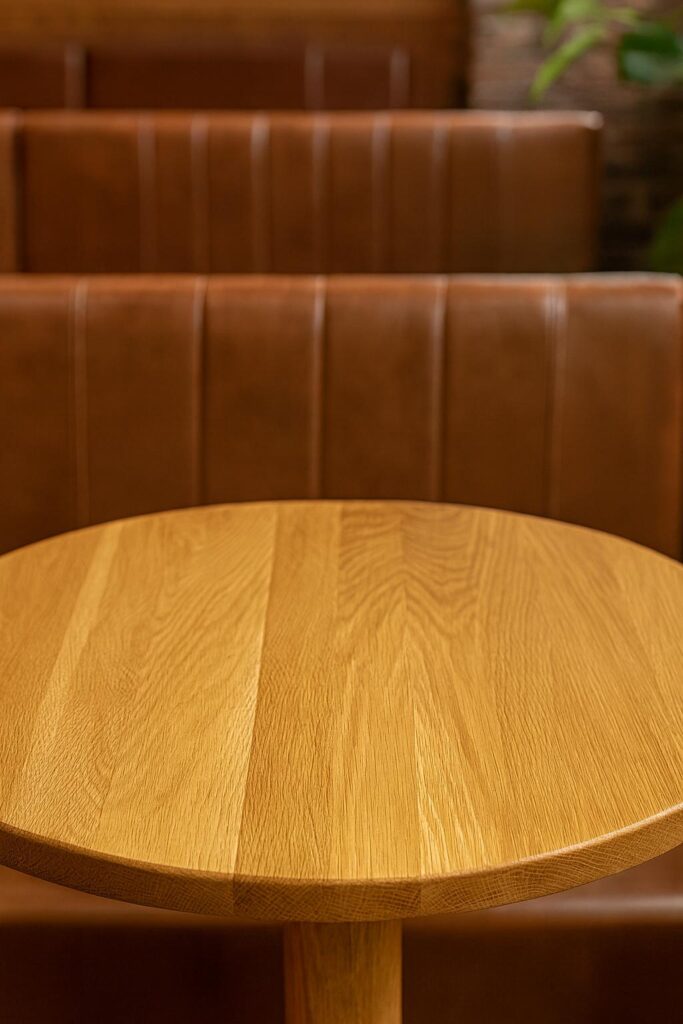
An AI photo of an oak restaurant table.

Struggling to Maximise Covers During Peak Times?

Our optimisation service helps you turn more tables without adding more stress.

Browse Our Festive Tables

Tablemaker

55 High St, London N8 7QB

02083416334

HVQM+58 London
 

Posted on

What’s the Difference Between Rustic and Modern Oak Tables?

What’s the Difference Between Rustic and Modern Oak Tables - Tablemaker

What’s the Difference Between Rustic and Modern Oak Tables?

What separates rustic oak tables from modern ones?

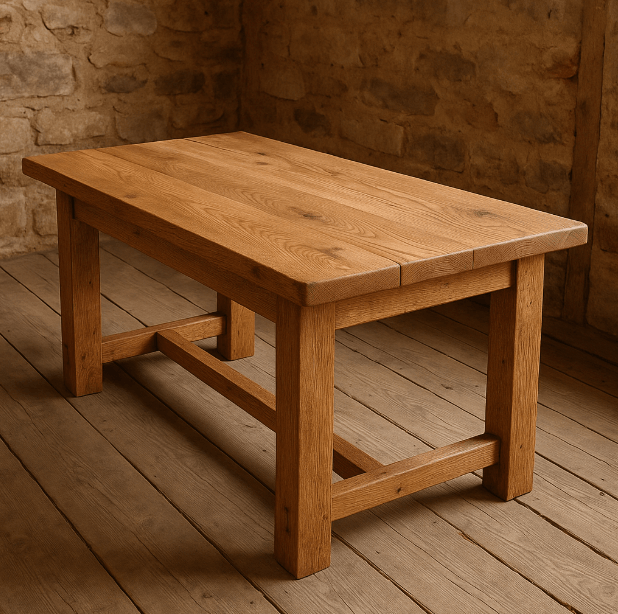
Rustic and modern oak tables may use the same timber, but they create completely different atmospheres. Rustic tables feel warm, textured and full of character. Modern oak tables look refined, calm and clean. Understanding these differences helps you find a style that suits your space and the oak dining table that fits your lifestyle.

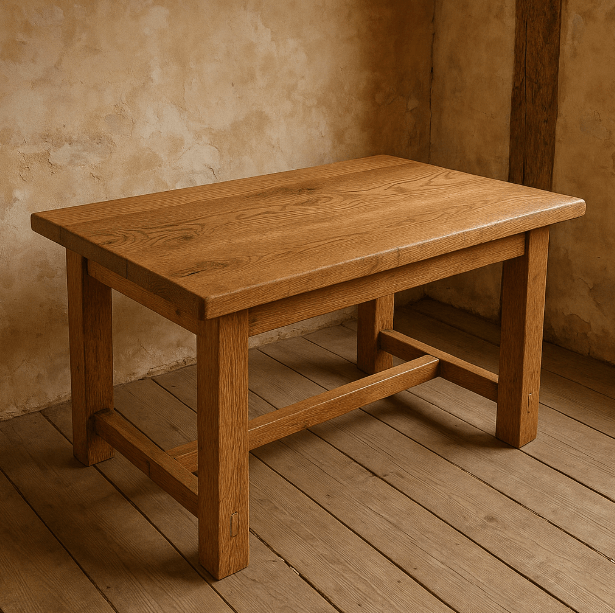
An AI photo of a rustic table in London by Tablemaker.

How can you spot the style at first glance?

Rustic oak tables often display visible knots, bold grain patterns and rounded or live cut edges. Their legs are typically traditional, like turned, trestle or cross shaped, adding a solid, grounded presence. You can often feel the natural texture of the timber when you touch the surface.

By contrast, modern oak tables present smoother surfaces, clean lines and angular or pedestal style legs. Their edges are sharp or bevelled. The overall look is more polished, with symmetry and a lighter visual footprint that suits minimal interiors.

Pro Tip: Avoid placing your table near radiators—oak can warp over time from dry heat.

Pro Tip: Use natural lighting when viewing oak samples—finishes can look different depending on the room.

Rustic oak tables: what sets them apart?

Rustic oak celebrates the wood’s unique features like knots, cracks and strong grain patterns. These are considered part of its charm. Finishes such as oil or wire brushing enhance the natural feel and highlight texture.

Traditional joinery such as mortise and tenon, paired with hand finishing, reinforces a crafted appearance. These tables look at home with stone floors, timber beams and countryside styling.

Their design often includes thicker tops and heavier legs. That extra mass grounds the furniture and adds a bold, stable look, ideal for a family dining space in a period property.

Unsure Which Oak Table Is Right for You?

Our design experts are ready to help you compare styles and finishes to find the perfect fit.

Request Style Advice

Modern oak tables: clean lines, calm finish

Modern oak tables embrace simplicity. They often use prime grade timber, which has a cleaner appearance and more consistent tone. The designs favour symmetry and balance without extra visual weight.

Lighter finishes such as white tinted oils, matte lacquer or bleached oak give them a smooth, refined feel. Legs are typically slim or visually quiet, such as sled, pedestal or floating bases.

These tables work well in contemporary kitchens, open plan dining rooms or spaces with polished flooring and minimal decor, perfect for a modern apartment or kitchen diner layout.

Is there a third option? Consider mid century oak design

Mid century oak furniture blends classic and modern characteristics. These tables often feature tapered legs, rounded corners and honey toned finishes. The overall effect is subtle and balanced.

This style works well in compact homes or period properties where you want design character without bulk. Pairing them with vintage lighting or soft fabric chairs can enhance the look.

How do materials and finishes change the look?

The type and treatment of oak has a big impact on a table’s appearance. Rustic oak features bold patterns and more natural marks, while prime grade oak feels smooth and even.

An oiled surface absorbs light gently and softens the grain. Lacquered or polished finishes, on the other hand, add gloss and sharpen the table’s outline. A brushed texture introduces depth under the fingertips.

Lighting can also change perception. Warm bulbs accentuate rustic character. Cool daylight lifts pale oak and complements cleaner silhouettes.

Visual guide: rustic vs modern oak tables side by side

Let’s compare the key traits:

Rustic Oak Table

  • Grain: expressive and bold

  • Edges: live cut or rounded

  • Legs: trestle, cross or turned designs

  • Finish: oil, wax or brushed

  • Colour: warm or darker tones

Modern Oak Table

  • Grain: subtle and uniform

  • Edges: bevelled or clean cut

  • Legs: pedestal, sled or slim profile

  • Finish: light oil, bleached or lacquered

  • Colour: pale or neutral shades

Reader Tip: A table with a rustic top and modern legs can bridge styles beautifully and works well in transitional rooms.

Can you mix rustic and modern styles?

Yes, and it can look fantastic. A rustic oak top can sit comfortably in a modern room, especially when paired with simple chairs in dark metal or soft fabric.

Focus on matching tone rather than form. If your home’s oak elements lean warm, choose a table with similar warmth. Use accessories like pendant lights or neutral ceramics to tie everything together.

Hybrid tables, which combine a characterful top with clean lined legs, are a smart way to keep your options open.

Which one works best in your room?

The right choice depends on your room’s size, light levels and existing furnishings. Choosing an oak table becomes easier once you understand how each style interacts with its surroundings.

Rustic might suit you if:

  • Your home features stone, brick or exposed timber

  • You prefer traditional shapes and visible texture

  • You want a heavier piece that feels anchored

Modern might be best if:

  • Your room is bright and pared back

  • You like clean surfaces and a lighter feel

  • You want to maximise space in a smaller area

In tighter spaces, modern tables feel less intrusive. Their slimmer legs help the room feel open. Rustic tables, while beautiful, need space to breathe. Use this oak furniture guide to assess what works for your lifestyle and layout.

What about eco sourced oak?

If you’re concerned about sustainability, look for FSC certified oak. This certification ensures the timber comes from responsibly managed forests.

Reclaimed oak is another good choice, often used in rustic styles. It gives old timber new life while reducing waste. Both options let you enjoy solid oak without compromising your values.

What about maintenance and longevity?

Rustic tables with oil finishes are great at disguising wear. Minor scratches tend to blend in with the grain. You may need to re oil once a year, depending on usage.

Modern lacquered finishes resist staining and are simple to wipe down. However, their smooth surfaces can make scratches more visible under bright light.

Both types are long lasting when properly maintained. Solid oak is known for its strength, and well built tables can last for generations.

Quick Q and A: Common oak table terms explained

What is reclaimed oak?
It’s wood recovered from older buildings, barns or industrial sites. Expect weathered texture, nail marks or uneven grain that adds real character.

What does hybrid table mean?
It’s a design that combines elements from more than one style. For example, a rustic tabletop paired with minimalist legs.

Is FSC certification important?
Yes, especially if sustainability matters to you. It shows the oak comes from a forest that’s responsibly managed for the future.

Final thoughts: choose the style that suits your life

Rustic oak tables bring comfort and natural warmth. They suit relaxed spaces with tactile finishes and traditional details. Modern oak tables feel fresh, calm and adaptable to newer home layouts.

Whichever oak dining table you choose, you’re investing in a piece that wears well, lasts long and adds real presence to your dining space.

Explore more oak dining tables from Tablemaker if you’re looking for a piece that suits your space and your style naturally.

An AI photo of an oak modern table.

Bring Your Space to Life with a Table That Fits

Explore bespoke oak dining tables crafted to match your exact style and space.

Browse Our Oak Range

Tablemaker

55 High St, London N8 7QB

02083416334

HVQM+58 London
 

Posted on

5 Layout Mistakes Cafés Make (and How to Fix Them with Oak Tables)

Are Extendable Oak Tables Worth It for Dining Rooms -Tablemaker

5 Layout Mistakes Cafés Make (and How to Fix Them with Oak Tables)

1. Are your tables too close together?

Tightly packed café layouts may let you squeeze in more seating, but they often make guests uncomfortable and staff less efficient. Cramped conditions affect how long people stay, how easily they move around, and how inviting your café feels. Thankfully, a few layout tweaks can help without cutting your capacity.

UK guidance recommends spacing between tables in restaurants should fall between 600 and 900 millimetres. This ensures proper elbow room, chair pull out clearance and helps maintain visual space perception. If space feels tight, switch to narrow oak café tables for better comfort and circulation. These maintain seating levels while improving legroom and flow.

Slimmer table designs with oak pedestal tables help guests feel more comfortable and increase the chance they will stay longer. A less cluttered layout also reduces noise and encourages repeat visits. Fewer well placed tables can often lead to better business outcomes.

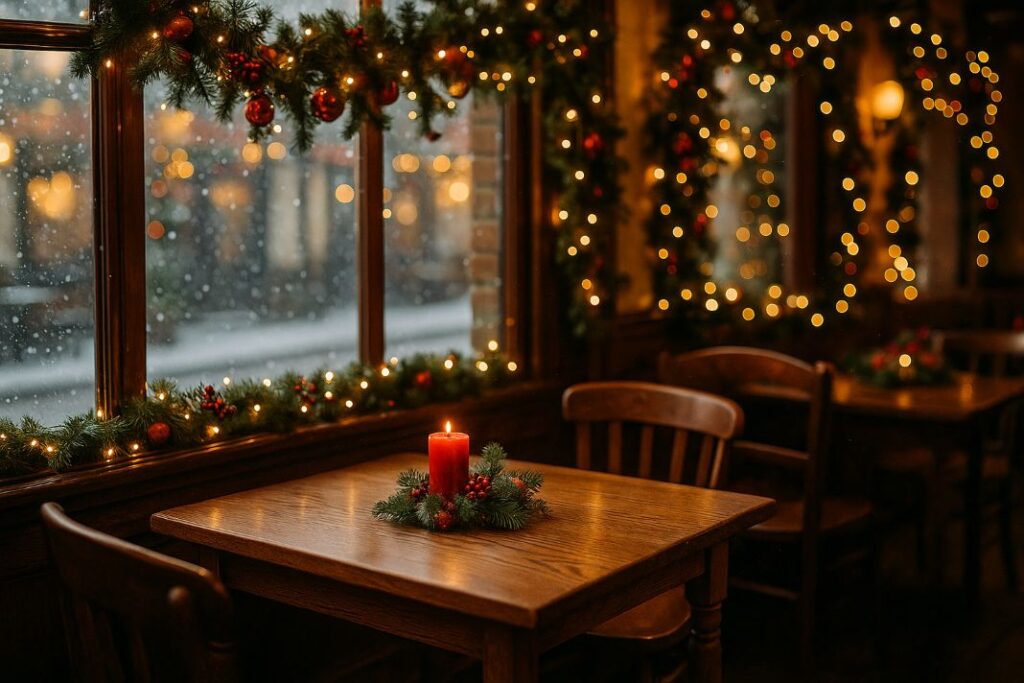
An AI photo of an solid oak cafe tables in London by Tablemaker.

2. Is staff movement being blocked by bad layout?

If your staff are constantly dodging obstacles or taking long detours with trays, your layout may be slowing everything down. Narrow paths raise the risk of spills, reduce table turnover, and hurt service quality.

How wide should staff corridors be?

According to the British Hospitality Association and UK Building Regs Part M, one way server paths should be at least 900 millimetres wide. For two way routes, 1.2 metres helps avoid tight turn radius issues and service flow bottlenecks.

What kind of tables reduce obstruction?

Table choice makes a difference. Four legged tables often interfere with route optimisation, while oak pedestal tables allow better table base clearance. These small changes reduce spill risk and improve layout for restaurant workflow.

Take a moment to observe your team during busy times. Notice if they are hesitating, rerouting or stepping around obstructions. Adjusting the layout with space saving tables for cafés can improve how your team works and how quickly guests are served.

Pro Tip: Small round tables near windows attract solo diners who stay longer.

An AI photo of an oak cafe table set up by Tablemaker.

Pro Tip: Always test new layouts with tape before moving furniture—it saves time and guesswork.

3. Did you choose the wrong shape or size tables?

Different table shapes serve different purposes. Round tables suit corners and solo guests. Square ones offer layout flexibility. Rectangular tables make the most of narrow rooms.

Table shape affects table footprint

In compact cafés, oak pedestal tables are often the smartest choice. They increase surface to seat ratio and allow better table footprint efficiency. Small oak tables create warmth without overpowering your floorplan.

How consistent table shape improves layout

Repeating the same shapes along key sightlines improves visual alignment and supports design consistency. Using a wide variety of shapes can disrupt space mapping and result in a disjointed look.

If the layout feels awkward, the table shape may be to blame. Try sketching a new arrangement that groups tables by shape to help circulation and visual flow.

Upgrade Your Café with Custom Oak Tables

Boost comfort, style and layout flow with handcrafted oak café tables.

Call Oak Expert

4. Is your café centre space overcrowded?

Filling the centre of your café with tables can seem like a smart way to add seats, but it often has the opposite effect. A blocked centre feels unwelcoming and limits how people move.

Why you should clear the centre

The middle of your space should be a preserved flow zone that makes a positive café entrance experience. Push more seating to the walls, use banquettes, or try half moon oak tables in corners to free up the centre.

Avoid placing high backed chairs or bulky items in central areas. These interrupt sightline optimisation and create clustered table arrangements that reduce comfort.

Use masking tape to mock up table boundaries and test new routes before shifting furniture permanently. Breathing space in the middle can improve first impressions and ease foot traffic.

5. Are you forgetting solo diners, groups or accessibility?

If all your tables are set up for pairs, you could be missing out on valuable customers. Solo workers, families and those with accessibility needs all benefit from layout flexibility.

Seating solutions for different guest types

Create window seating with small round oak tables for those working or dining alone. Use extendable oak tables or modular layouts to support group seating in small cafés. Include at least one wheelchair accessible table with proper turning radius near a clear aisle.

Inclusive café design can lead to stronger reviews and a broader customer base. Rigid setups limit flexibility. Modular seating zones with table swap flexibility let you respond to different customer needs.

Adapting your layout throughout the day

A solo diner setup during morning hours can attract remote workers. Later, that same area can serve larger lunch groups. Oak tables are ideal for these changes as they combine durability with a neutral look that works in any setup.

What is a good turning radius for wheelchair access?

Government accessibility standards recommend allowing 1.5 metres of clear space at at least one table for safe and dignified access.

Why should inclusive layouts matter for small cafés?

They increase dwell time, broaden your appeal, and reduce the risk of excluding valuable guests. Making a space usable for everyone is not just fair, it is good business.

An AI photo of an oak cafe tables.

Need Help Fixing Your Café Layout?

Discover how our space-saving oak tables support staff movement and seating flexibility.

Explore Table Solutions

Tablemaker

55 High St, London N8 7QB

02083416334

HVQM+58 London
 

Posted on

Are Extendable Oak Tables Worth It for Dining Rooms?

Are Extendable Oak Tables Worth It for Dining Rooms -Tablemaker

Are Extendable Oak Tables Worth It for Dining Rooms?

Are extendable oak tables worth it for most UK dining rooms?

Extendable oak tables provide practical seating flexibility without sacrificing style or durability. They are a smart option for UK households, especially where dining space is limited but occasional hosting is still part of life. Well-built models with strong extension mechanisms and solid oak construction tend to hold their value over time and handle regular use with ease. In compact dining rooms and open plan kitchen diners, these tables offer flexibility that fixed styles simply cannot.

What makes a dining table ‘worth it’ in the first place?

A dining table earns its value by being useful, durable, and suited to your lifestyle. For many British homes, that means accommodating occasional guests, surviving family life, and matching the surrounding decor.

When you calculate cost per year of use, solid oak tables often come out ahead. A well-maintained piece can last twenty years or more, offering strong return on investment. These investment pieces also serve as multiuse worktops for homework, crafts, remote working, and everyday dining.

Sentimentally, these tables often become central to family rituals. They are the scene of daily meals, birthdays, and celebrationsadding long-term emotional value to their practical use.

Pro Tip: Always check that the grain runs in the same direction across leaves to ensure visual continuity.

Pro Tip: Test the mechanism at least twice before buying to make sure it opens and locks smoothly.

How long do oak extendable tables last?

With proper care, extendable oak tables can last several decades. Their durability comes from the density of solid oak, expert joinery, and protective finishes like wax or oil. Many become heirloom furniture pieces passed down or resold with retained value.

How do extendable oak tables actually work?

Most extendable oak tables use either internal or external mechanisms to create more space when needed. The most common types include:

  • Butterfly extension: Leaves fold and store within the centre of the table

  • Telescopic runners: Table pulls apart with insertable leaves

  • Drop-leaf: Sides fold up or down on hinges

Look for quality indicators like rail glides, locking mechanisms, and leaf storage built into the structure. If seams align well and the mechanism glides without effort, that is usually a sign of good build.

Poor construction may lead to mechanism fatigue, misalignment, or structural instability. Joinery integrity, panel alignment, and grain continuation are key features to evaluate.

Want a Custom Oak Table That Fits Any Room?

Our made to measure oak tables are built for real homes, real meals, and real flexibility.

Free Consultation

The real pros and cons of extendable oak dining tables

Pros

  • Flexible layout for smaller or multiuse rooms

  • Space saving dining furniture for compact homes

  • Long lasting with proper maintenance

  • Strong resale value when made from solid European oak

  • Visual warmth and timeless style that suits both classic and contemporary interiors

Cons

  • Weight can make solo operation difficult

  • Visible extension seams may affect visual consistency

  • Runner systems require occasional care

  • Premium build quality comes with a higher upfront cost

  • Some extended tables may have reduced lateral stability if poorly designed

What breaks first in an extendable table?

Wear and tear usually starts with the extension mechanism. Runners, sliders, and locking systems are subject to friction, debris, and force. Common problems include leaf misalignment, panel jamming, and locking clips losing tension.

Timber movement caused by moisture or heating systems can also distort alignment over time. Choosing seasoned oak and regularly inspecting mechanical components helps prevent most issues.

For homes with young children or frequent use, choosing a model with internal housing, reinforced glides, and easy locking clips will help maintain function.

What real buyers say: regrets, wins, and surprises

Feedback from owners typically focuses on day-to-day use:

“I wish we’d picked one with internal leaf storageit’s hard to find space for the panels.”

“The extension is smooth, but I have to clean the runners more than I thought.”

“We don’t extend it often, but it’s great for birthdays and holidays.”

“Even closed, there’s a fine seam line, but it doesn’t bother us.”

These insights reveal the importance of functional features like integrated storage, stable runners, and finish continuity.

Is a fixed or extendable table better for small homes?

In smaller homes or shared living areas, an extendable dining table often works better. It provides daily usability without dominating the space, and allows you to expand for guests. A fixed table may suit consistent seating needs, but limits adaptability.

Is an extendable oak table right for your home?

Suitable for you if:

  • You host friends or family occasionally

  • You need a compact table that adapts to larger groups

  • Your dining area is part of a multiuse or open plan room

  • You value long term table ownership and flexibility

Possibly unsuitable if:

  • You need permanent high-capacity seating

  • You prefer seamless furniture with no joins

  • You move home often and want lightweight furniture

Your dining lifestyle, guest habits, and room layout should guide your choice.

Comparison: Fixed vs Extendable vs Drop-leaf Tables

If you are unsure whether an extendable oak table is right for your home, this table offers a clear breakdown of how it compares to other popular options:

FeatureFixed TableExtendable TableDrop-leaf Table
Seating FlexibilityLowHighModerate
Best ForDaily consistent useOccasional hostingVery small dining areas
Space EfficiencyLeast flexibleSpace-saving when closedHighly compact
WeightModerateHeavy due to mechanismLightweight
Visual ConsistencySeamless grainMinor join visibilityExposed hinges
Mechanism MaintenanceNoneRequires occasional careHinges may loosen
Leaf Storage NeededNoOften yesNo
Price Range (typical)Low to HighMid to HighLow to Mid

This overview helps you identify what works best for your space, usage habits, and preferences.

What to look for when buying an extendable oak dining table

  • Internal storage for leaf panels so they stay protected and easy to access

  • Smooth telescopic glides or geared runners with steel reinforcement

  • Solid oak top and base to ensure structural consistency

  • Grain matched surfaces so the extension blends with the rest of the table

  • Fastening clips or dowels that hold panels tightly together when extended

  • A central leg or wide base to support length and weight during use

Always test extension ease and table stability in showrooms or request video demonstrations when shopping online.

Why craftsmanship still matters (including one quiet example)

A well-built table makes all the difference. Small construction detailslike grain continuation, strong joinery, and precise extensionscan prevent long-term issues.

One workshop worth mentioning is Tablemaker. Their extendable oak tables use seasoned European timber, dovetail joints, and screw bolt anchoring for long-term reliability. Internal leaf housing is flush-fitted and extensions lock without shifting.

This level of build quality supports daily use and preserves alignment across decades. Craftsmanship ensures your table performs as beautifully as it looks.

How to care for an extendable oak table

  • Wipe with a damp cloth and dry thoroughly

  • Avoid dragging items across joints or seams

  • Clean runners gently with a cloth or soft brush every few months

  • Use Osmo Oil or beeswax depending on finish type to keep the wood nourished

  • Protect surfaces with mats, pads, and coasters

  • Keep in a room with stable humidity and avoid direct heat sources

Maintenance supports both appearance and mechanism longevity. A well-cared-for table keeps performing without fuss.

Final verdict: who should (and shouldn’t) buy one

A strong option for:

  • Homeowners who entertain occasionally

  • Families needing flexible space management

  • Buyers who want long-lasting, real wood furniture with function

Less ideal for:

  • Daily use by six or more people

  • Households prioritising minimalism or ultra-light furniture

  • People who dislike visible joins in design

Extendable oak tables give you adaptability without sacrificing build or visual appeal. For many households, that makes them a sensible and enjoyable choice.

Quick answers to common doubts

Can I repair an extendable mechanism? Yes. Joiners or furniture technicians can usually repair or replace faulty parts.

Do seams always show when the table is closed? Usually, but better models have minimal visibility thanks to matched grain and precision cuts.

Will a solid oak table warp over time? Not if made from seasoned timber and stored in stable conditions.

Are they hard to maintain? No. Light cleaning and occasional oiling is enough in most homes.

Will the leaves match the main surface? If made from the same batch and board cut, they should match closely in grain and tone.

Don’t Just Buy a Table, Invest in a Lifetime Piece

Discover solid oak tables crafted for daily use and generational quality.

See Our Oak Range

Tablemaker

55 High St, London N8 7QB

02083416334

HVQM+58 London
 

Posted on

7 Reasons Solid Oak Tables Belong in Every Stylish Office

7 Reasons Solid Oak Tables Belong in Every Stylish Office -Tablemaker

7 Reasons Solid Oak Tables Belong in Every Stylish Office

Why are solid oak tables such a strong design choice for modern office interiors?

Solid oak tables create a sense of calm confidence in a workspace. Whether placed in a meeting room, reception area or collaborative desk zone, they bring warmth, texture and a natural focal point. Their visible grain and solid construction show long term thinking and a commitment to quality. In both modern and traditional interiors, oak fits comfortably without looking dated or out of place.

An AI photo of an oak office desk table by Tablemaker.

1. A refined visual centrepiece for today’s office interiors

How does oak furniture shape the style of a workspace?

Oak office table design becomes part of the room’s overall feel. Unlike plastic or laminate surfaces, oak has character. It feels intentional. The grain tells a story. The texture invites interaction. The tone adds depth.

In minimalist or neutral offices, oak helps the space feel more grounded. In reception and meeting rooms, it creates presence without shouting. A solid oak statement desk quietly sets the tone.

People notice oak. It feels familiar, steady and reassuring—ideal for offices that care about visual identity. Its surface also helps reduce background noise, contributing to a calmer room tone.

Pro Tip: Position oak tables near natural light to highlight grain and reduce glare.

An AI photo of a oak desk in London office by Tablemaker.

Pro Tip: Refinishing oak every few years can make it look brand new without replacing it.

2. Built for everyday use in busy workplaces

What makes oak ideal for commercial work surfaces?

Office life is constant. Chairs scrape, mugs clatter, meetings come and go. Solid oak handles it all. Unlike veneer or chipboard, it does not sag under pressure or wear thin from use.

Kiln dried oak with an oil based finish resists dents and stains. If the surface gets marked, it can often be sanded and resealed. That makes it practical for boardrooms, training rooms or coworking desks.

Oak stays looking good. With strong edge resistance and a forgiving surface, it suits high footfall areas. It is a sound investment when long term performance and commercial grade durability matter.

Book a Free Office Furniture Consultation

Thinking about upgrading your office? Let’s explore the best oak furniture options for your workspace.

Call Now

3. Oak supports trust and a professional brand image

Furniture communicates values. Choosing oak shows commitment to longevity and care. It says the details matter. That builds confidence among clients, staff and partners.

It works in many settings. Oak feels at home in law firms, creative studios or growing tech companies. It suits clean modern offices or older buildings with character.

A flat pack desk can feel temporary. Oak is permanent. An oak boardroom table strengthens your brand tone. It reinforces a message of stability and attention to detail. As part of your furniture for brand identity, it shows a quality first approach.

4. Works with modern, Scandi and industrial design

Oak suits a wide range of office styles. It softens modern spaces, blends well in Nordic inspired rooms and adds contrast in industrial interiors.

Oak combinations that work well:

  • Oak and acoustic panels reduce noise in open plans

  • Whitewashed oak and grey bring a calm Scandinavian look

  • Raw oak and metal frame an industrial edge

  • Oak and textured textiles make the space feel relaxed and balanced

Because it is so neutral, oak pairs easily with other materials. This gives flexibility when the layout evolves or your brand changes. Designers value oak for its ability to create visual harmony across different zones.

In open plan spaces, oak helps define work areas. It supports zoning while softening the overall layout. It also helps reduce echo, supporting a quieter and more focused atmosphere.

5. Helps lower costs by lasting longer

Upfront, oak costs more. But over time, it saves money. Cheaper desks made from laminate or melamine often need replacing within a few years. Oak can last decades with care.

Solid wood can be refinished. A worn table can be sanded, re oiled and reused. That keeps it in service far longer than composite alternatives.

Example timeline:

  • Year 1: Oak costs more initially

  • Year 3: Laminate surfaces begin to mark and fade

  • Year 5: Most low cost desks replaced

  • Year 10: Oak tables still in place and often looking even better

For offices thinking long term, this means lower replacement rates, less waste and consistent style. Oak supports sustainability goals and protects budgets. It is a high value choice for anyone looking at office furniture investment from a lifecycle cost perspective.

6. Comfortable to use and good for wellbeing

How does oak contribute to employee comfort and focus?

Work surfaces affect how people feel. Oak has a natural warmth. It is never icy like glass or overly shiny like plastic. Its gentle texture feels comfortable under hand.

This matters in open layouts where noise, screens and movement compete for attention. A smooth oak surface creates a grounded place to work. It helps offset screen fatigue and reduces sensory overload.

Natural materials like oak are known to support wellbeing. They reduce cognitive strain and help people feel more settled. A tactile, light reflecting surface like oak contributes to a calmer and more productive environment. It plays an important role in biophilic office furniture and workplace wellbeing.

7. A sustainable choice for conscious buyers

Oak is renewable and lasts a long time. When it comes from certified sources and is made locally, it supports responsible production. Look for FSC certified timber and UK manufacturing.

Long lasting furniture reduces waste. Instead of buying again every few years, oak can be repaired and kept in use. This supports carbon goals and reduces landfill.

Quick checklist for sustainable oak:

  • Look for FSC certification

  • Choose UK made or locally produced

  • Select oil based finishes for repair and care

  • Plan routine maintenance for surface upkeep

Oak does not ask you to choose between design and responsibility. It delivers on both. For procurement teams and brand leaders, it offers long term value with measurable environmental benefits. It is a smart addition to any eco office furniture strategy or sustainable boardroom table selection.

An AI photo of a solid oak desk by Tablemaker.

Discover Our UK Made Oak Tables

View our collection of handcrafted solid oak desks, tables and boardroom solutions made locally.

See the Range

Tablemaker

55 High St, London N8 7QB

02083416334

HVQM+58 London
 

Posted on

Should You Buy a Reclaimed Oak Table or New?

Should You Buy a Reclaimed Oak Table or New?

Should You Buy a Reclaimed Oak Table or New?

Should you buy a reclaimed oak table or choose new oak furniture instead?

If you’re trying to decide between a reclaimed oak table and a new oak dining table, you’re not alone. Many people are drawn to the warmth and character of reclaimed oak, while others prefer the clean grain and uniformity of new timber. This guide compares both options in detail – helping you make an oak furniture decision that suits your style, budget and space.

An AI photo of a oak dining table by Tablemaker.

What counts as reclaimed oak and what doesn’t?

True reclaimed oak is wood that’s been salvaged from a previous structure – not just made to look old. Common sources include:

  • Beams from agricultural barns

  • Railway sleepers

  • Structural timber from dismantled buildings

Be cautious with marketing phrases like “reclaimed style” or “rustic look”. These often refer to new oak that’s been distressed or stained, rather than wood that’s genuinely been used before.

How to spot authentic reclaimed oak:

  • Aged markings like nail holes, dark patches or saw marks

  • Visible variation in colour and grain

  • Source information from the supplier

  • Signs that it’s been cleaned, denailed and kiln dried

Buying from a reputable reclaimed wood supplier helps you avoid imitations and guarantees the material has been properly prepared.

Pro Tip: New oak gives you predictable results if you need matching furniture or a clean finish.

An AI photo of an oak table by Tablemaker.

Pro Tip: Reclaimed oak isn’t always cheaper — factor in the cost of prep and finishing.

How does reclaimed oak perform compared to new oak?

Strength and stability

Reclaimed oak is often very stable, having already gone through decades of natural expansion and contraction. That means it’s less likely to warp. However, it can contain hidden weaknesses if not carefully inspected. Reclaimed wood durability depends on its previous use and how well it’s been restored.

New oak, particularly when it’s kiln dried and graded to BS EN 942 standards, is dense and structurally reliable. It’s ideal for large dining tables and precise joinery. Its oak table strength is especially suited to long, wide formats.

Moisture content and movement

Reclaimed oak generally has a lower and more stable moisture content. New oak adjusts to its environment over time, which may cause minor surface changes like small cracks.

Grain consistency and surface feel

New oak has a smoother texture and more even grain – perfect if you want a modern oak dining table. Reclaimed oak has more variation and texture, which gives it visual depth and a natural aged feel.

Book a Free Table Consultation

Not sure which oak is right for your space? Speak to a Tablemaker expert today.

Speak to Expert

Which oak style works better in your home?

Where reclaimed oak shines:

  • Farmhouse kitchens or rustic interiors

  • Heritage homes with period features

  • Loft flats and industrial-style spaces

Reclaimed oak furniture adds character and blends with architectural history.

When new oak is a better fit:

  • Contemporary or minimal interiors

  • Scandinavian or Japandi styles

  • Homes needing matching furniture sets

Its clean grain and light tone work well in modern spaces with simple lines.

Whether you’re making a practical choice or a design led decision, think about how your space is used day to day. Some styles thrive on uniformity. Others benefit from texture and irregularity.

Is reclaimed oak actually cheaper?

The price story

Reclaimed wood may seem cheaper at first, but once you factor in denailing, sanding and finishing, the cost can equal or exceed new oak. New oak has clearer pricing and often less prep required.

Maintenance needs

Reclaimed oak may need extra care. Its texture can hold dirt, and older grain sometimes absorbs finishes unevenly. New oak is easier to clean and treat evenly.

Long-term value

A well-built reclaimed oak table can become a family heirloom, especially when crafted by a skilled maker. But the same goes for high quality new oak furniture. Think in terms of long table lifespan and cost per year of use.

What are the risks of reclaimed oak and how do you avoid them?

Potential issues:

  • Hidden metal or screws inside the wood

  • Lead paint or historic finishes with toxic residue

  • Cracks, splits or soft grain areas

  • Surface damage from insects or decay

How to protect your investment:

  • Ask where the wood was sourced and how it was cleaned

  • Check it was kiln dried to remove moisture

  • Confirm it’s been metal scanned before cutting

  • Choose makers like Tablemaker who specialise in reclaimed oak tables and inspect every board carefully

Using a “reclaimed oak table checklist” when shopping helps avoid mistakes and ensures you’re buying safe, quality furniture.

When does reclaimed oak make the most sense?

Reclaimed oak is best when you want:

  • A statement table with history and texture

  • Sustainable or low waste furniture choices

  • A piece that naturally softens a modern space

  • Something that looks lived-in straight away

It’s especially popular in interior design for rustic oak dining tables and showpiece kitchen furniture.

When is new oak the smarter choice?

New oak might suit you more if:

  • You’re working to a tight deadline and need reliable delivery

  • You want matching sets with consistent colour

  • You like pale oak finishes or want to stain the piece to fit a room

  • You prefer a simpler maintenance routine

It’s the best option for clients who want control, coordination and clear finishes.

Can you combine reclaimed and new oak in one design?

Yes, and it works well. A hybrid oak table can give you the best of both.

Examples include:

  • A reclaimed top with new oak legs for strength and balance

  • New oak frames with reclaimed oak inlays

  • Using reclaimed oak veneer bonded to engineered cores

This mixed oak furniture style offers design flexibility, keeps costs down and gives you visual warmth with structural reliability. It’s an ideal choice when you want to compare oak tables that offer both charm and modern practicality.

Tablemaker’s expert advice on choosing oak tables

We work with both reclaimed and new oak daily. Here’s what we always do:

  • Scan all reclaimed oak for nails and old fixings

  • Flatten and prepare boards before assembly

  • Match new oak for colour and grain if needed

Always ask your furniture maker how they process reclaimed wood. If they can’t answer clearly, find someone who can.

Quick checklist to choose the right oak table

ConsiderationReclaimed OakNew Oak
AppearanceWeathered, unique, full of detailClean, consistent, light-toned
CostVariable with hidden prep costsEasier to estimate and plan
Eco valueHigh – reuses timberHigh if FSC certified
PerformanceStable but varies by boardPredictable and uniform
Best forRustic, heritage or statementModern, minimal or matched

Frequently asked questions about reclaimed and new oak tables

Is reclaimed oak safe for use in homes? Yes, when properly treated and checked for metal or toxins.

Will reclaimed oak furniture last as long? Often yes – sometimes longer – especially if made from structural beams.

Can I get a modern look using reclaimed oak? Yes. It depends on how it’s cut, shaped and finished.

Is new oak furniture better for dining tables? Not always. It depends on your design goals and maintenance preference.

Final thoughts: which oak table is right for you?

Both reclaimed and new oak can make excellent investment furniture. Reclaimed oak is perfect if you value uniqueness, sustainability and timeless charm. New oak is right if you want uniformity, ease and design control.

Still unsure? Reach out to Tablemaker for personalised advice. We’ll help you compare oak tables and find the one that fits your home and your lifestyle.

An AI photo of a bespoke oak table by Tablemaker.

Explore Our Oak Table Collection

Browse our reclaimed and new oak tables, custom-made in our North London workshop.

View Our Tables

Tablemaker

55 High St, London N8 7QB
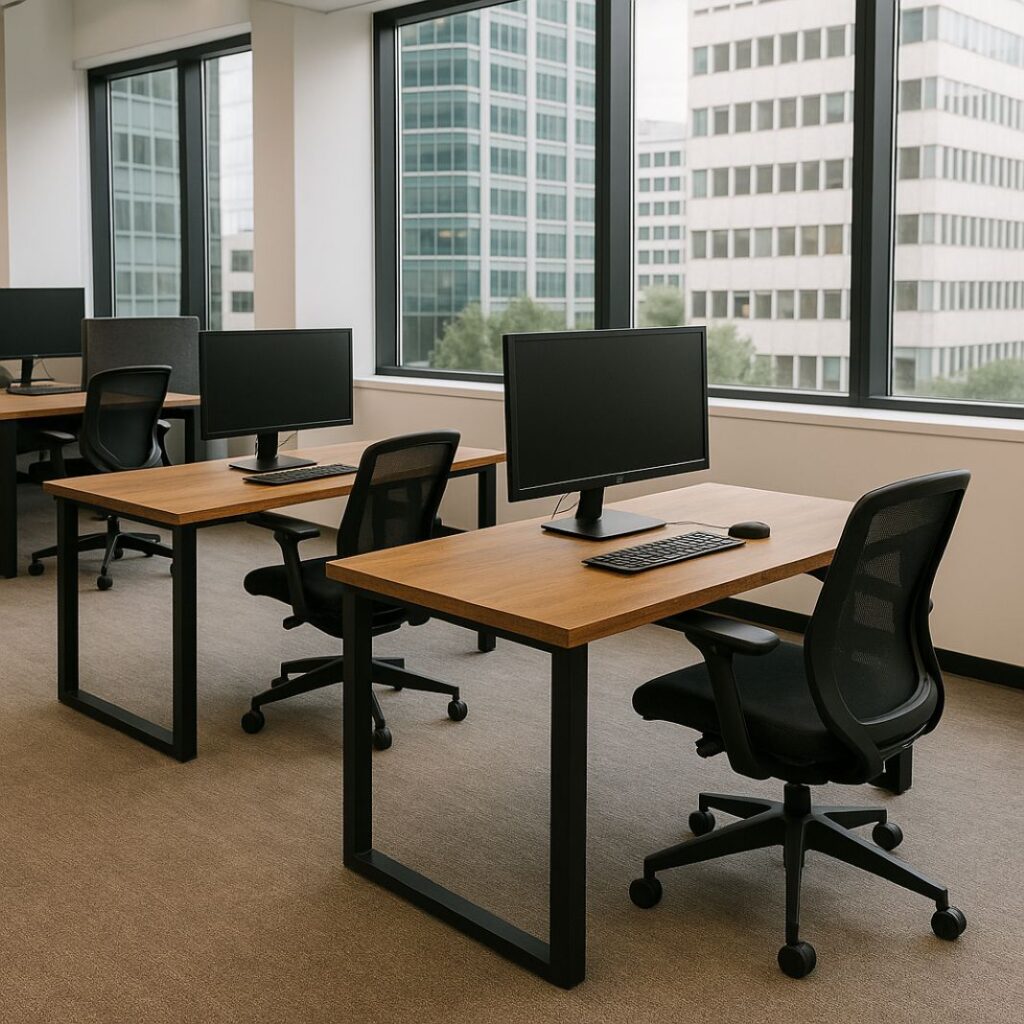
02083416334

HVQM+58 London