
Why One-Size-Fits-All Tables Fail in Real Commercial Environments
Why do one-size-fits-all tables fail in commercial environments?
One-size-fits-all tables promise flexibility and simplicity, helping buyers reduce decision-making and streamline procurement. However, commercial spaces often exceed what these tables are built to handle. While they may meet design standards, they frequently fail under the repeated stresses of real-world use.
Table of Contents
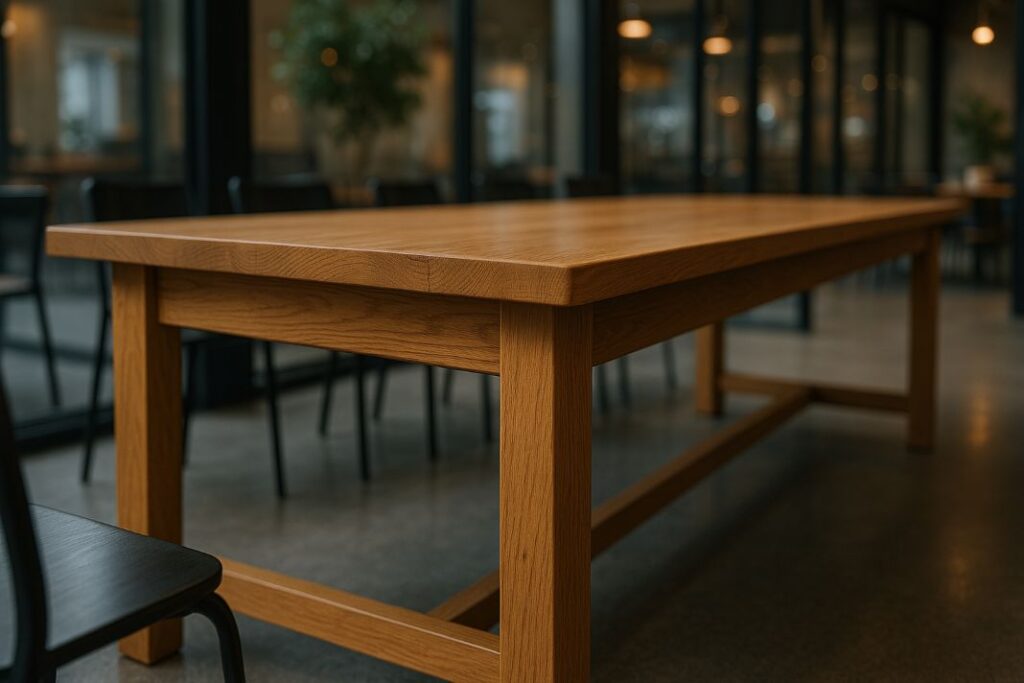
An AI photo of a commercial-grade solid oak table
The Promise and Trap of “Universal” Tables
Many commercial spaces face these challenges because standardised options dominate procurement catalogues. But firms like Tablemaker – Made-to-Measure Tables for Commercial Interiors – offer a different path by focusing on contextual fit and durable construction. The promise of universal furniture is simplicity. A single solution that fits many spaces, users, and needs seems efficient and scalable. Universal tables are appealing for good reasons. Fewer models simplify decisions, make stock management easier, and deliver a cohesive look. They appear to minimise risk and align with procurement goals.
In reality, though, most commercial environments are anything but standard. Tables are dragged between rooms, leaned on, or reconfigured daily. These aren’t unusual behaviours,they are expected in busy, flexible spaces.
A table that seems adequate at purchase may feel unstable or unsuitable only months later. Wobbles, surface wear, and layout incompatibility emerge gradually. Each issue may appear minor in isolation, but collectively they accumulate and cause significant problems over time.
The Design Assumptions Behind One-Size-Fits-All Tables
These table design assumptions are based on static loads, average behaviours, and predictable use. Furniture manufacturers typically design for what works for the majority. It’s an efficient approach, based on compliance with standards like EN 527 and EN 1729. Production costs stay down, and outputs stay consistent.
This approach assumes uniform flooring, consistent use, and predictable behaviour. Yet commercial realities are dynamic. Spaces shift, teams rotate, and cleaning methods vary widely.
The mismatch isn’t in the design’s logic,it’s in its real-world applicability. What holds up in controlled testing doesn’t always translate into long-term operational success. These designs often represent a design compromise, optimised for production efficiency rather than situational fit.
Pro Tip: Ask end users how furniture is really being used before committing to specs.

An AI photo displaying various solid oak cafe tables.
Pro Tip: Don’t assume matching standards guarantees durability in dynamic spaces.
How Commercial Spaces Actually Use Tables
The intended use of tables and how they are actually used in commercial environments rarely align.
In offices, people lean on them during casual conversations, move them for meetings, and sometimes stand at them. In hospitality settings, tables support varied and heavy use throughout the day.
Cleaning is frequent and aggressive. Tables are clustered, dragged, and leaned on from every angle. While none of this is misuse, it’s behaviour that universal designs often fail to accommodate.
When Movement, Cleaning, and Reconfiguration Become Stress Tests
Commercial table durability is rarely tested by single impacts. Routine actions, repeated every day, are what stress tables the most.
Dragging tables across uneven floors slowly wears out joints. Strong cleaning products wear down finishes and adhesives. Frequent layout changes introduce small shifts that loosen components over time.
The parts designed for flexibility,like folding legs or castors,tend to fail first. These features offer convenience early on but often become liabilities as stress accumulates.
The table might not collapse,but it becomes unreliable. That reliability loss affects day-to-day operations more than dramatic breakages ever would.
Where Standard Tables Break Down First
Failure tends to start in familiar places:
Legs loosen due to movement and uneven surfaces.
Edges chip as people grip, lean, or shift them.
Fixings wear down after repeated tension and minor knocks.
Surfaces fade or scratch under frequent cleaning and use.
While these issues often develop slowly, they create long-term headaches. One wobbly table can affect workflow; a dozen can undermine confidence in the workspace.
Why Small Failures Create Big Operational Problems
Small issues are easy to overlook,but they add up quickly.
A few loose screws or worn edges don’t just mean inconvenience. They create workarounds. Staff avoid certain tables. Maintenance teams spend more time on repeated fixes. Clients and guests notice.
The result is a drag on efficiency, aesthetics, and morale. When replacements don’t match the original set, consistency is lost, and the space starts to feel patched together.
Common Procurement Mistakes That Lead to Furniture Mismatch
While intentions are sound, there are a few recurring procurement oversights that contribute to long-term table failure:
Relying solely on specification sheets: Technical compliance does not always translate into operational suitability.
Not consulting end users: Those who interact with the furniture daily often have insights into how it will really be used.
Ignoring layout change frequency: Spaces that shift regularly need flexible or modular designs, not fixed furniture.
Focusing on unit cost over lifecycle value: A lower upfront price can obscure higher long-term maintenance or replacement costs.
Assuming cleaning practices are uniform: Variability in cleaning agents and routines can affect finish durability.
By recognising these patterns, buyers can avoid repeat failures and make informed decisions that favour fit-for-purpose furniture over default standardisation.
Custom Tables for Real Commercial Use
Tired of flimsy, off-the-shelf tables? We build to match how your space really works.
Enquire About Made-to-Measure TablesWhy Standardisation Persists Despite Repeated Failures
Even when issues emerge, standardised tables remain popular.
Procurement teams are encouraged to play it safe. Pre-approved models reduce complexity, keep costs visible, and help tick off compliance checklists. These incentives prioritise consistency over suitability.
Standards from bodies like the British Standards Institution offer reassurance but don’t reflect day-to-day challenges. The gap between design compliance and lived experience often goes unaddressed, even within broader facilities management frameworks.
Responsibility is shared across departments, so long-term performance often takes a backseat. Once a standard solution is chosen, repeating it feels easier than questioning it.
Rethinking Suitability Instead of Searching for the “Perfect” Table
Working with specialists who understand commercial demands, such as Tablemaker, can help bridge the gap between operational requirements and long-term value. There is no perfect table. But there are better questions to ask.
Who will use the table?
What roles does it need to serve?
How often will it be moved or cleaned?
Shifting focus from standardisation to suitability allows for smarter choices. It encourages buyers to factor in real use rather than theoretical benchmarks.
Each commercial environment has unique requirements, so not every space benefits from the same design. A busy events area might need durable modular units. A quiet office may benefit from lighter-weight options.
When tables are selected based on how they will genuinely be used, they last longer, perform more effectively, and minimise long-term issues.
Trade-Focused Table Design Support
Architect or designer? We collaborate closely on finishes, sizes, and layouts.
Start a Project with Tablemaker
Tablemaker
55 High St, London N8 7QB
02083416334
HVQM+58 London